Guides/DIY plate tree and home gym storage in steel
DIY plate tree and home gym storage
Gym storage looks like the easy build next to a power rack, and it is, but it carries a lot of iron. A full plate tree is a quarter of a tonne on one post, loaded and unloaded every session, often one side at a time. Here is how our plans size the horns, the post and the base, and why the storage standard's factor is lower than the rack's.
The storage rule
ISO 20957-2 has a separate, lower rule for weight posts intended for storage: in class H, home use, they shall withstand a single static load of 2.5 times the maximum load. A post you train from takes 4 times, under the clause before it.
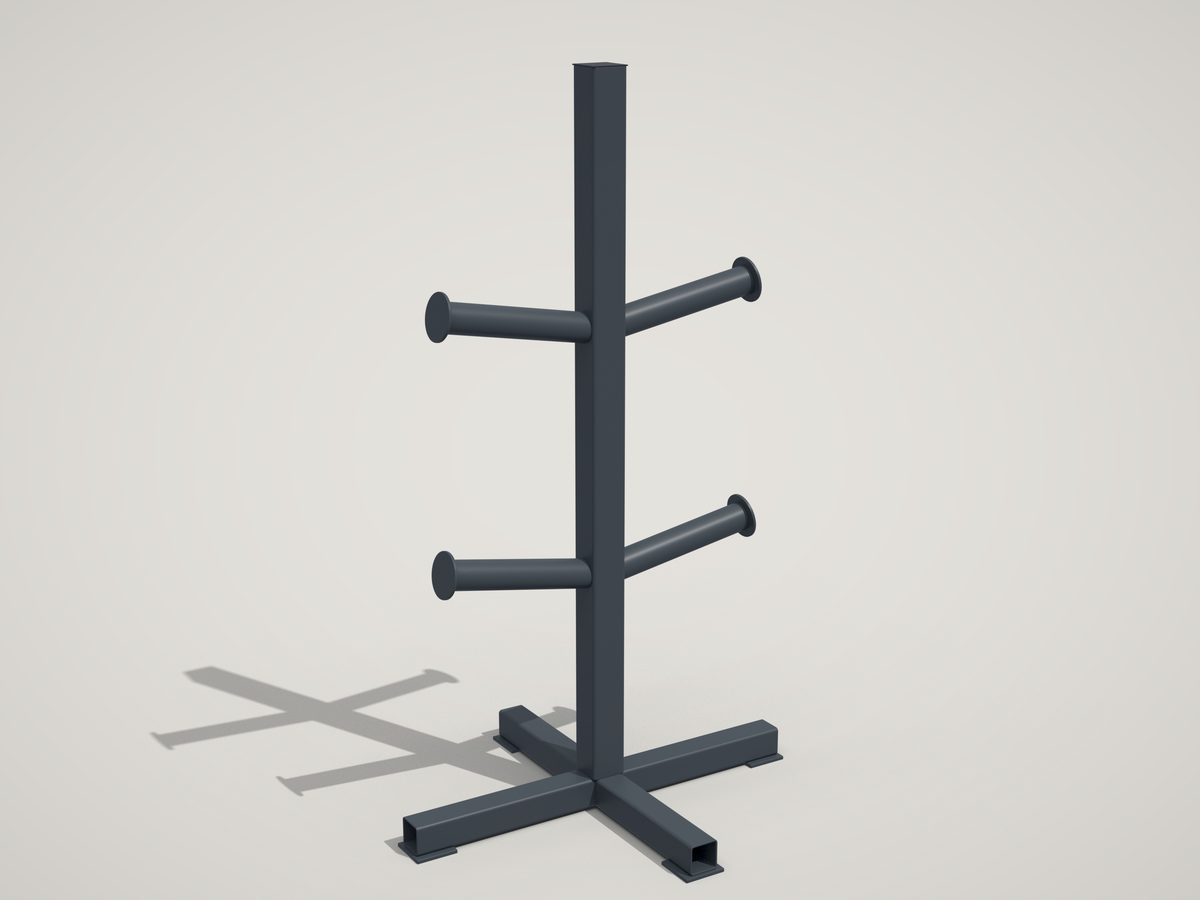
Our plate tree is checked at 2.5 times the load on each horn. On the standard tree, 250 kg of plates, each CHS 48.3 x 3.2 horn takes 62 kg and works at 36 % of its yield at 2.5 times that, with no permanent set.
| Plan | Sizes | Load | Checked at |
|---|---|---|---|
| Plate tree | compact, standard, large | 150, 250 or 350 kg of Olympic plates | 2.5 x per horn |
| Barbell rack | 4, 6 or 9 bars | Olympic bars up to 20 kg each | 2.5 x on the base rail |
| Dumbbell rack | short, standard, long | 200, 300 or 400 kg on two tiers | 2.5 x per tier |
| Kettlebell rack | standard | 250 kg on two tiers | 2.5 x per tier |
Swipe the table sideways to see every column.
Horns, post and base
The horns are CHS 48.3 x 3.2, which fits an Olympic plate's 50 mm hole with room to slide, cut at 10 degrees at the post end so they rake upwards and the plates sit back against the post. A stop disc on every tip stops a plate walking off. Standard plates with a 25 mm hole need sleeves on 50 mm horns.
The post is SHS 60 x 60 x 3 on the standard tree and SHS 80 x 80 x 3 on the large, welded all round with a full-strength fillet onto a cross of feet with pads under the ends. File every edge you can touch to a 2.5 mm radius, the ISO 20957-1 figure for edges that support the body, and plug the post top.
The base is sized for the worst case people actually do: loading one side and leaving the other empty. Our check loads one side full, 125 kg on the standard tree, with the other bare, and the load's centre stays inside the feet. Even so, the plan's rule is to load and unload both sides in turn past half the rated load.
Barbell, dumbbell and kettlebell racks
A barbell rack stands Olympic bars on end in sleeves that take the 50 mm sleeve end. Ours holds 4, 6 or 9 bars of up to 20 kg each; its base rail is checked at 2.5 times the bars' weight and it is stable with the bars leaning on the top rail.
Our dumbbell rack carries 200, 300 or 400 kg on two tiers, and the kettlebell rack 250 kg on the standard size. The tier rails are SHS 30 x 30 x 2.5, which on the standard dumbbell rack works at 52 % of yield at 2.5 times its 150 kg tier load. The bells' weight sits between the feet whichever tier is loaded, so it cannot tip forward on its own.
All of them are class H, indoors, on a level hard floor, with every edge rounded and every open end plugged.
Building it, and where it goes
The welds that matter are the post to the base and the horns to the post: weld both all round with a full-strength fillet, because a horn carrying 60 kg of plates 250 mm out from the post is a lever on that weld every time a plate goes on. Tack each horn over a 10 degree block so they all rake the same, then weld it out.
Stand storage where you use it, beside the rack or the bench and inside the free area round your training space, so plates are never carried far. Keep it off soft mats that let one foot sink: a level, hard floor is what the plan's stability checks assume. Put the heaviest plates on the lowest horns, both sides alike, and the plate tree stays put even half loaded.
Mistakes we see
Horns welded square to the post, so plates slide off. Horns from thin tube that bend after a month. A plate tree on a single small foot plate that tips when one side is loaded. Open tube ends that cut knuckles. And storage racks used to train from: a dumbbell rack is not a step, and the plan says not to climb on it or drop bells onto it.
The build, step by step
The order we build it in. The plan draws each step with its new parts in orange.
- Cut and prepare
Cut the feet, post and horns; the horns get a 10 degree cut at the post end. File every edge to 2.5 mm radius.
- Base
Weld the feet into a cross under where the post stands, with pads under the ends.
- Post
Stand the post on the crossing, plumb both ways, and weld it all round with a full-strength fillet.
- Horns
Tack the horns on at the drawn heights over a 10 degree block, weld them, add the stop discs and plug the post top.
The plan
Each plan comes in 3 sizes, drawn from a checked 3D model: the steel to buy, the cutting list, every part drawn, the build step by step and a DXF for every plate, and the loads it was checked for.
Weight plate tree plans
A free-standing plate tree for Olympic plates: a box-section post on a wide base, tube horns raked up both sides.
£53 sizes, instant download
Add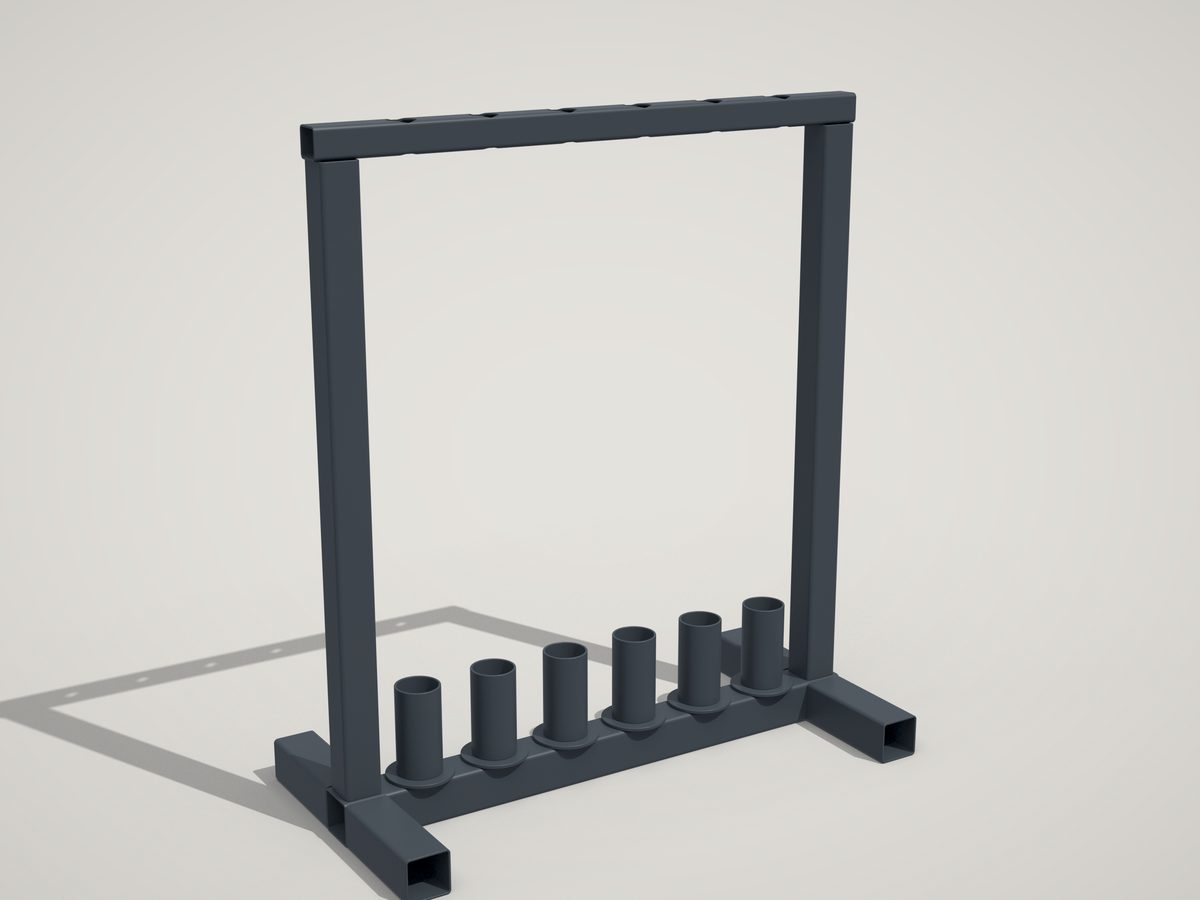
Barbell storage rack plans
A vertical barbell holder: tube sleeves on a box-section base stand the bars on end, a top rail keeps them upright.
£53 sizes, instant download
Add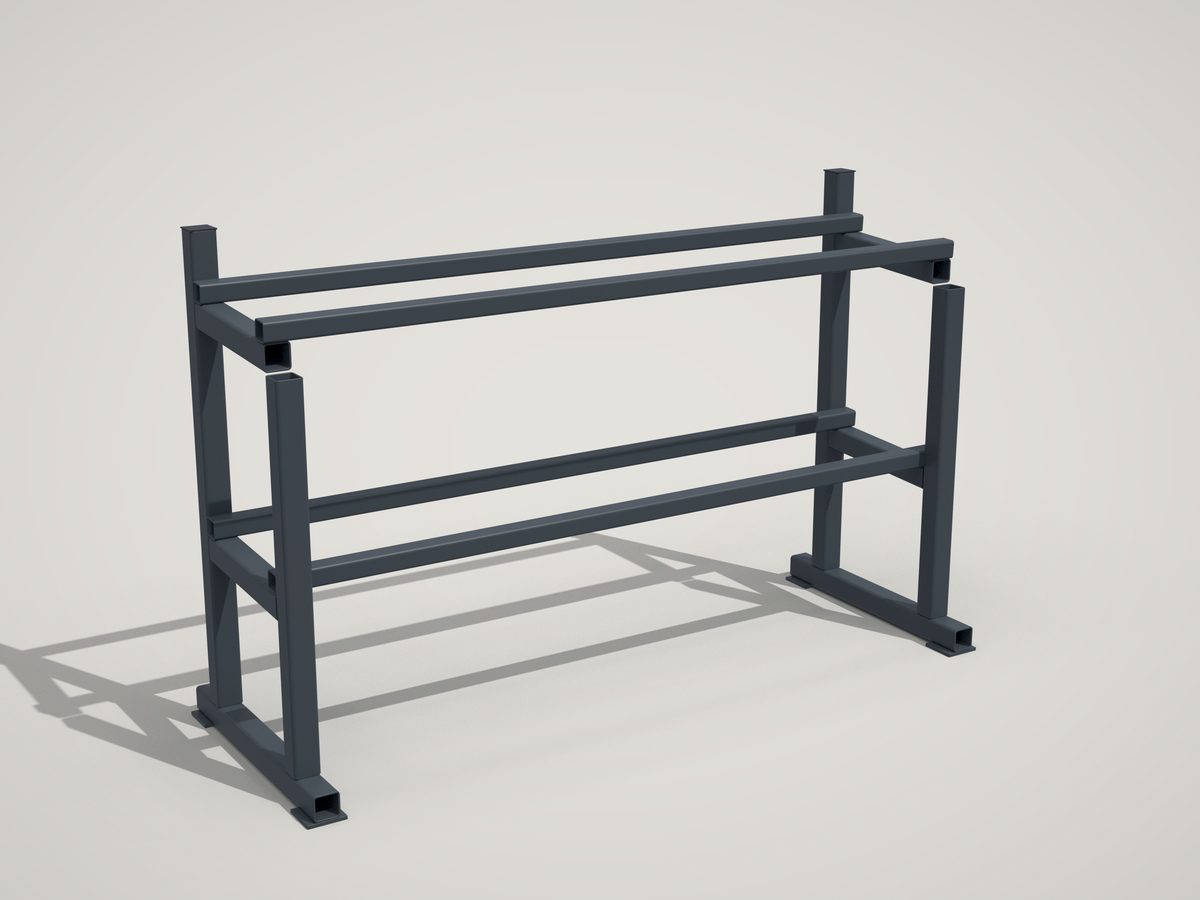
Building more than one? Every home gym plan is in the home gym bundle for £15 (21 plans, every size); any 3 plans are £12.
Questions
How much weight can a plate tree hold?
Ours is checked for 150, 250 or 350 kg of Olympic plates, each horn at 2.5 times its share, the ISO 20957-2 storage factor for class H.
What size tube for plate tree horns?
CHS 48.3 x 3.2 on our plan: it fits a 50 mm Olympic hole. Standard 25 mm plates need sleeves.
Why are the horns angled?
A 10 degree rake keeps plates sitting back against the post instead of walking off the end.
Will a plate tree tip over?
Ours holds one side full with the other empty. Still load and unload both sides in turn.
Does gym storage need fixing down?
Our storage racks stand on a level, hard floor; the power rack and squat stands are the ones that must be anchored.
Sources
Read on the published page. The plan figures are our own, taken off the checked 3D model. Where the law is quoted it is the law in England unless it says otherwise; your engineer, insurer or competent person decides your build.
- ISO 20957-2:2020, Stationary training equipment, Part 2: strength training equipment (publisher's preview), 5.3.2.3 Weight posts intended for storage“a single static load of 2,5 times the maximum load”
- ISO 20957-1:2013, Stationary training equipment, Part 1: general safety requirements (publisher's preview), 5.3.1 Edges and corners“shall have a radius r ≥ 2,5 mm”
- ISO 20957-1:2013, Stationary training equipment, Part 1: general safety requirements (publisher's preview), 5.3.2 Tube ends“the pullout force of the plug shall be ≥ 20 N”
- ISO 20957-1:2013, Stationary training equipment, Part 1: general safety requirements (publisher's preview), 4.3.2, classes of use“Class H (Home): domestic use.”
Where next
Weight plate tree plans
A free-standing plate tree for Olympic plates: a box-section post on a wide base, tube horns raked up both sides.
£53 sizes, instant download
AddBarbell storage rack plans
A vertical barbell holder: tube sleeves on a box-section base stand the bars on end, a top rail keeps them upright.
£53 sizes, instant download
Add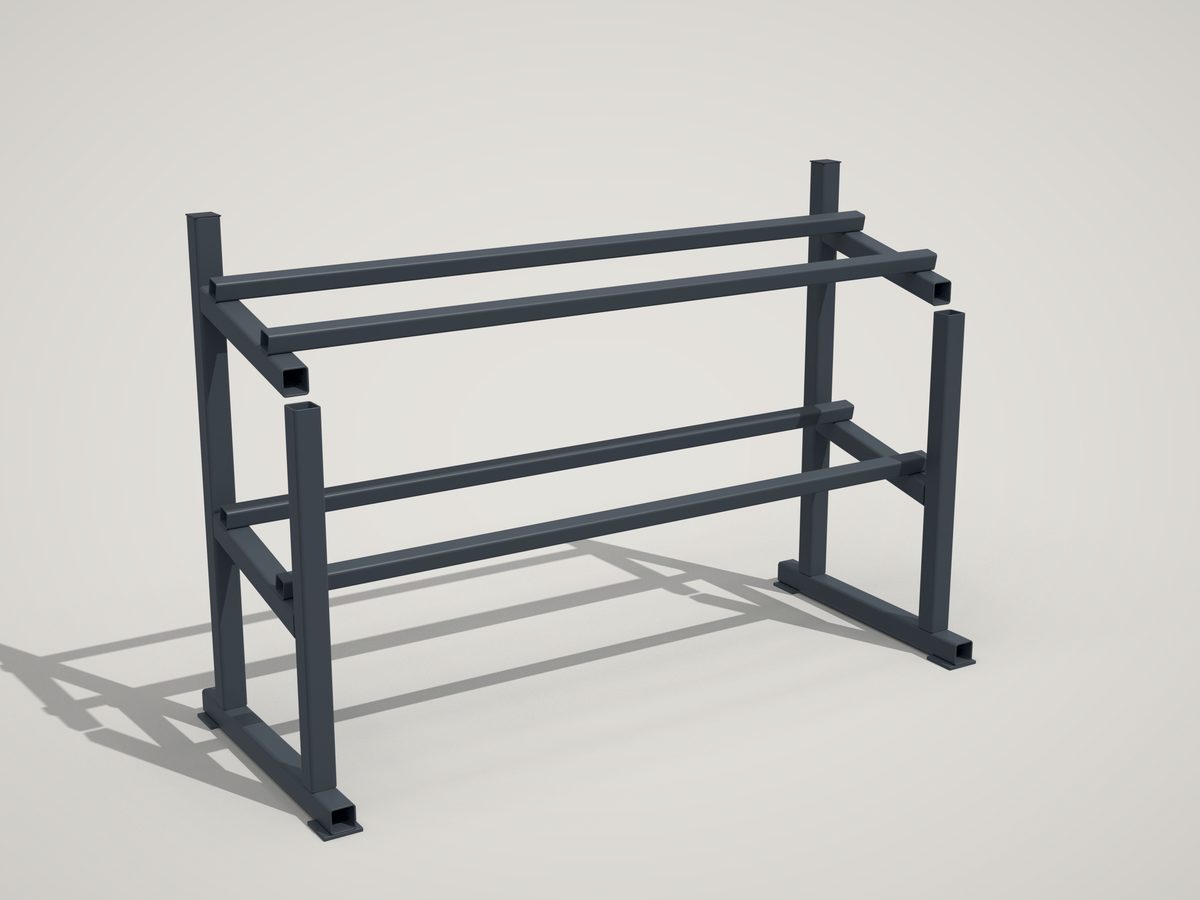
Dumbbell rack plans
A two-tier dumbbell rack: box-section end frames, tiers raked to the front, twin rails each tier so the bells sit in.
£53 sizes, instant download
Add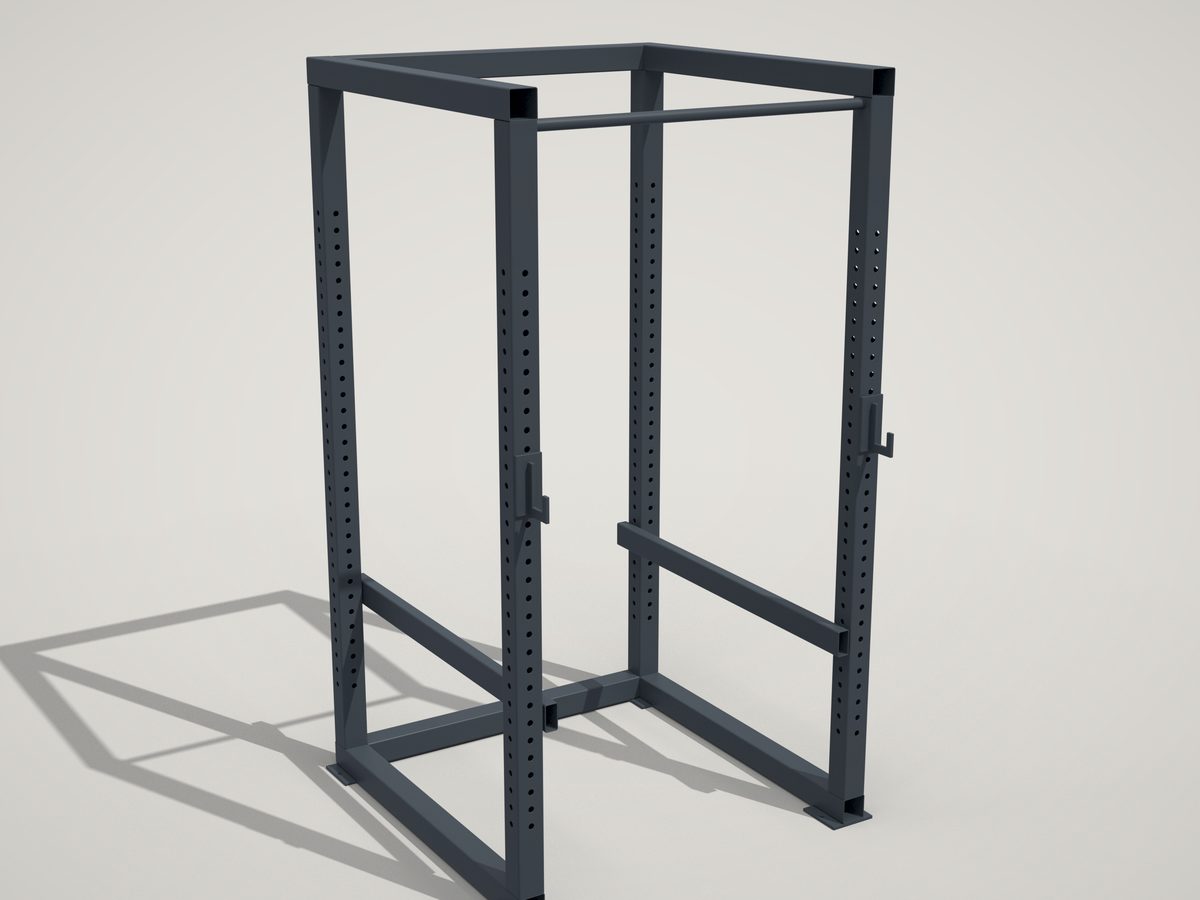
How to build a power rack or squat stands
How to build a power rack at home: SHS 80 uprights, 10 mm plate J-hooks, safety bars checked at 4 x a 300 kg bar, anchored to concrete. Home use, indoors.
Guide6 sources read
More guides
How to build a welding table: steel and sizes
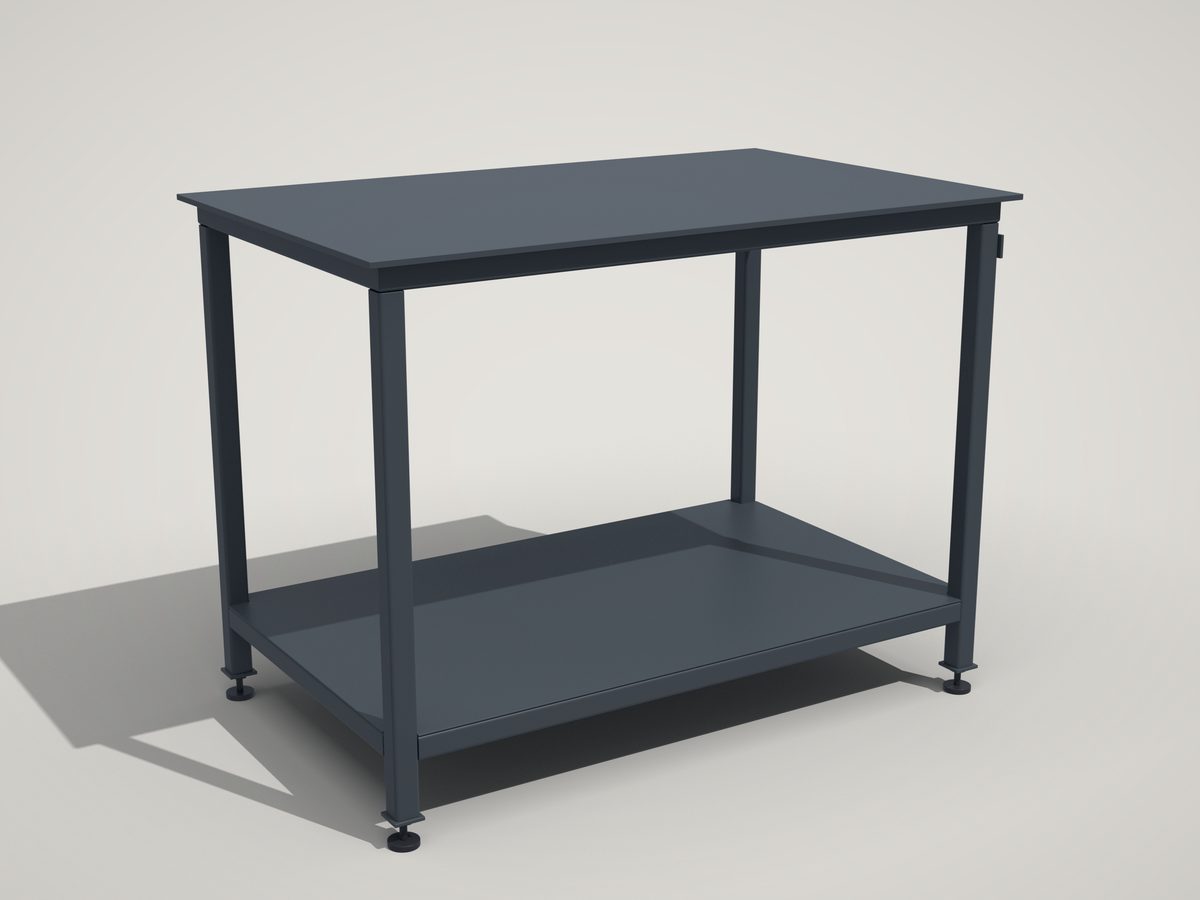
How to build a welding table: an 8 or 10 mm plate top with a 25 mm clamping edge, a mitred SHS 40 frame, stitch welds to keep it flat. Sizes to 1500 x 900.
Guide3 sources read
DIY welding cart: sizes, castors and the bottle
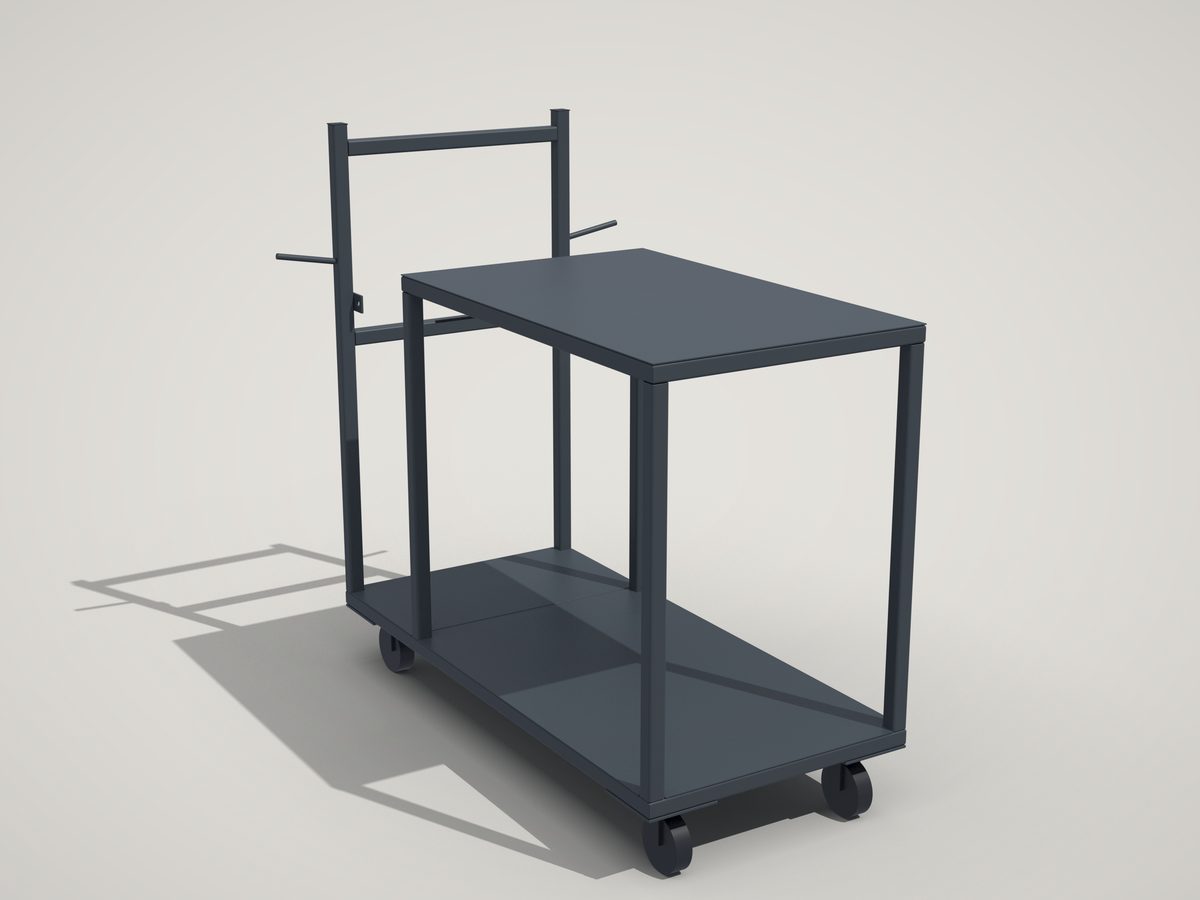
DIY welding cart: a bottle bay for a 200 to 250 mm cylinder, chained; castors rated for three wheels; stable to 15 degrees loaded. Three sizes.
Guide3 sources read
How to build a metal workbench that stays put
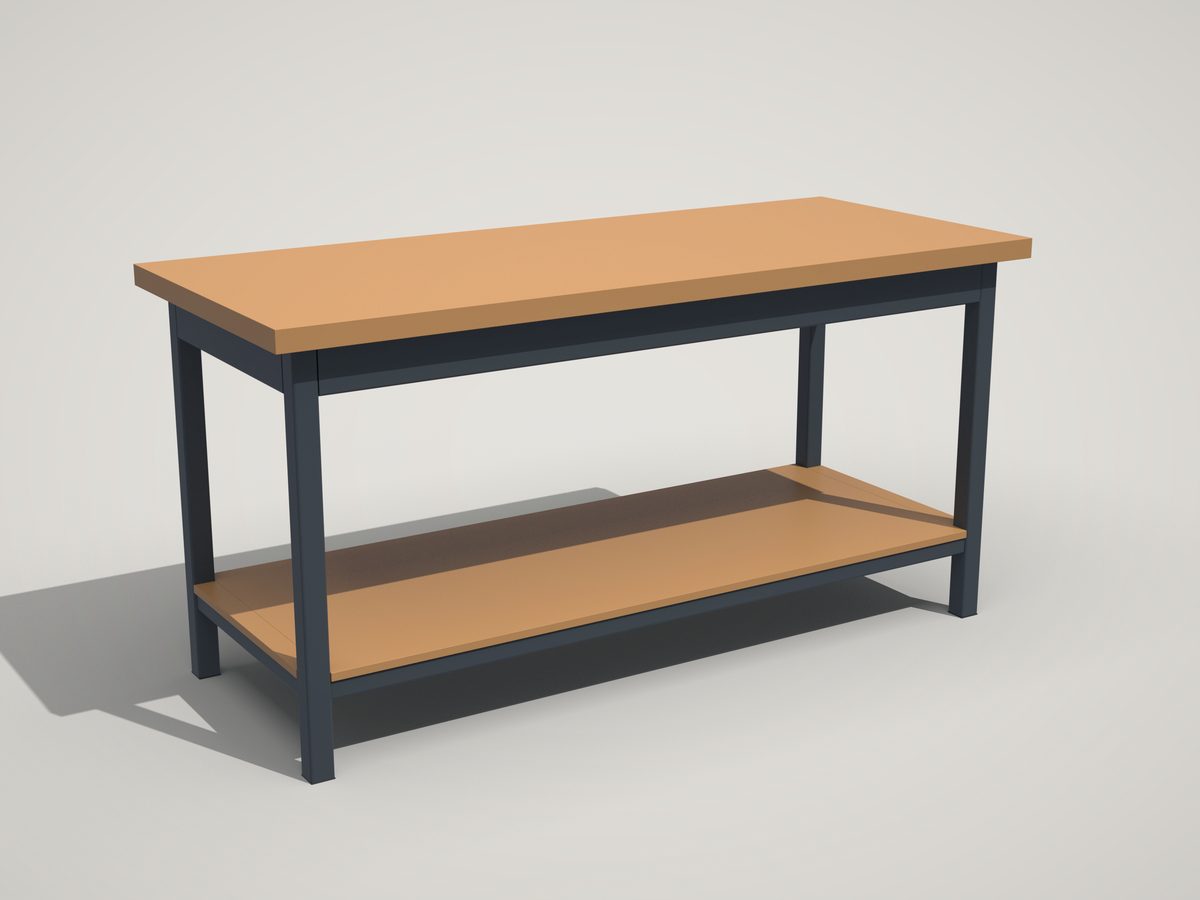
How to build a steel workbench: RHS 100 x 50 rails, SHS 50 legs and a 45 mm timber top, checked for 3.0 kN/m2 and a 2 kN point load. 1.5 to 2.1 m long.
Guide3 sources read