Guides/DIY welding cart: sizes, castors and the bottle
How to build a welding cart
A welding cart has three jobs: carry the welder, hold its gas cylinder upright and safe, and roll without tipping. Plenty of home-built carts get the first one right and the other two wrong. Here is how we size the bay, the castors and the frame, from our plan's own checks.
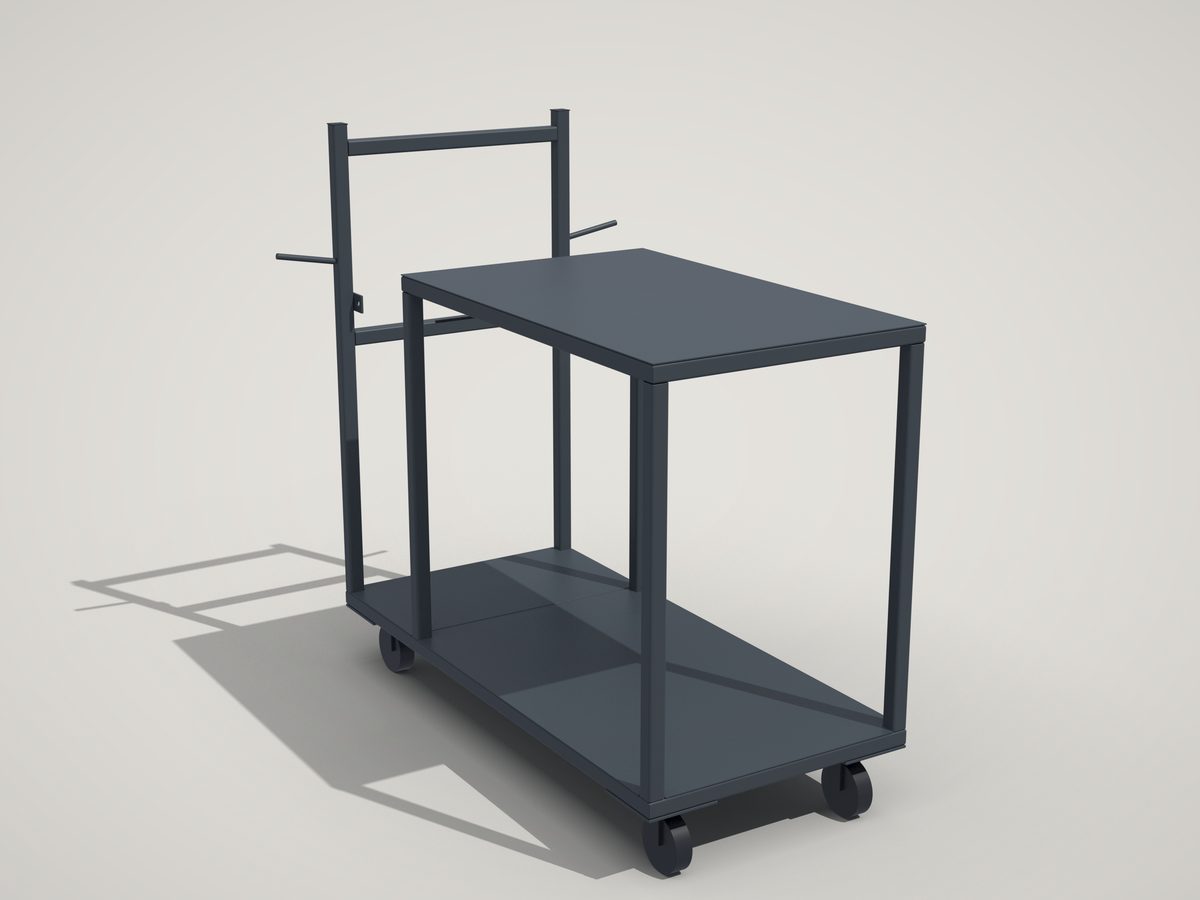
Start from the cylinder, not the welder
Measure your gas cylinder and weigh it full before you design anything. Cylinders vary a lot. A BOC X size, the smallest cylinder in BOC's ARGOSHIELD range, is about 940 mm high and 140 mm across and weighs about 19 kg full. A full-size W is about 1460 mm high and 230 mm across and weighs about 86 kg (BOC's ARGOSHIELD factsheet). Those are different carts.
Our plan's bottle bay is drawn for one cylinder: up to 200 mm across and 35 kg on the compact size, 230 mm and 50 kg on the standard, 250 mm and 70 kg on the large. So an X fits all three, and a full W does not fit any of them by weight. A big cylinder belongs chained to a wall or on a purpose-made cylinder trolley, not on the back of a welding cart.
HSE's guidance is simple: store cylinders upright and chain them to racks or suitable trolleys so they cannot fall. The plan puts two chain tabs inside the bay posts with the chain about 540 mm above the bay floor on the standard size, above the middle of a small cylinder, and its rule is the chain goes on whenever a cylinder is in the bay.
| Size | Overall (mm) | Welder up to | Cylinder up to | Castors | Tips sideways at |
|---|---|---|---|---|---|
| Compact | 760 x 920 x 1050 | 50 kg | 200 mm, 35 kg | 4 x 100 mm, 60 kg each | about 15 degrees |
| Standard | 780 x 1120 x 1100 | 80 kg | 230 mm, 50 kg | 4 x 100 mm, 80 kg each | about 15 degrees |
| Large | 860 x 1320 x 1150 | 120 kg | 250 mm, 70 kg | 4 x 125 mm, 100 kg each | about 17 degrees |
Swipe the table sideways to see every column.
Castors: rate them for three wheels
A cart on a real floor stands on three wheels, not four. Our castor check takes the welder, the cylinder and the cart on three castors: on the standard size that is 178 kg loaded, 59 kg a castor, so the plan fits 100 mm castors rated 80 kg each. The large size goes to 125 mm castors rated 100 kg. Rating castors for a quarter of the load each is how they collapse on the first bump.
The plan puts braked swivel castors at the front and fixed castors at the back, under the bottle bay. Two swivels and two fixed track straight across a workshop, and the brakes on the swivels hold the cart still while you weld.
Stability and the frame
A loaded cart with a cylinder in the back is tall and top-heavy at one end. Our stability check tips each size sideways until it goes: about 15 degrees loaded on the compact and standard carts and 17 on the large, with the heaviest items low. That is plenty for a level workshop floor and not enough for a ramp or a gravel drive, which is why the plan says level floors only.
The frame is box section, 30 or 40 mm depending on size, with mitred top and bottom frames joined by four legs, and 2 mm plate shelves stitch welded on. Square the bottom frame first: both diagonals within 2 mm before you tack. Every other part is set out from it, so an error there runs through the whole cart.
Weld the castor pads flush with the frame's outside faces and drill the holes using a castor as the template. The plan checks that each bolt hole sits at least 8 mm clear of the frame tube, so there is room for the nut and a socket.
What goes where
The welder sits on the top shelf, wire, gloves and consumables on the bottom shelf, the torch and leads on the two cable hooks on the outside of the bay posts. Keep the heavy things low and to the centre: a box of wire reels on the top shelf costs you stability.
Check your welder's footprint against the top shelf before you cut. The plan lists the shelf size for each cart and the welder mass it was checked for: 50 kg on the compact, 80 kg on the standard, 120 kg on the large.
Mistakes we see
A bay sized for the cylinder you have now, not the one you will swap to. No chain, or a bungee. Four cheap castors from the bargain bin rated for a quarter of the load. The cylinder valve sticking up above the handle, where it gets knocked. And using the cart as a step to reach a shelf: the plan says not to, and the castors are the reason.
The build, step by step
The order we build it in. The plan draws each step with its new parts in orange.
- Cut and prepare
Cut every bar to the list, mitres at 45 degrees. File the mitre faces flat. Cut the plates or have the DXFs laser cut; drill the castor pads.
- Bottom frame
Clamp the four mitred rails flat, both diagonals within 2 mm, tack, check, weld. Add the cross rail where the body ends.
- Legs and top frame
Stand the legs on the bottom frame's corners, plumb both ways. Set the top frame on, square and level, then weld out.
- Bottle bay and handle
Weld the two bay posts, the handle and the bottle bar. Add the chain tabs inside the posts and cable hooks outside.
- Castors
Turn it over, weld the pads flush with the outside faces, drill, and bolt braked swivels at the front, fixed at the back.
- Shelves and finish
Stitch weld the shelves, 25 mm at 150 mm. Grind sharp edges, prime and paint, cap the post tops, fit the chain.
The plan
Each plan comes in 3 sizes, drawn from a checked 3D model: the steel to buy, the cutting list, every part drawn, the build step by step and a DXF for every plate, and the loads it was checked for.
Building more than one? Every workshop plan is in the workshop bundle for £15 (29 plans, every size); any 3 plans are £12.
Questions
What size gas bottle fits a welding cart?
Ours takes one cylinder up to 200 mm across and 35 kg (compact), 230 mm and 50 kg (standard) or 250 mm and 70 kg (large). Measure and weigh yours full: a BOC X at about 140 mm and 19 kg fits all three; a full W at about 86 kg fits none.
What castors should a welding cart have?
Ones rated for the loaded cart on three wheels. On our standard cart that is 59 kg a castor, so the plan fits 100 mm castors rated 80 kg, braked swivels at the front and fixed at the back.
Does the cylinder have to be chained?
Yes. HSE's guidance is to keep cylinders upright and chained to racks or suitable trolleys so they cannot fall. Our plan's rule is the chain stays on whenever a cylinder is in the bay.
Can I tow the cart or take it outside?
No. It is drawn for level workshop floors and tips sideways at about 15 degrees loaded. Do not tow it, ride on it or use it as a step.
What thickness steel is it made from?
Box section, 30 or 40 mm depending on the size, with 2 mm plate shelves. The plan lists every bar and plate to buy.
Sources
Read on the published page. The plan figures are our own, taken off the checked 3D model. Where the law is quoted it is the law in England unless it says otherwise; your engineer, insurer or competent person decides your build.
- BOC ARGOSHIELD factsheet BOC/501345/Arg_Rev3/CST/0322, Cylinder sizes: X and W“Approx. dimensions (H x W) incl. valve and guard where supplied”
- HSE: Welding and flame cutting (motor vehicle repair), Gas cylinders“chain cylinders to racks or suitable trolleys to prevent them falling”
- HSE Safety Alert STSU1-2019: change in enforcement expectations for mild steel welding fume, Bulletin STSU1-2019, February 2019“all welding fume, including mild steel welding fume, can cause lung cancer”
Where next
Welding cart plans
A box-section trolley for a MIG welder and its gas bottle: two shelves, a chained bottle bay, handle, castors.
£53 sizes, instant download
Add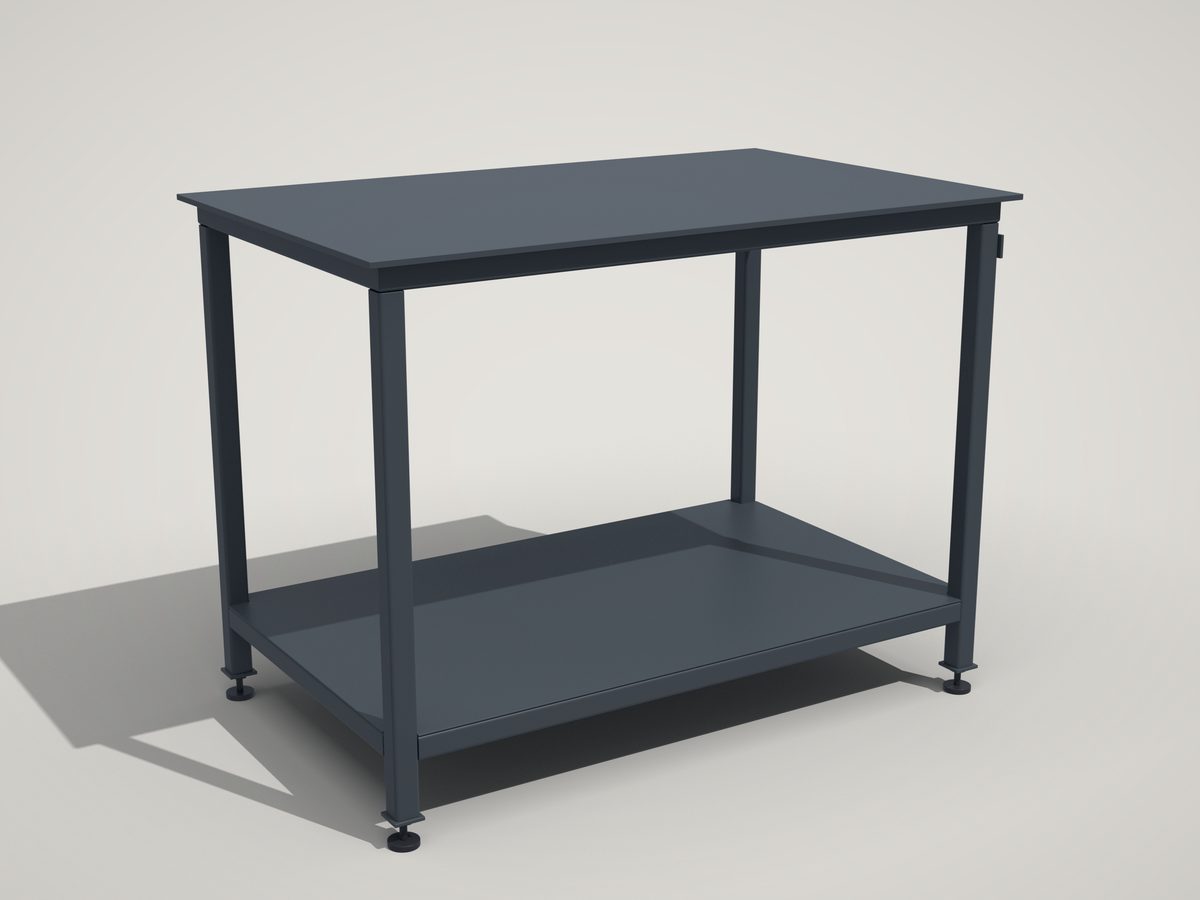
Welding table plans
A plate-topped fabrication table: clamping edge all round, box-section frame, a shelf under and levelling feet.
£53 sizes, instant download
AddHow to build a welding table: steel and sizes
How to build a welding table: an 8 or 10 mm plate top with a 25 mm clamping edge, a mitred SHS 40 frame, stitch welds to keep it flat. Sizes to 1500 x 900.
Guide3 sources read
Welding at home: fume, fire and gas bottles
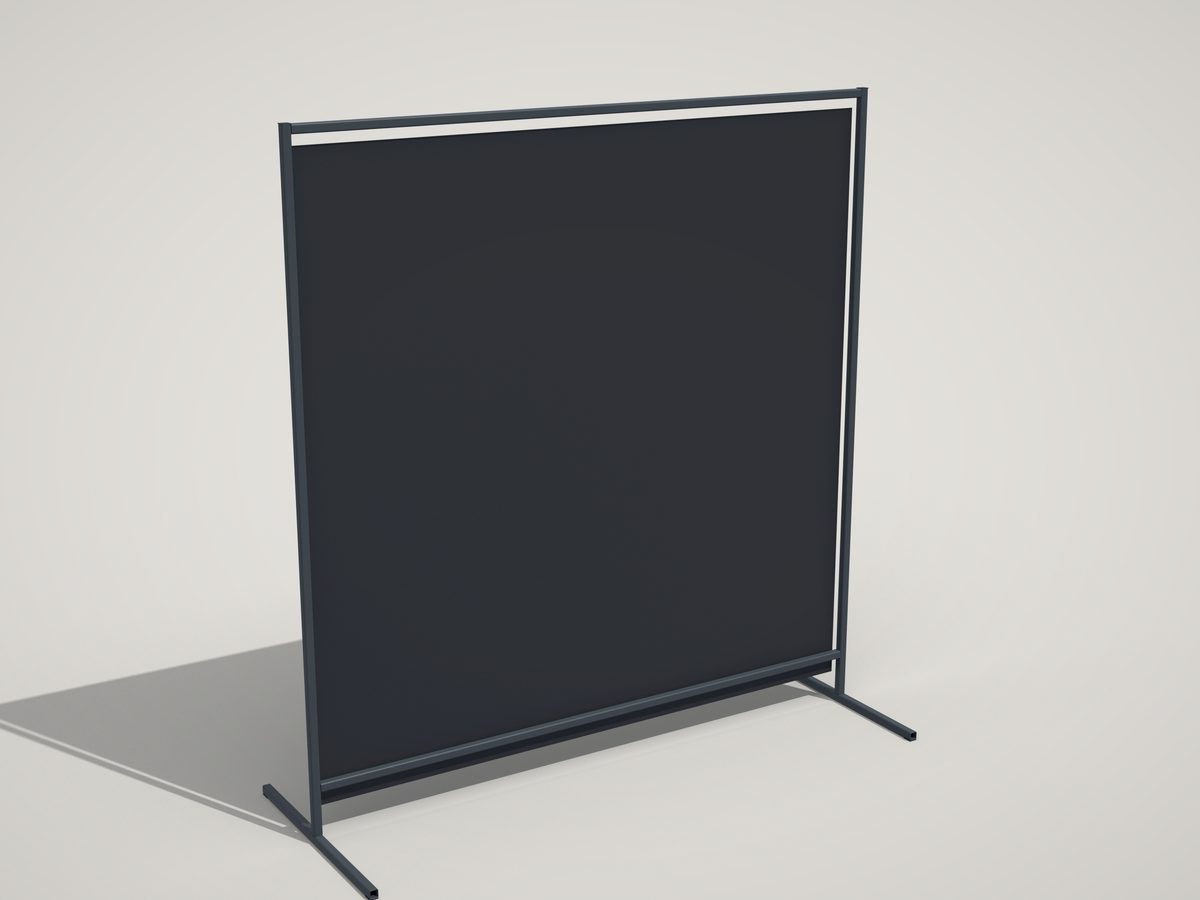
Welding at home: HSE says all welding fume can cause lung cancer, so extract it at the arc; APF 20 masks, chained gas bottles, screens, fire precautions.
Guide9 sources read
More guides
How to build a welding table: steel and sizes
How to build a welding table: an 8 or 10 mm plate top with a 25 mm clamping edge, a mitred SHS 40 frame, stitch welds to keep it flat. Sizes to 1500 x 900.
Guide3 sources read
How to build a metal workbench that stays put
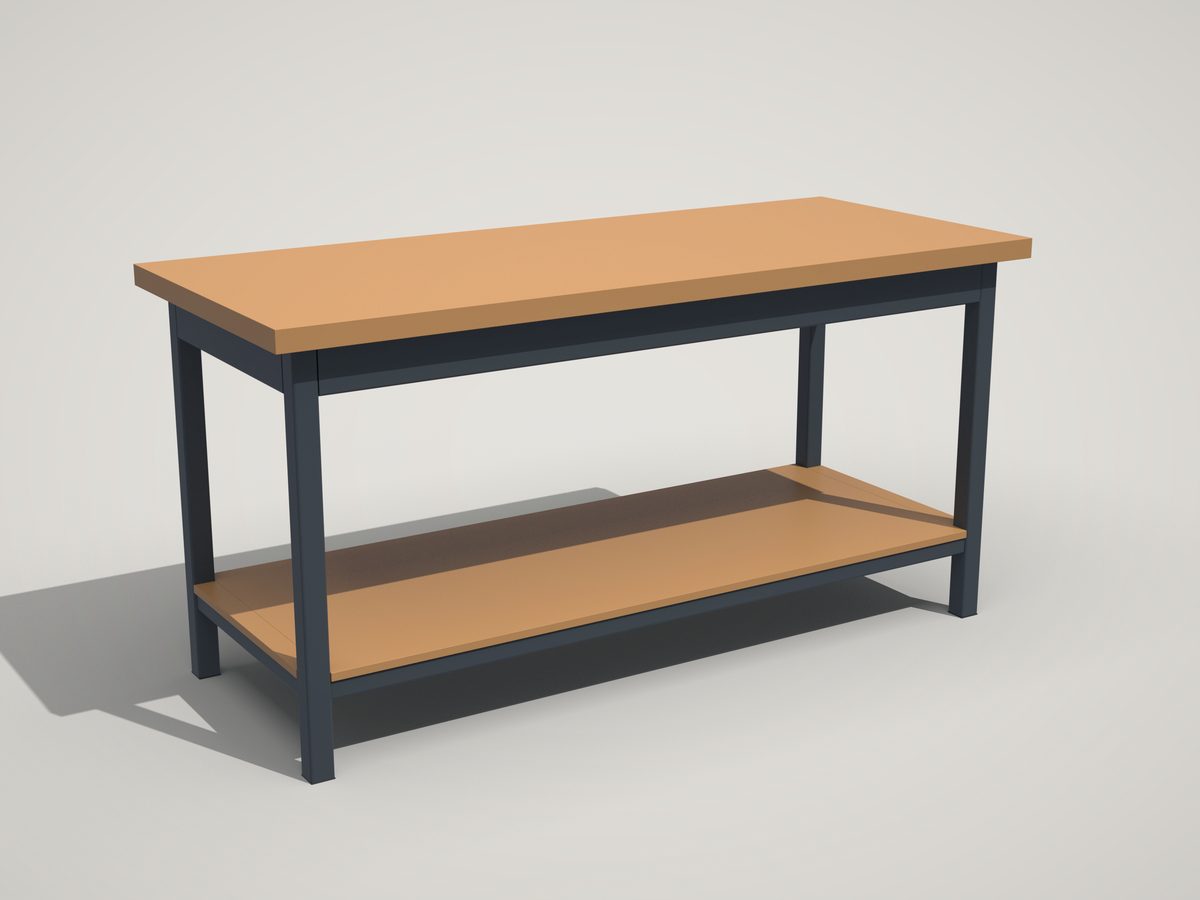
How to build a steel workbench: RHS 100 x 50 rails, SHS 50 legs and a 45 mm timber top, checked for 3.0 kN/m2 and a 2 kN point load. 1.5 to 2.1 m long.
Guide3 sources read
How to make a steel fire pit: plate and safety
How to make a steel fire pit: 5 or 6 mm plate that will not burn through, the base 200 mm off the ground, never galvanised, 3 m from anything that burns.
Guide6 sources read