Guides/How to build a welding table: steel and sizes
How to build a welding table
A welding table is a flat, earthed steel top you can clamp to, on a frame that does not rack when you drag work across it. Get the plate, the frame and the order of welding right and it stays flat for years. This is what we decide first, and why, from the plan we draw it to.
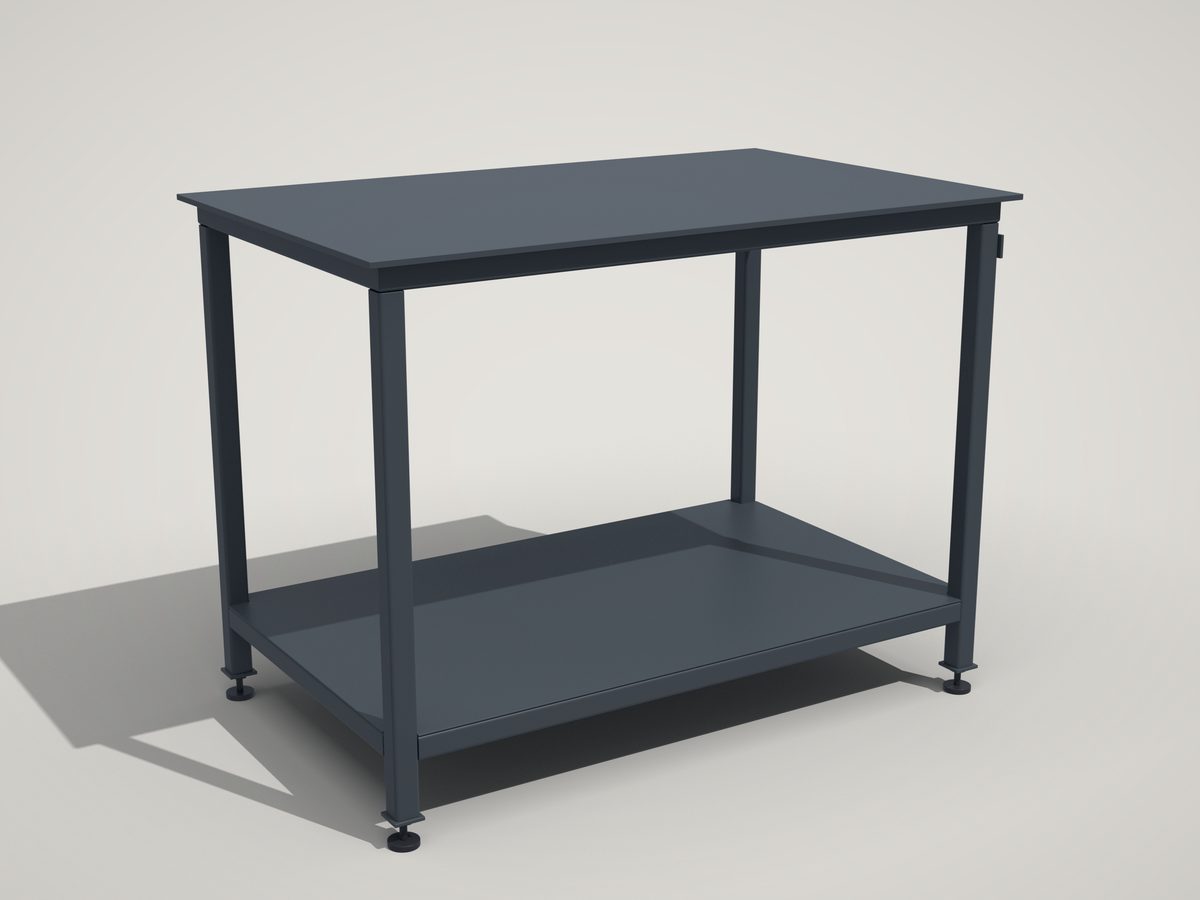
Decide the size, then the top
Start from the biggest job you will lay on it, not the space you have. Our plan comes in three sizes, 900 x 700, 1200 x 750 and 1500 x 900 mm, all 900 mm high, a comfortable height to work at standing. A table you can walk round is worth more than a bigger one pushed against a wall.
The top is the table. On the compact size we use 8 mm plate and on the two bigger sizes 10 mm, overhanging the frame by 25 mm all round so a G-clamp or a toggle clamp can grip the edge anywhere. Thinner plate is cheaper, but it dishes when you weld near it and rings like a drum. Sheet of 3 mm is a shelf, not a top: it is what the plan uses under the table.
Check the plate is flat before you pay for it. Lay a straight edge across it both ways in the stockist's yard and turn down a piece that rocks or shows daylight. No amount of welding or grinding flattens a bent plate later.
| Size | Overall (mm) | Top plate | Spread load on the top | Shelf | Steel in it |
|---|---|---|---|---|---|
| Compact | 900 x 700 x 900 | 8 mm | 200 kg | 60 kg | 89 kg |
| Standard | 1200 x 750 x 900 | 10 mm | 300 kg | 80 kg | 132 kg |
| Large | 1500 x 900 x 900 | 10 mm | 400 kg | 100 kg | 205 kg |
Swipe the table sideways to see every column.
The frame, and why SHS 40 x 40 x 3
Square hollow section is stiff both ways, cuts cleanly on a chop saw and welds easily at 3 mm wall. The whole frame is SHS 40 x 40 x 3, mitred at the top corners. On the 1200 mm table the long rails span 1110 mm, and our check puts them at 26 % of their strength at 1.5 times a 300 kg spread load, sagging 1.2 mm. The steel is rarely the weak point on a welding table: flatness and squareness are.
The legs carry little load downwards. What they resist is the shove when you drag a heavy piece across or hammer a tack, so the frame has rails at the top and a second frame low down carrying the shelf. That turns four legs into a stiff box. Empty, the standard table takes 2.4 times the 200 N push at its top edge that would tip it.
The plan nests every piece into whole stock bars. If you change a size, run your own list through the cutting list optimiser before you order, and weigh the plate with the plate weight calculator: the 1500 x 900 top alone is over 100 kg, so plan how you will lift it onto the frame.
Welding the top on without pulling it
Most home-made welding tables are flat until the top goes on. A continuous weld round a plate shrinks as it cools and bows the plate. The plan clamps the top down hard, turns the table on its side and welds it from underneath in 30 mm stitches at 200 mm centres, starting in the middle and working out, alternating sides and letting it cool between runs.
Weld the frame square before the top goes near it. Lay the four mitred top rails upside down on the flattest floor you have, clamp them, and only tack once both diagonals match within 2 mm. Check again after tacking, then weld out. A frame out of square puts a twist in the top that the plate will copy.
Leave the top bare and wipe it with oil. A painted top holds spatter and will not earth your work, and earthing through the table is half the point of a steel one. The plan welds an earth tab to the front right leg for the clamp.
What it carries
The loads below are the ones the plan was checked for, spread over the top. One heavy item, a vice or a small engine block, is limited to 100 kg on every size, because a point load is what dents a plate. If you forge or straighten heavy work, stand the anvil on an anvil stand: a fabrication table is not an anvil, and the plan says not to stand, sit or climb on it.
Fit the levelling feet the plan draws. A garage floor is never flat, and a table that rocks will not hold a square job. Castors under a table you hammer on are a mistake: brakes stop it rolling, not shifting.
Safety at the table
HSE's position since 2019 is that all welding fume, including mild steel fume, can cause lung cancer. In a garage that means an open door is not enough: an on-torch extractor or a fan drawing fume away from your face, and a mask rated for welding fume. Our welding at home guide sets out what HSE says.
Keep the table clear of anything that burns, sweep up grinding dust before you weld, and never weld on a drum or tank that may have held anything flammable.
Mistakes we see
Butt-welding two plates to make a bigger top, which never stays flat along the joint. Welding the top all round. Buying plate without checking it. Painting the top. Building the frame on an uneven floor and wondering why one leg is short. And leaving the plate's mill edges sharp: the plan grinds the top's edges smooth, because you will lean on them every day.
The build, step by step
The order we build it in. The plan draws each step with its new parts in orange.
- Cut and prepare
Cut every bar to the cutting list, mitres at 45 degrees from a test piece first. Deburr and mark each piece. Check the top plate is flat.
- Top frame
Clamp the mitred rails upside down on a flat floor, diagonals within 2 mm, tack, check, weld. Add the cross rails.
- Legs and feet
Weld a foot plate and nut to each leg, stand the legs on the frame's corners, plumb both ways, weld all round.
- Lower frame
Turn it over, fit the lower rails at the drawn height, check the legs are still square, tack and weld.
- Top plate
Clamp the plate on with an even overhang and stitch weld it from underneath: 30 mm at 200 mm, from the middle out.
- Shelf and finish
Stitch in the shelf, weld the earth tab, grind the plate edges, paint the frame, oil the top, level the feet.
The plan
Each plan comes in 3 sizes, drawn from a checked 3D model: the steel to buy, the cutting list, every part drawn, the build step by step and a DXF for every plate, and the loads it was checked for.
Welding table plans
A plate-topped fabrication table: clamping edge all round, box-section frame, a shelf under and levelling feet.
£53 sizes, instant download
AddBuilding more than one? Every workshop plan is in the workshop bundle for £15 (29 plans, every size); any 3 plans are £12.
Questions
How thick should a welding table top be?
On our plan, 8 mm for a 900 x 700 table and 10 mm for the 1200 and 1500 mm tables. Thinner plate dishes from the heat of welding near it; much thicker adds weight and cost without making a home table any flatter.
Can I use a 3 mm or 5 mm sheet for the top?
Not for a top you weld on. It will pull out of flat. Use 3 mm for the shelf, as the plan does, and 8 or 10 mm for the top.
Should a welding table be painted?
Paint the frame and the shelf, never the top. A bare top earths your work and lets spatter knock off; wipe it with oil to keep the rust down.
What height should a welding table be?
Our plan uses 900 mm for all three sizes. If you mostly weld sitting down or work on tall pieces, set your own height before you cut the legs.
How much steel does it take?
From 89 kg for the compact size to 205 kg for the large one, much of it in the top plate. The plan lists the whole bars and plates to buy, already nested.
Do I need a welding cart as well?
It helps: the welding cart plan carries the welder and its gas bottle on four castors, so the set can come to the table. Our welding cart guide covers sizing the bottle bay.
Sources
Read on the published page. The plan figures are our own, taken off the checked 3D model. Where the law is quoted it is the law in England unless it says otherwise; your engineer, insurer or competent person decides your build.
- HSE Safety Alert STSU1-2019: change in enforcement expectations for mild steel welding fume, Bulletin STSU1-2019, February 2019“all welding fume, including mild steel welding fume, can cause lung cancer”
- HSE: Controlling the risks from welding, Local exhaust ventilation“On-torch extraction can be very effective for MIG welding”
- HSE: Welding and flame cutting (motor vehicle repair), Fire precautions“Never apply heat to containers, tanks or drums that may contain flammable residues”
Where next
Welding table plans
A plate-topped fabrication table: clamping edge all round, box-section frame, a shelf under and levelling feet.
£53 sizes, instant download
Add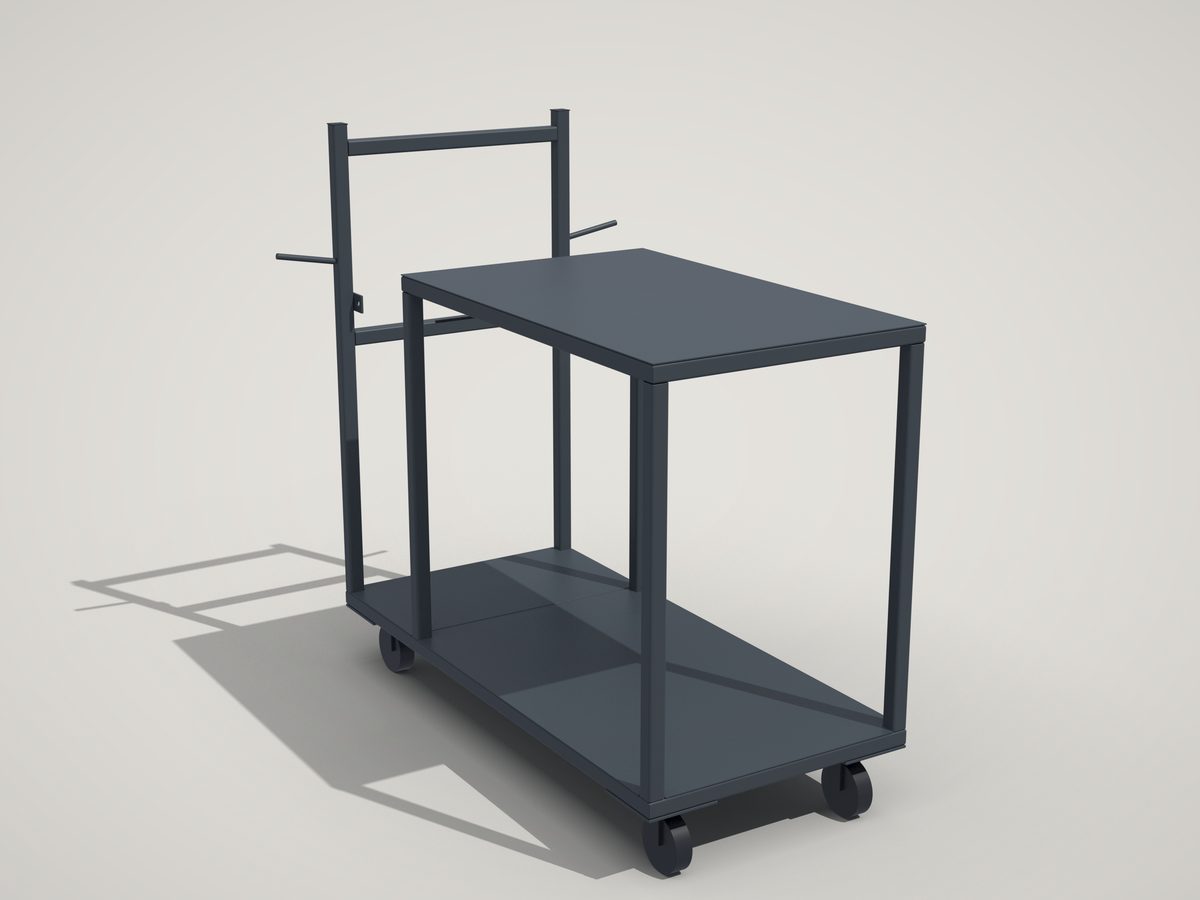
Welding cart plans
A box-section trolley for a MIG welder and its gas bottle: two shelves, a chained bottle bay, handle, castors.
£53 sizes, instant download
Add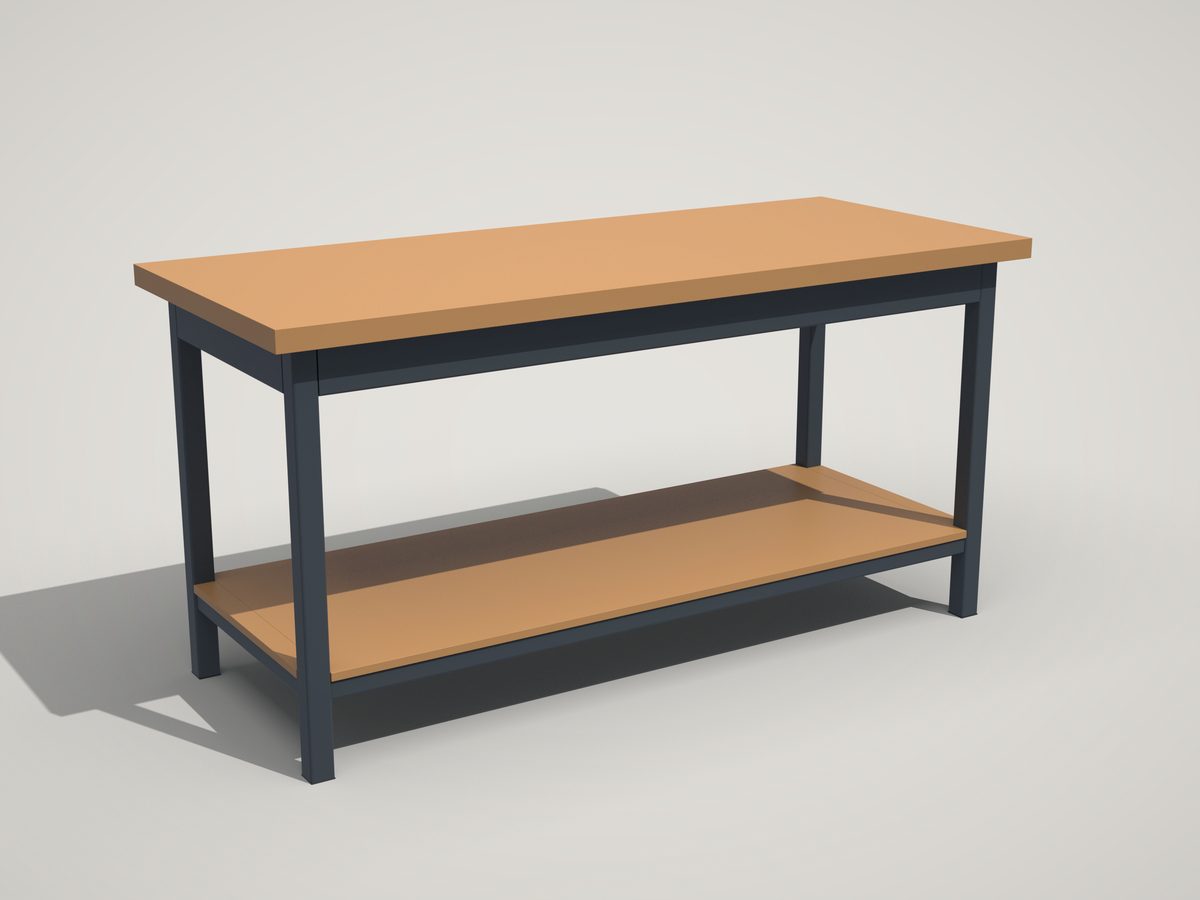
How to build a metal workbench that stays put
How to build a steel workbench: RHS 100 x 50 rails, SHS 50 legs and a 45 mm timber top, checked for 3.0 kN/m2 and a 2 kN point load. 1.5 to 2.1 m long.
Guide3 sources read
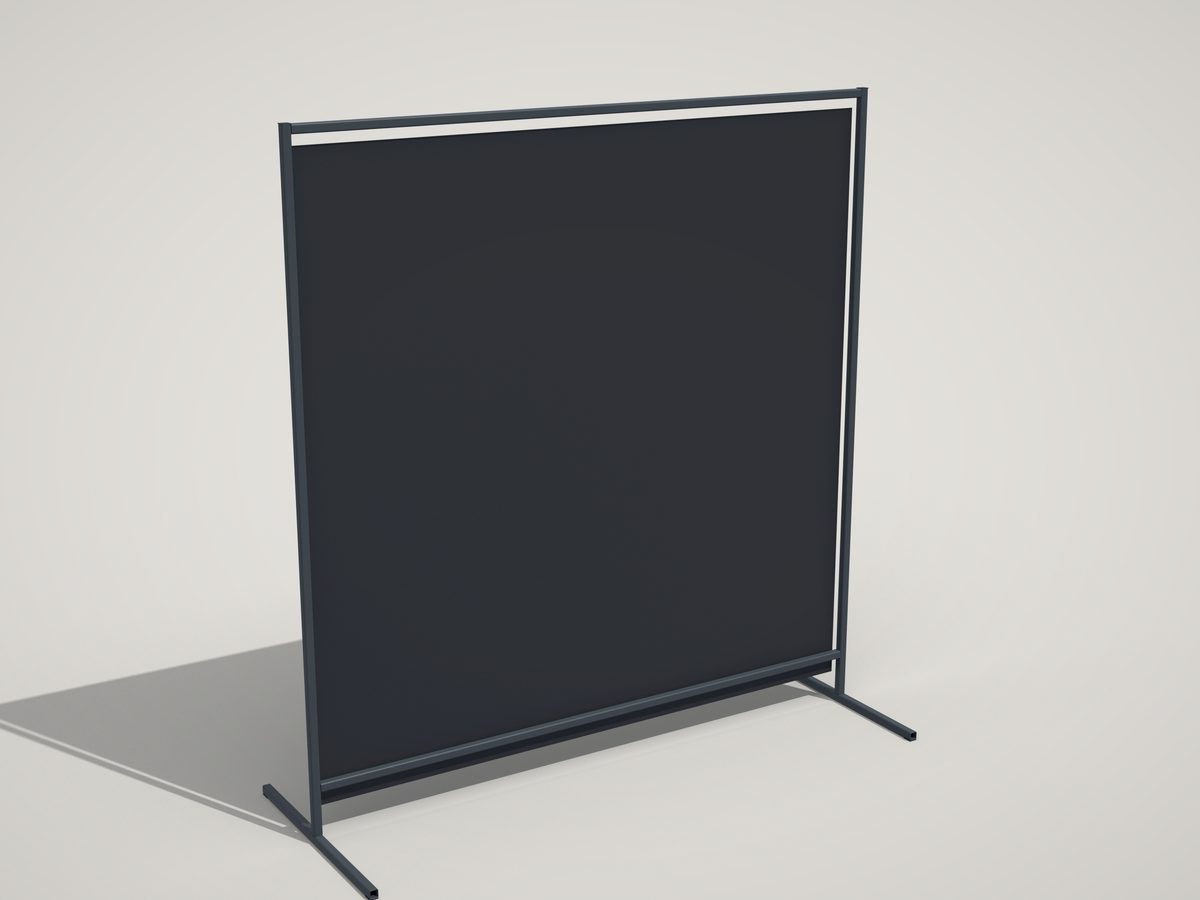
Welding at home: fume, fire and gas bottles
Welding at home: HSE says all welding fume can cause lung cancer, so extract it at the arc; APF 20 masks, chained gas bottles, screens, fire precautions.
Guide9 sources read
More guides
DIY welding cart: sizes, castors and the bottle
DIY welding cart: a bottle bay for a 200 to 250 mm cylinder, chained; castors rated for three wheels; stable to 15 degrees loaded. Three sizes.
Guide3 sources read
How to build a metal workbench that stays put
How to build a steel workbench: RHS 100 x 50 rails, SHS 50 legs and a 45 mm timber top, checked for 3.0 kN/m2 and a 2 kN point load. 1.5 to 2.1 m long.
Guide3 sources read
How to make a steel fire pit: plate and safety
How to make a steel fire pit: 5 or 6 mm plate that will not burn through, the base 200 mm off the ground, never galvanised, 3 m from anything that burns.
Guide6 sources read