Guides/Box section sizes for steel furniture
Box section sizes for steel furniture
Most steel furniture is SHS 25 to 60 mm box section, and most of the choices people agonise over do not matter while the few that do get missed. Depth beats wall thickness, span is everything, and a table frame is sized for stiffness, not strength. Here are the numbers, from the section tables and our own plans.
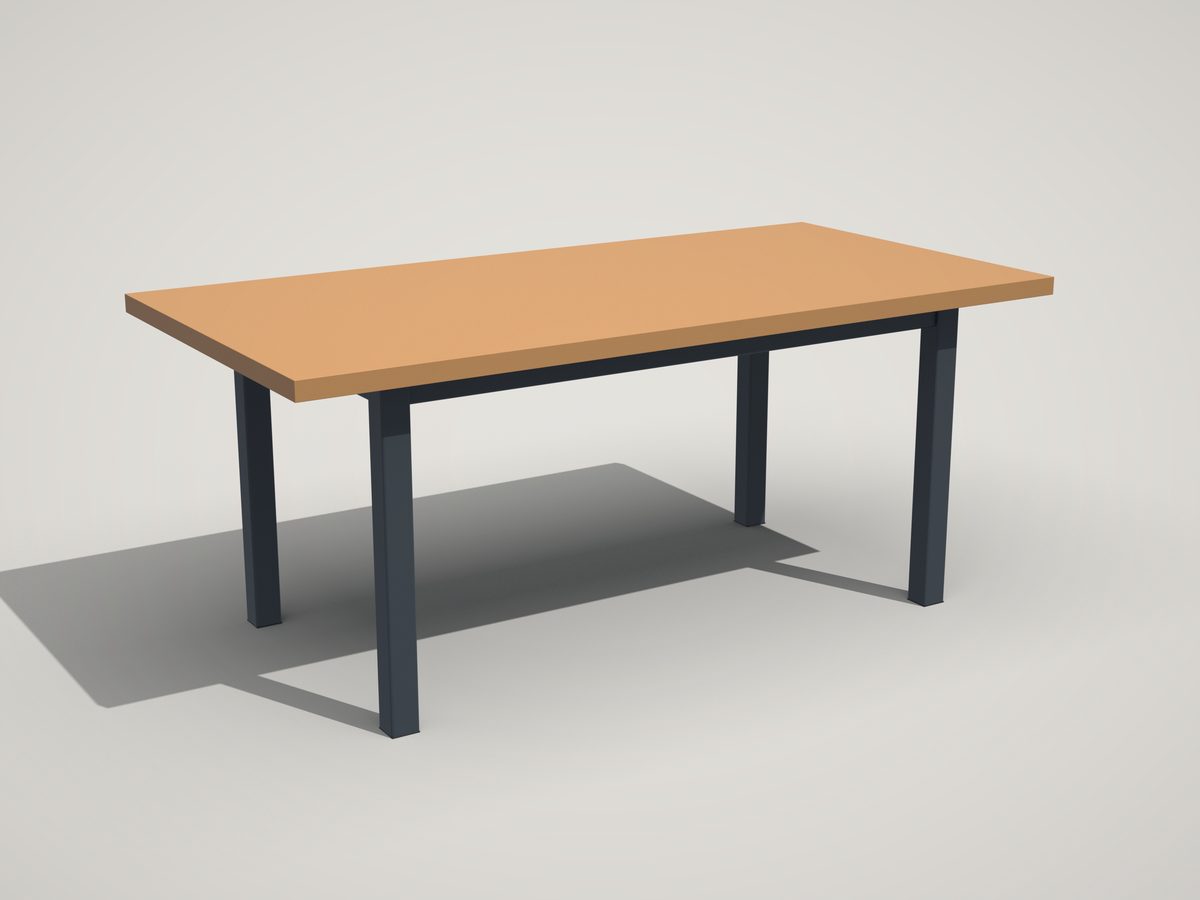
Depth beats wall thickness
A box section's stiffness in bending is its second moment of area, and it grows with the cube of the depth. Going from SHS 40 x 40 x 2 to 40 x 40 x 3 adds 43 % to the weight, from 2.31 to 3.30 kg/m, and only 34 % to the stiffness. Going from 40 x 40 x 3 to 50 x 50 x 3 adds 29 % to the weight, to 4.25 kg/m, and doubles the stiffness. The masses are the Blue Book's for cold-formed sections to BS EN 10219; the stiffness ratios are our arithmetic from the same shapes.
Rectangular section on edge is better again. RHS 60 x 40 x 3 weighs the same 4.25 kg/m as SHS 50 x 50 x 3 and is about 30 % stiffer standing on its 60 mm side. That is why our dining table plan uses RHS 60 x 40 x 3 aprons on edge, and our workbench uses RHS 100 x 50 x 3 for its long rails.
Wall thickness still matters, for other reasons: 3 mm is forgiving to MIG weld and takes a drilled and tapped hole; 2 mm and under is easy to burn through and dents if it is knocked. Most of our furniture plans use 2.5 or 3 mm wall.
| Section | Mass (kg/m) | Second moment of area (cm4) | Stiffness against SHS 40 x 40 x 3 |
|---|---|---|---|
| SHS 25 x 25 x 2.5 | 1.64 | 1.7 | 0.18 x |
| SHS 30 x 30 x 2.5 | 2.03 | 3.2 | 0.34 x |
| SHS 40 x 40 x 2 | 2.31 | 6.9 | 0.74 x |
| SHS 40 x 40 x 3 | 3.30 | 9.3 | 1.00 x |
| SHS 50 x 50 x 3 | 4.25 | 19.5 | 2.09 x |
| RHS 60 x 40 x 3, on edge | 4.25 | 25.4 | 2.72 x |
| SHS 60 x 60 x 3 | 5.19 | 35.1 | 3.77 x |
| RHS 100 x 50 x 3, on edge | 6.60 | 106.5 | 11.4 x |
Swipe the table sideways to see every column.
Span is everything
For a spread load, sag grows with the fourth power of the span. Double the length of a rail and it sags sixteen times as much under the same load per metre. A frame that is fine at 1200 mm can be visibly soft at 1800 mm in the same tube.
Our furniture plans check every steel rail for a sag of no more than span / 200 and for strength at 1.5 times the load. On the 1400 mm desk the SHS 40 x 40 x 3 long rails span 1260 mm and sag 3.1 mm, inside the 6.3 mm limit, working at 59 % of their strength. The 1800 mm dining table's RHS 60 x 40 aprons span 1340 mm and sag 1.6 mm.
Sizes we use, and why
SHS 25 x 25 x 2.5 and 30 x 30 x 2.5 for light frames and shelf rails: our bookcase uses 30 x 30 for its frame and 25 x 25 for the shelf rails. SHS 40 x 40 x 3 for table legs and rails up to about 1200 mm: our coffee table's long rails span 1080 mm and sag 1.8 mm. RHS 60 x 40 x 3 on edge for dining tables and longer spans. SHS 50 to 80 for heavy-duty kit like workbench legs and gym racks.
The tables are checked against the BS EN 12521 test loads, 1.5 kN/m2 spread and 1.0 kN at a point, and a sideways push at the top. Furniture frames rarely fail by breaking. They fail by bouncing, racking and wobbling, so the joints at the top of the legs and a rail low down matter as much as the section.
Cutting it and costing it
Work out the steel with the steel weight calculator, which keeps hot-finished and cold-formed hollow sections apart as the Blue Book does, and nest your cuts into stock bars with the cutting list optimiser. Our plans do both for you, with every piece lettered.
Joints: where furniture frames go wrong
A frame is only as stiff as its corners. Where a leg meets a rail, weld all round, not just the two sides you can see, and keep the welds at the top of the legs full: that joint resists the sideways push that makes a table wobble. Our table and desk plans check the legs for the sideways load the BS EN 12521 test applies at the top.
Square cuts and butt joints are easier and stronger to weld than mitres; mitres look better on a frame you will see edge-on. Grind the welds flush only where they show, and cap every open end: an open tube end is a dust trap indoors and a water trap outside. Check both diagonals of every frame before you weld it out, and stand the finished frame on a flat floor to check all four feet touch.
Mistakes we see
Thick-wall small tube instead of a bigger thin one. A long rail in square tube laid flat when the same weight of rectangular on edge would not sag. Legs welded on with no low rail, so the table racks. Screwing a timber top down tight, so it splits: our dining table plan uses oversize holes and washers. And open tube ends left raw.
The plan
Each plan comes in 3 sizes, drawn from a checked 3D model: the steel to buy, the cutting list, every part drawn, the build step by step and a DXF for every plate, and the loads it was checked for.
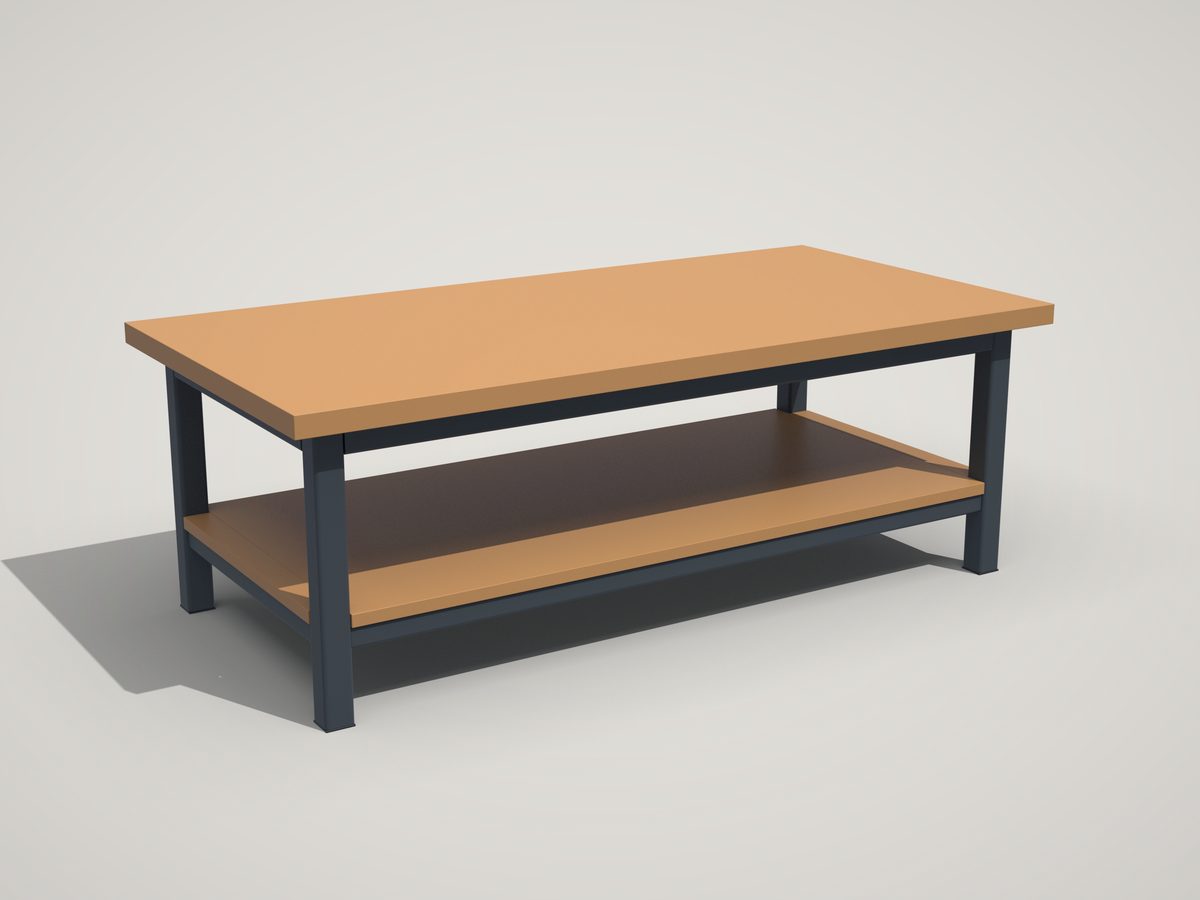
Coffee table plans
A low box-section coffee table with a timber top and a plywood shelf underneath for books and magazines.
£53 sizes, instant download
AddDining table frame plans
A box-section dining table frame for your own timber top: square legs, a slim apron, tabs that let the top move.
£53 sizes, instant download
Add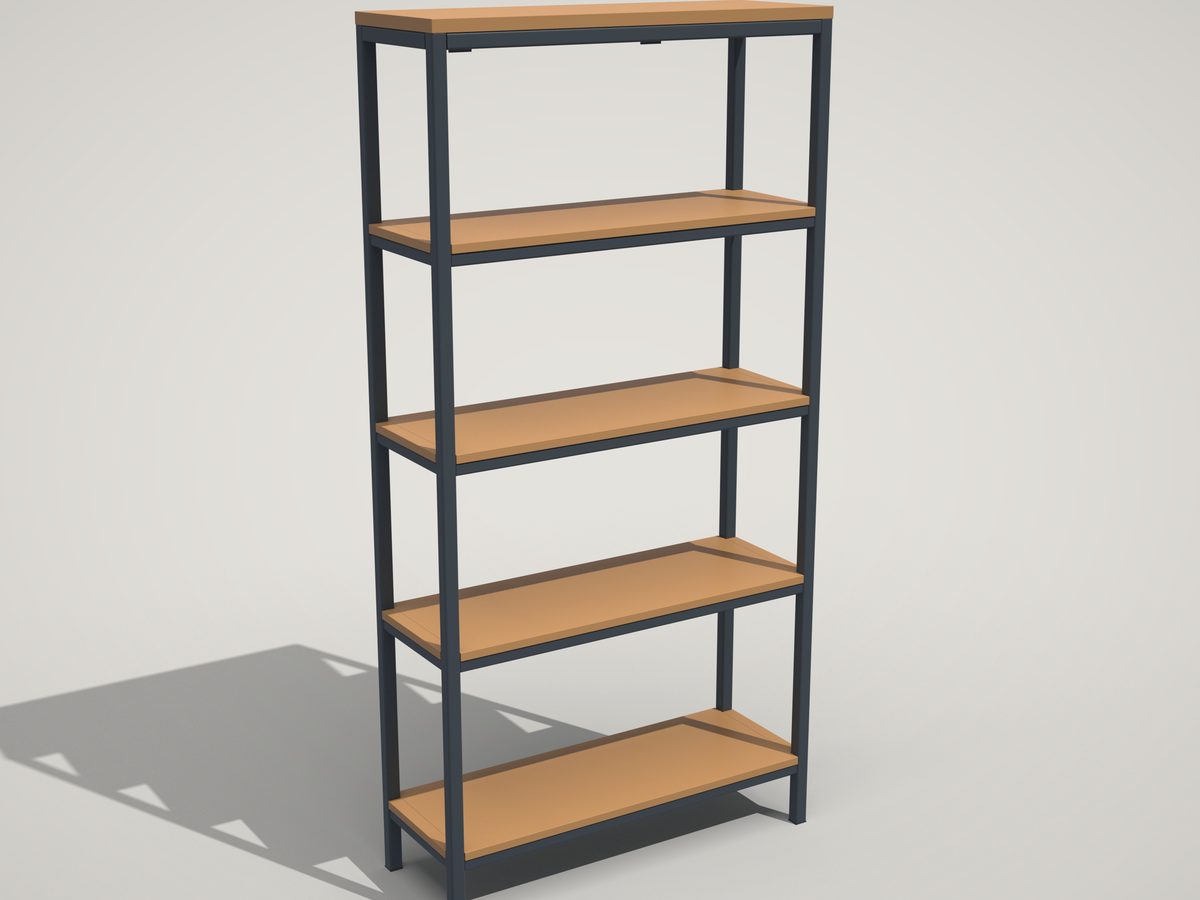
Building more than one? Every furniture plan is in the furniture bundle for £15 (35 plans, every size); any 3 plans are £12.
Questions
What size box section for a table frame?
On our plans: SHS 40 x 40 x 3 for coffee tables and desks up to about 1400 mm, RHS 60 x 40 x 3 on edge for dining table aprons. Longer spans need deeper sections, not thicker walls.
Is 2 mm or 3 mm wall better for furniture?
3 mm is easier to MIG weld without burning through and takes a tapped hole. For stiffness, a deeper section does far more than a thicker wall.
How much does box section weigh?
SHS 40 x 40 x 3 is 3.30 kg/m and SHS 50 x 50 x 3 is 4.25 kg/m (Blue Book, cold-formed BS EN 10219). The steel weight calculator does any size.
How much should a table rail sag?
Our plans hold every rail to span / 200 at its load. On a 1260 mm desk rail that is 6.3 mm.
Cold-formed or hot-finished?
The small sizes furniture uses are cold-formed (BS EN 10219). Hot-finished (BS EN 10210) is a different product with its own table, starting at 40 mm; do not mix the two tables when you weigh steel.
Sources
Read on the published page. The plan figures are our own, taken off the checked 3D model. Where the law is quoted it is the law in England unless it says otherwise; your engineer, insurer or competent person decides your build.
- Steel for Life Blue Book, explanatory notes: dimensions (the basis of every section mass in the tables), 2.1 Masses“calculated assuming that the density of steel is 7850 kg/m3”
- EN 14749:2016+A1:2022, Domestic and kitchen storage units and kitchen-worktops, safety requirements (publisher's preview), 5.1.3, Table 1 (0,65 kg/dm2)“All horizontal storage areas, including shelves, bottoms, tops and bottom hinged flaps”
Where next
Coffee table plans
A low box-section coffee table with a timber top and a plywood shelf underneath for books and magazines.
£53 sizes, instant download
AddDining table frame plans
A box-section dining table frame for your own timber top: square legs, a slim apron, tabs that let the top move.
£53 sizes, instant download
Add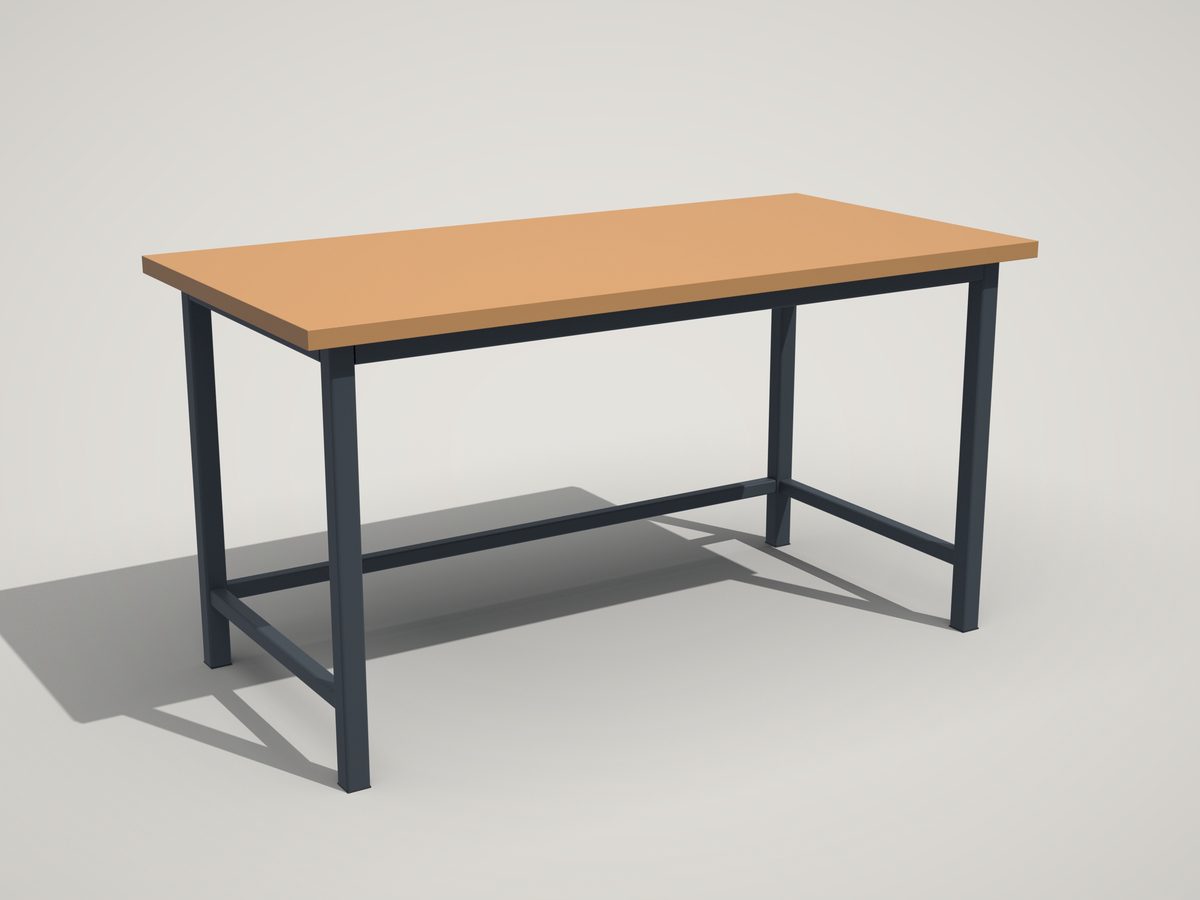
Desk plans
A box-section desk frame for a timber top: open at the front for your knees, a low rail round the ends and back.
£53 sizes, instant download
Add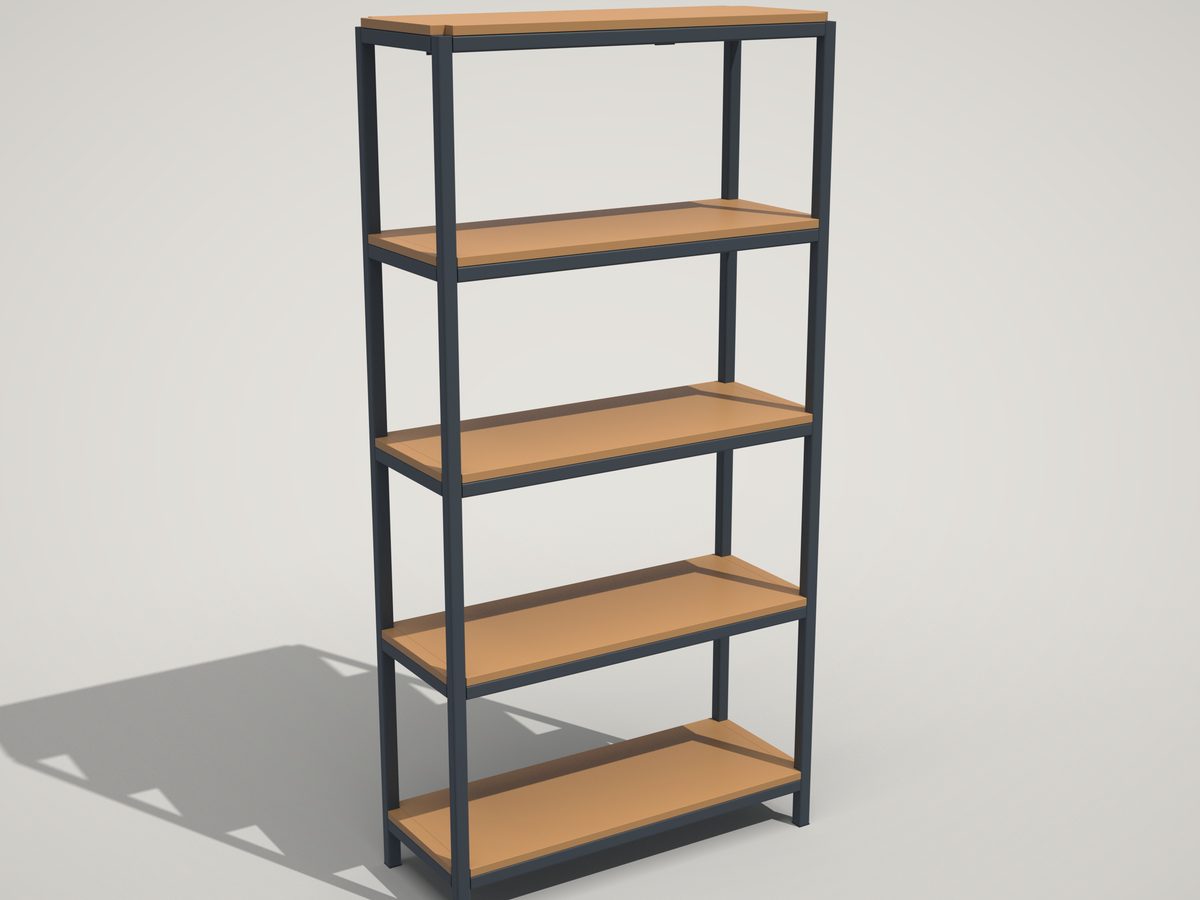
How to build steel shelving and a bookcase
How to build steel shelving: SHS 30 x 2.5 frames, 18 mm ply shelves for 40 to 60 kg each, and wall tabs, because a 100 N pull would tip a full 1.8 m unit.
Guide2 sources read
More guides
How to build a welding table: steel and sizes
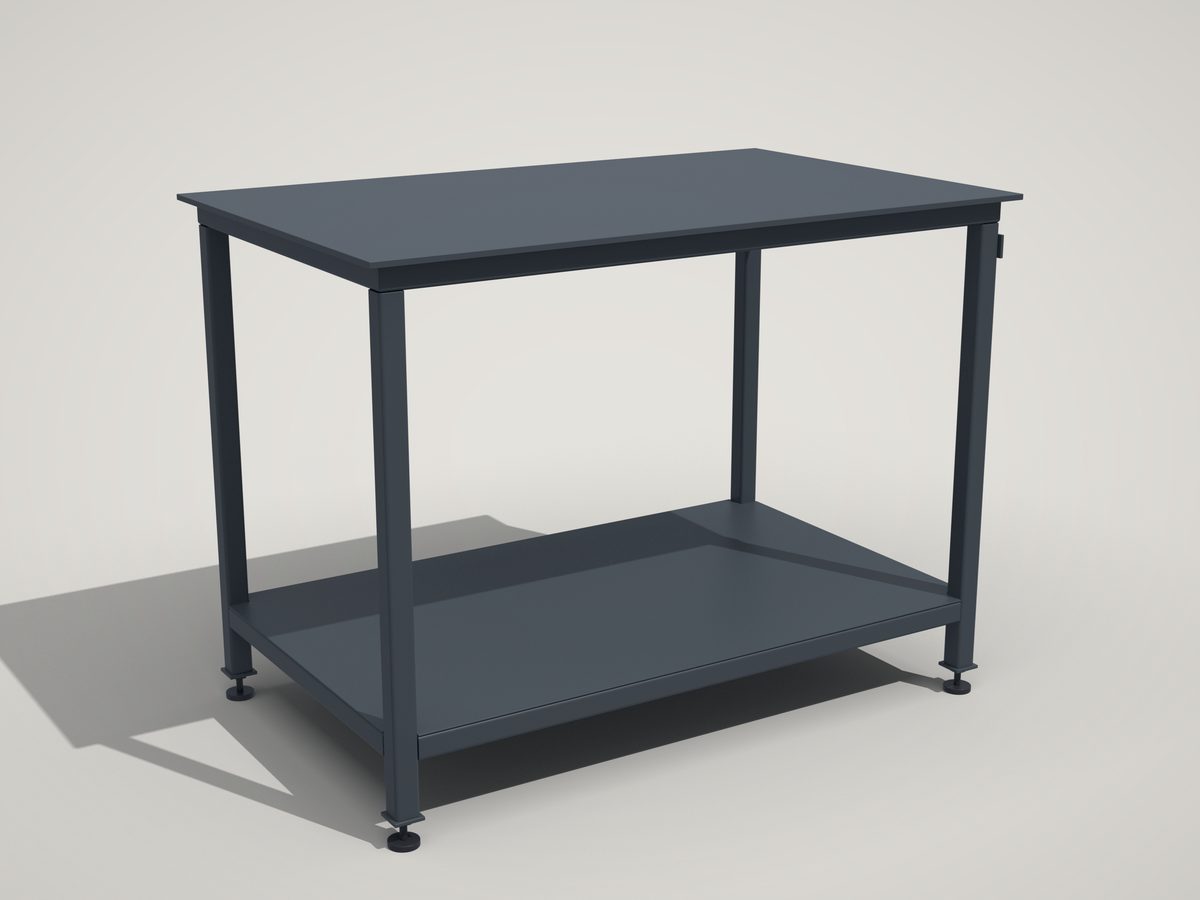
How to build a welding table: an 8 or 10 mm plate top with a 25 mm clamping edge, a mitred SHS 40 frame, stitch welds to keep it flat. Sizes to 1500 x 900.
Guide3 sources read
DIY welding cart: sizes, castors and the bottle
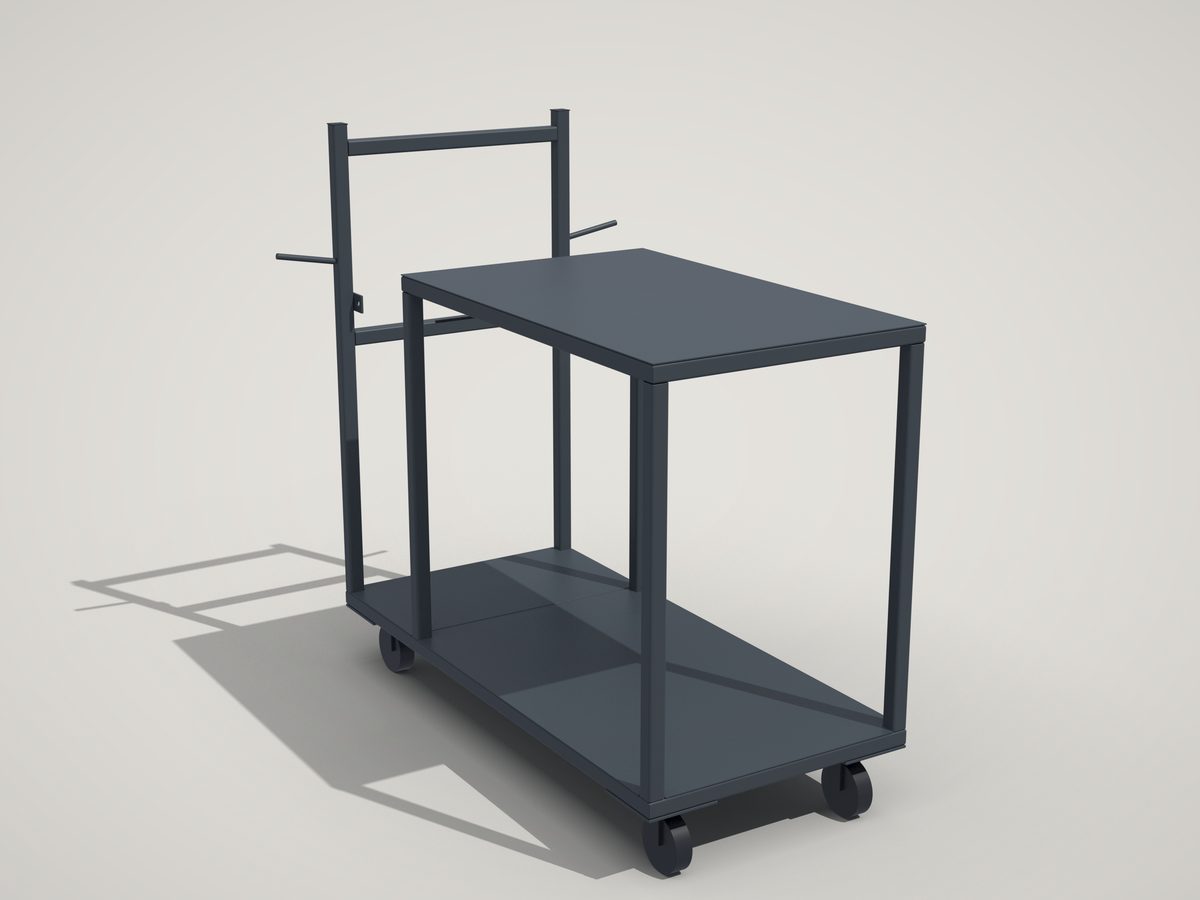
DIY welding cart: a bottle bay for a 200 to 250 mm cylinder, chained; castors rated for three wheels; stable to 15 degrees loaded. Three sizes.
Guide3 sources read
How to build a metal workbench that stays put
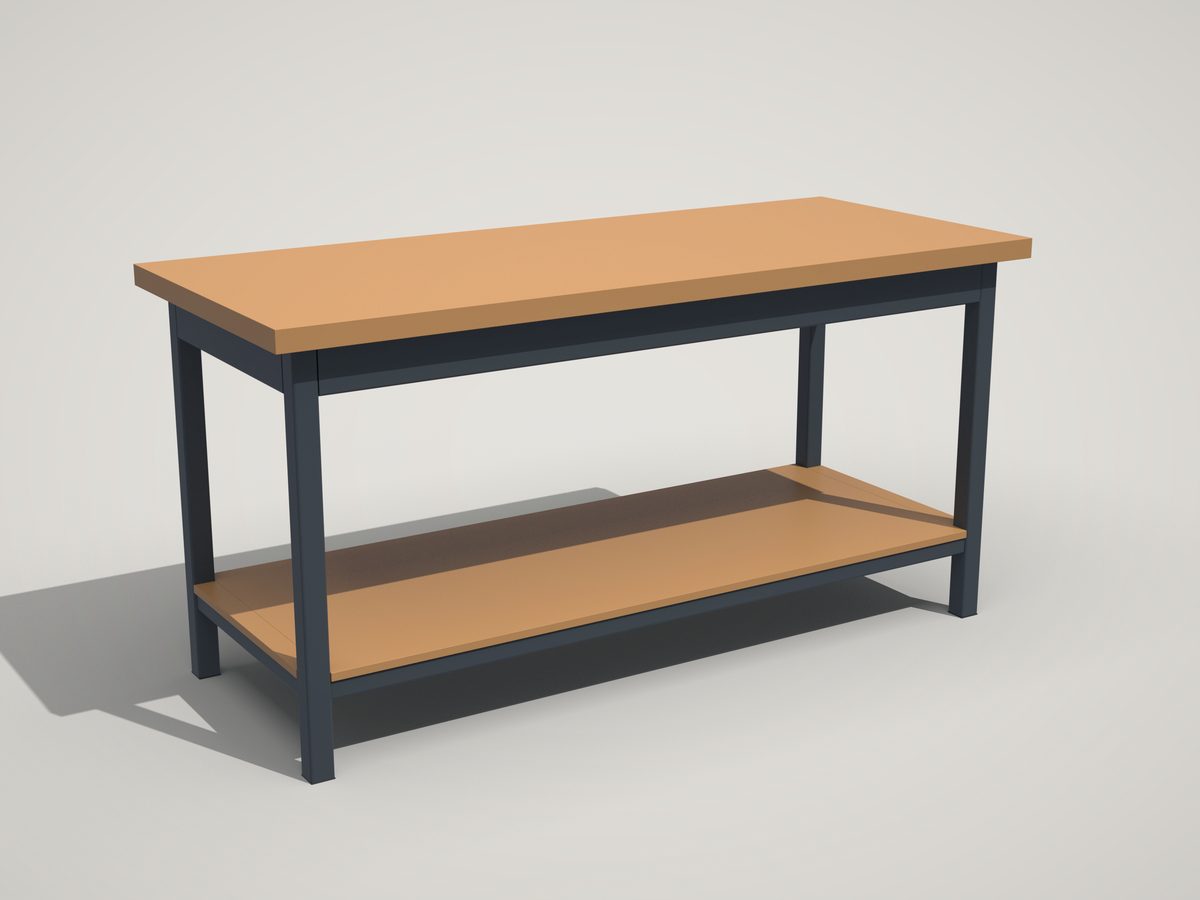
How to build a steel workbench: RHS 100 x 50 rails, SHS 50 legs and a 45 mm timber top, checked for 3.0 kN/m2 and a 2 kN point load. 1.5 to 2.1 m long.
Guide3 sources read