Guides/DIY mobile gantry crane: the build and LOLER
DIY mobile gantry crane: the build and the law
A mobile gantry is the most useful thing in a workshop that lifts engines, castings or machines, and the one build where a mistake can kill. The steel is not hard. What makes it safe is the test before first use, the marking, the hoist and the floor. Here is what the law says, read on the page, and how our plans meet it.
Whoever builds it is its manufacturer
The Supply of Machinery (Safety) Regulations 2008 count a person who makes machinery for their own use in Great Britain as its manufacturer. Build a gantry from our plans and you are its manufacturer in law, even if it never leaves your garage. If you sell it, the full duties of a manufacturer of lifting machinery are yours.
The same regulations set the static test for lifting machinery: as a general rule 1.5 times the safe working load for manually operated machinery and lifting accessories, 1.25 for other machinery, and a dynamic test at 1.1 times, with no permanent deformation. Our gantry plan prints the test for each size: 1.5 times the SWL with a hand hoist, 1.25 times with a powered one, and 1.1 times moving.
| Size | SWL | Overall (mm) | Clear under the beam | Static test, hand hoist | Steel in it |
|---|---|---|---|---|---|
| 500 kg | 500 kg | 3400 x 1500 x 2500 | 2322 mm | 750 kg | 190 kg |
| Standard | 1000 kg | 3400 x 1800 x 3000 | 2797 mm | 1500 kg | 263 kg |
| 2 t | 2000 kg | 4400 x 2200 x 3500 | 3244 mm | 3000 kg | 460 kg |
Swipe the table sideways to see every column.
LOLER: when it applies
The Lifting Operations and Lifting Equipment Regulations 1998 apply to lifting equipment used at work. HSE's Approved Code of Practice, L113, says they apply wherever work is done except for domestic work in a private household. Lift an engine out of your own car in your own garage and LOLER does not bind you. Use the gantry in a business, a garage that charges, a farm or a club with employees, and it does.
At work, lifting equipment needs a thorough examination by a competent person before first use and then at least every 12 months, or every 6 months for an accessory for lifting, such as a lifting beam or a sling, and its safe working load marked on it. Even at home, have it tested and examined before it lifts anything: the hazard does not change with the law.
The build
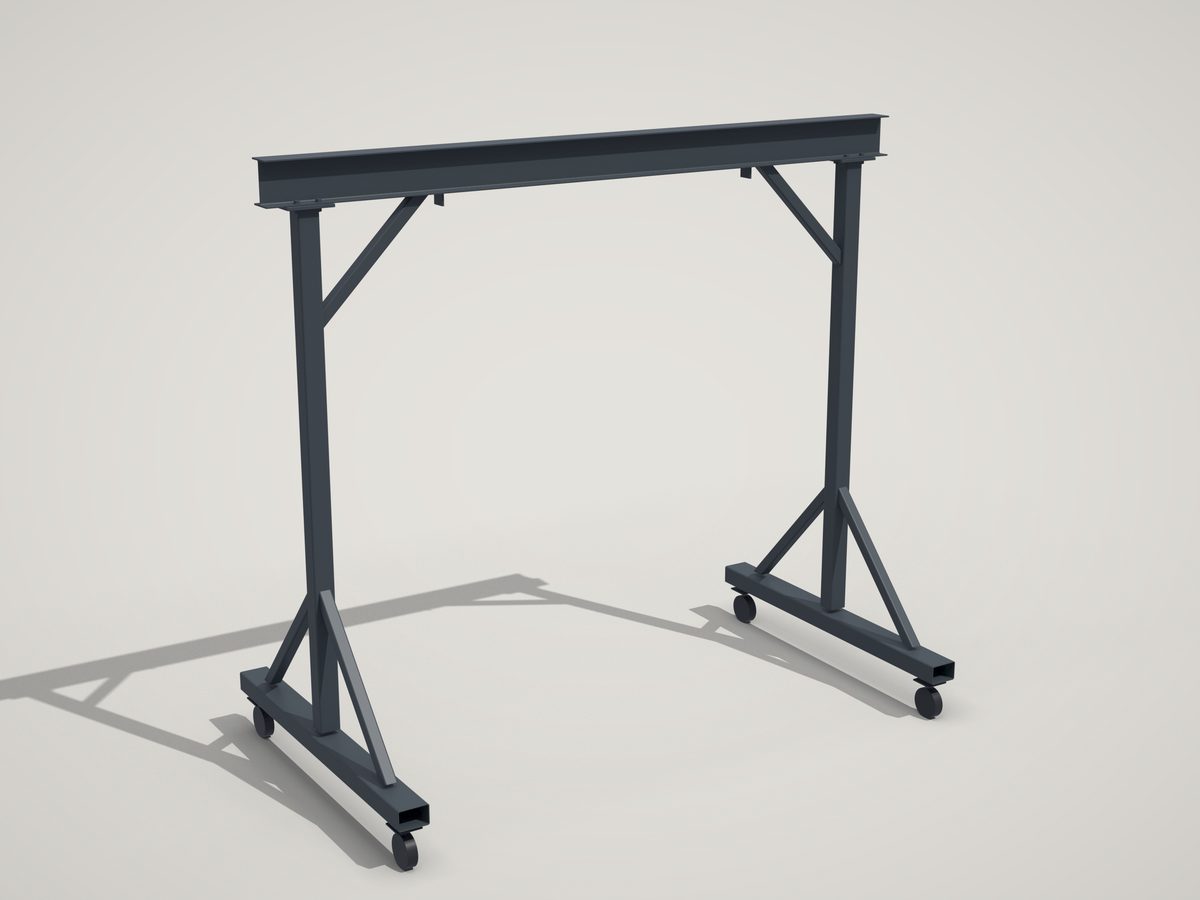
Our gantry is a UB beam bolted onto two braced A-frame ends on castors. The 1 tonne gantry uses a UB 203 x 133 x 25 beam over a 3000 mm span on SHS 100 x 100 x 5 posts and RHS 150 x 100 x 5 base beams, with 2797 mm clear under the beam. At the static test of 1.5 tonnes the beam works at 21 % of its yield with lateral-torsional buckling allowed for, and at its SWL it sags 1.2 mm against our limit of span / 600.
Every load-bearing weld is full strength: the posts to their base beams all round, then the braces. The beam bolts down through its bottom flange onto the head plates with 4 x M16 grade 8.8 bolts each end, and knee braces from each post to the beam's underside stiffen the frame. The end stops go under the bottom flange 100 mm inside each knee brace, so the trolley cannot run into the braces.
Overturning is checked with 5 % of the load pushing sideways at the beam on a 1 % floor slope, our allowance for a load that swings: the 1 tonne gantry has 5.9 times what tips it. The castors are rated 650 kg each, so three of them carry the 1.5 x SWL static test load, the hoist and the 263 kg gantry (601 kg a wheel).
The floor, the hoist and the marking
Sealey's instructions for their own 1 tonne gantry say to use it on a level, firm surface able to take the gantry and its load, recommend concrete, and say never to use it on tarmacadam or other soft surfaces. Our plan's rules are the same: level concrete, castor brakes on before lifting, never moved while loaded.
The SWL of the whole gantry is the lowest of the beam, the frame, the trolley and the hoist. Buy a trolley and hoist rated at least the gantry's SWL, each with its own certificate, and never make your own hooks or chains. Mark the SWL in letters at least 50 mm high on both sides of the beam, as the plan draws it, and keep the test record.
Lifting beams and jib cranes
A lifting beam hangs from a hoist and spreads the slings: it is an accessory for lifting, tested at 1.5 times its SWL and, at work, examined every 6 months. Our lifting beam plan sizes the lugs for bow shackles and keeps the slings hanging straight down.
A pillar jib crane stands on its own concrete pad: our pillar jib crane plan sizes the pad for 250 kg to 1 tonne, from 1300 x 1300 x 700 mm to 2000 x 2000 x 900 mm in C25/30, not loaded until it has cured 28 days (or your engineer confirms its strength), on firm ground. If the ground is soft, made or wet, ask an engineer.
Mistakes we see
A beam chosen by eye. A hoist rated higher than the frame, so the SWL is a guess. A gantry used on a sloping drive or pushed across the floor with an engine hanging off it. No test, no marking, no record. Welding or drilling the frame after it was tested, which means it needs testing again. And anyone standing under the load: never.
The build, step by step
The order we build it in. The plan draws each step with its new parts in orange.
- Cut and prepare
Cut the posts, base beams, braces and beam; drill the head plates, the beam's bottom flange and the castor plates. Mark every part.
- Ends
Lay each end flat, the post square on the middle of its base beam. Weld it all round, full strength, then the braces and the head plate.
- Beam
With the ends on their castors and the brakes on, lift the beam on and bolt it down with 4 x M16 grade 8.8 each end. Weld the knee braces.
- Stops, test and marking
Weld the end stops 100 mm inside each knee brace. Have it proof tested and examined, then mark the SWL on both sides of the beam.
The plan
Each plan comes in 3 sizes, drawn from a checked 3D model: the steel to buy, the cutting list, every part drawn, the build step by step and a DXF for every plate, and the loads it was checked for.
Mobile lifting gantry plans
A mobile workshop gantry: two braced post ends on braked castors and a UB beam for a trolley and hoist. 500 kg to 2 t SWL.
£53 sizes, instant download
AddBuilding more than one? Every lifting gear plan is in the lifting gear bundle for £9 (3 plans, every size); any 3 plans are £12.
Questions
Does a home-made gantry crane need testing?
Yes. Whoever builds it is its manufacturer under the Supply of Machinery (Safety) Regulations 2008, and the static test for manually operated lifting machinery is 1.5 times the SWL, with a dynamic test at 1.1 times.
Does LOLER apply to my garage?
Not to domestic work in a private household (HSE L113). It does apply as soon as the gantry is used for work: a business, employees, paying customers.
How often does a gantry need examining?
At work, at least every 12 months, and every 6 months for accessories such as lifting beams and slings (LOLER regulation 9), and after any overload, damage or repair.
Can I use a gantry on tarmac or gravel?
No. Use it on level concrete. Sealey's own gantry instructions say never on tarmacadam or other soft surfaces.
What beam does a 1 tonne gantry need?
Our 1 tonne plan uses a UB 203 x 133 x 25 over 3000 mm, checked for buckling at the 1.5 tonne test load and for a span / 600 sag at SWL.
Can I lift people with it?
No. Never lift people, never stand under the load, and never lift over the SWL marked on the beam.
Sources
Read on the published page. The plan figures are our own, taken off the checked 3D model. Where the law is quoted it is the law in England unless it says otherwise; your engineer, insurer or competent person decides your build.
- The Supply of Machinery (Safety) Regulations 2008, regulation 2, reg 2(2), manufacturer“for that person's own use in Great Britain”
- The Supply of Machinery (Safety) Regulations 2008, Schedule 2, Annex I, 4.1.2.3 Mechanical strength“manually-operated machinery and lifting accessories: 1.5”
- HSE L113, Safe use of lifting equipment: LOLER Approved Code of Practice and guidance, 2nd edition, para 36“except for domestic work in a private household”
- The Lifting Operations and Lifting Equipment Regulations 1998 (LOLER), regulation 9, reg 9(3)(a)(ii)“in the case of other lifting equipment, at least every 12 months”
- The Lifting Operations and Lifting Equipment Regulations 1998 (LOLER), regulation 9, reg 9(3)(a)(i)“an accessory for lifting, at least every 6 months”
- Sealey SG1000 1 tonne portable gantry crane, instructions, Safety, item 9“Never use the gantry on tarmacadam or other soft surfaces”
Where next
Mobile lifting gantry plans
A mobile workshop gantry: two braced post ends on braked castors and a UB beam for a trolley and hoist. 500 kg to 2 t SWL.
£53 sizes, instant download
Add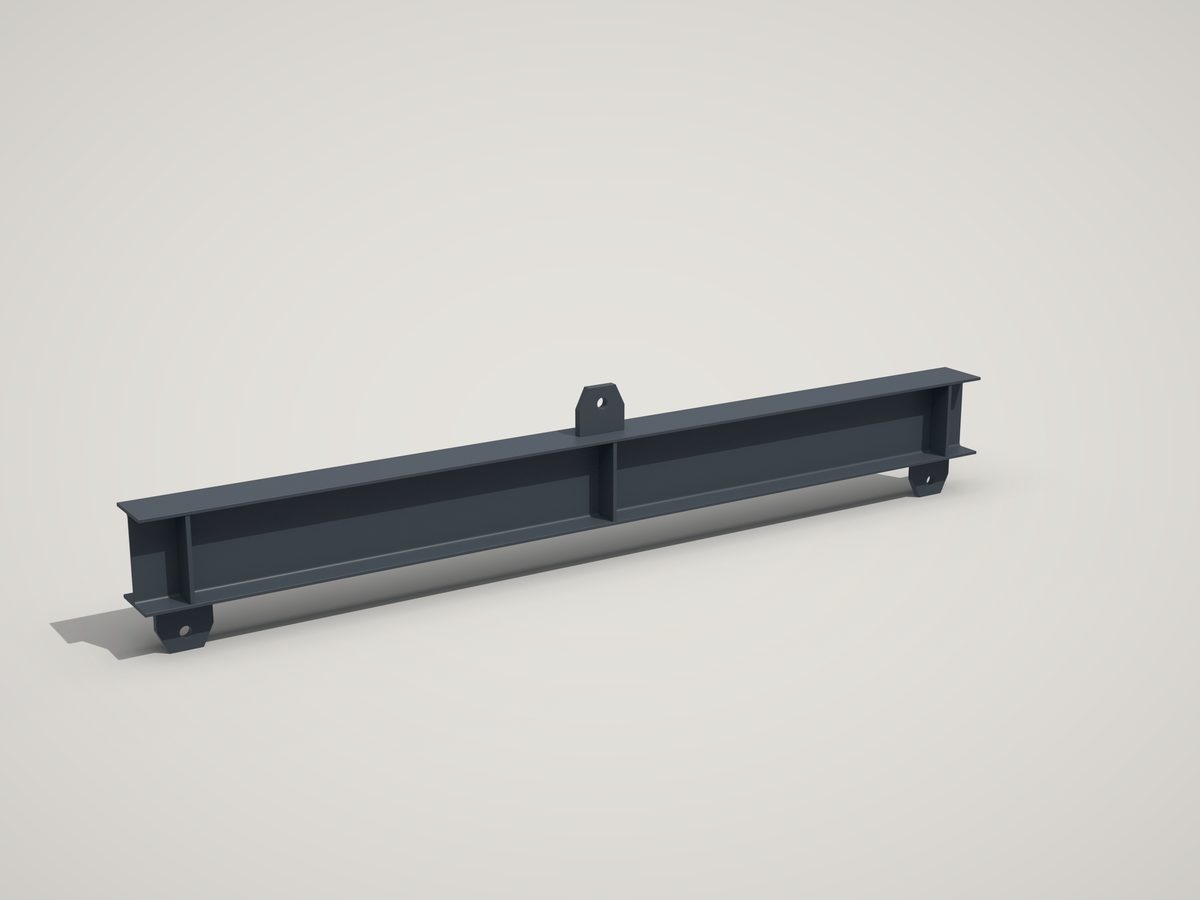
Lifting beam plans
A below-the-hook lifting beam: one top lug for the crane hook, a lug each end for the slings, every lug and weld checked.
£53 sizes, instant download
Add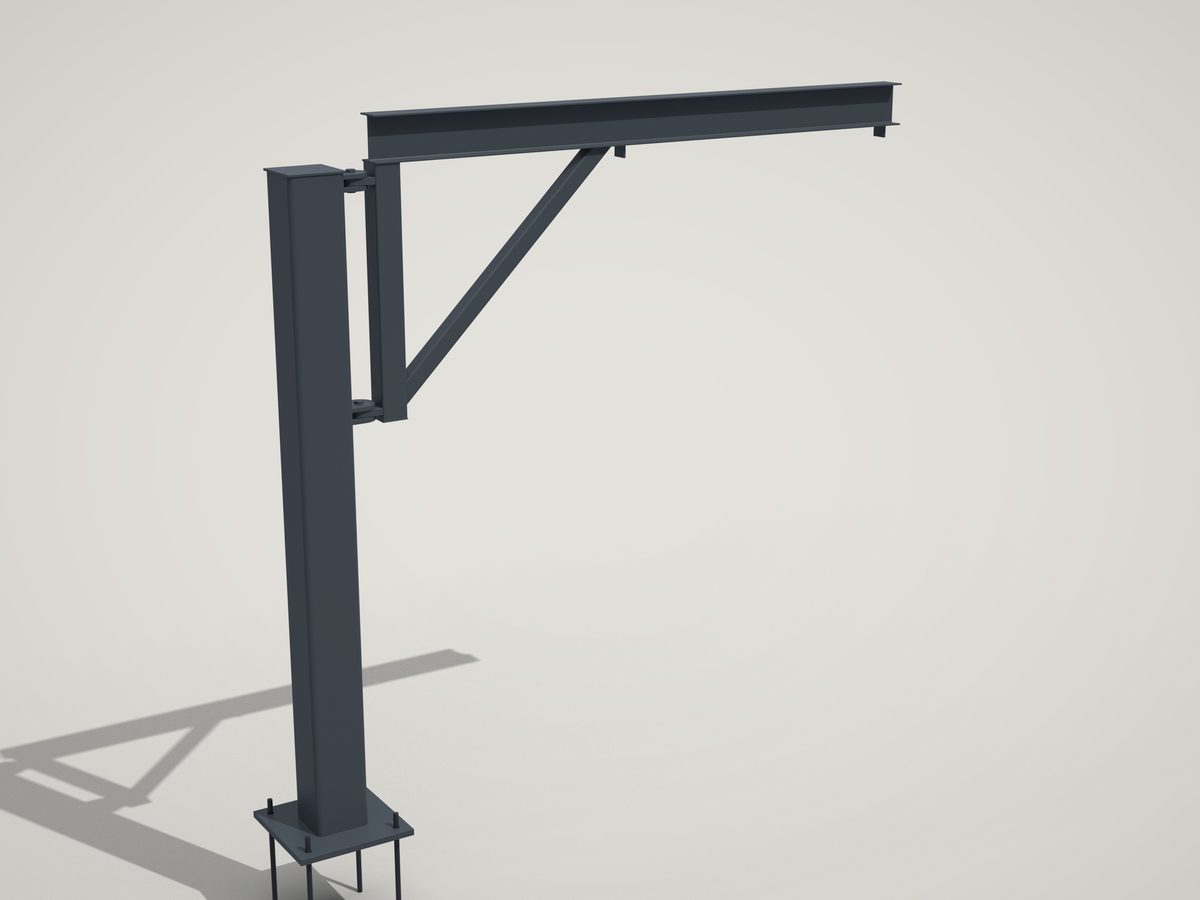
Pillar jib crane plans
A free-standing pillar jib crane: a UB arm and king post hinged on pins in fork brackets, on a box-section pillar and a cast-in base.
£53 sizes, instant download
Add
How to build a welding table: steel and sizes
How to build a welding table: an 8 or 10 mm plate top with a 25 mm clamping edge, a mitred SHS 40 frame, stitch welds to keep it flat. Sizes to 1500 x 900.
Guide3 sources read
More guides
How to build a welding table: steel and sizes
How to build a welding table: an 8 or 10 mm plate top with a 25 mm clamping edge, a mitred SHS 40 frame, stitch welds to keep it flat. Sizes to 1500 x 900.
Guide3 sources read
DIY welding cart: sizes, castors and the bottle
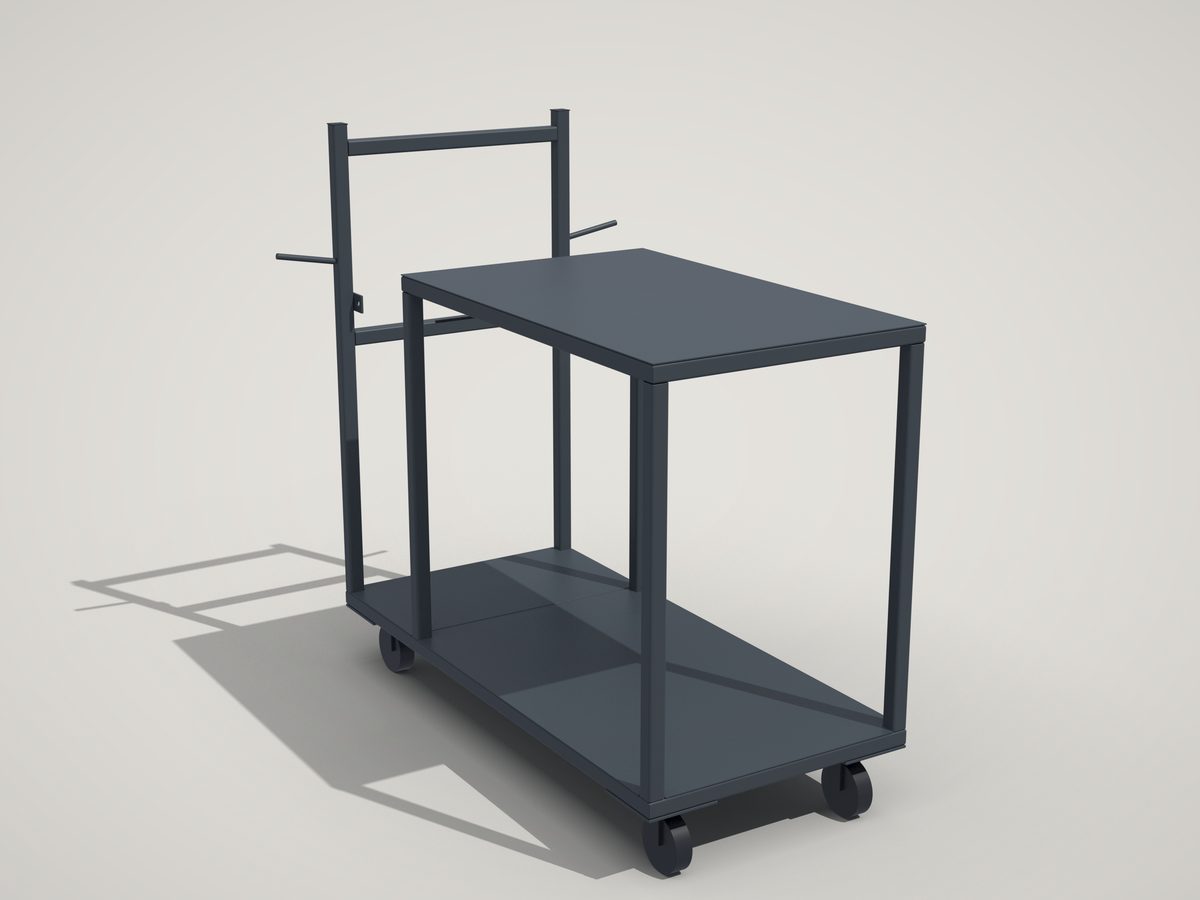
DIY welding cart: a bottle bay for a 200 to 250 mm cylinder, chained; castors rated for three wheels; stable to 15 degrees loaded. Three sizes.
Guide3 sources read

How to build a metal workbench that stays put
How to build a steel workbench: RHS 100 x 50 rails, SHS 50 legs and a 45 mm timber top, checked for 3.0 kN/m2 and a 2 kN point load. 1.5 to 2.1 m long.
Guide3 sources read