Guides/Welding at home: fume, fire and gas bottles
Welding at home: fume, fire and gas bottles
Everything we sell a plan for is welded, and most of it is welded at home. The law that protects welders at work does not reach a private garage, but the fume, the light and the fire risk are the same. Here is what HSE says, read on its own pages, and what it means for a home workshop.
Fume: the change in 2019
In February 2019 HSE changed its position: exposure to all welding fume, including mild steel welding fume, can cause lung cancer. For welding at work it now expects engineering controls for all welding indoors, such as local exhaust ventilation, and where that alone does not control exposure, suitable respiratory protection as well. For welding outdoors it expects respiratory protection.
HSE's guidance on controls says on-torch extraction can be very effective for MIG welding, and that in most workshops natural ventilation from open doors and windows is not enough to disperse the fume. For a mask, it points arc welders to a powered or supplied-air respirator with an assigned protection factor of at least 20.
In a garage that means: extraction at the arc, not a door left open; a fan that pulls fume away from your face, never towards it; and a powered respirator under the helmet if you weld for long. HSE's rules are written for workplaces, but a hobby welder's lungs are no different.
Galvanised steel and coatings
HSE says metal fume fever, a flu-like illness, is usually linked to welding or hot work on galvanised metals. Grind the zinc back well clear of the joint before you weld galvanised steel, extract the fume, and weld bare steel first and galvanise after where you can. Paint, oil and plastic coatings give off their own fume: clean back to bright metal.
Never galvanise anything that will sit in a fire, such as a fire pit or barbecue. Our finishing guide explains why.
Light, eyes and screens
Arc light burns eyes and skin. HSE describes arc eye as an acute injury to the front of the eye after exposure to radiation from welding, and it hits the people walking past as well as the welder. Wear a helmet with a filter suited to the process and current, cover your arms and neck, and screen the arc from anyone else.
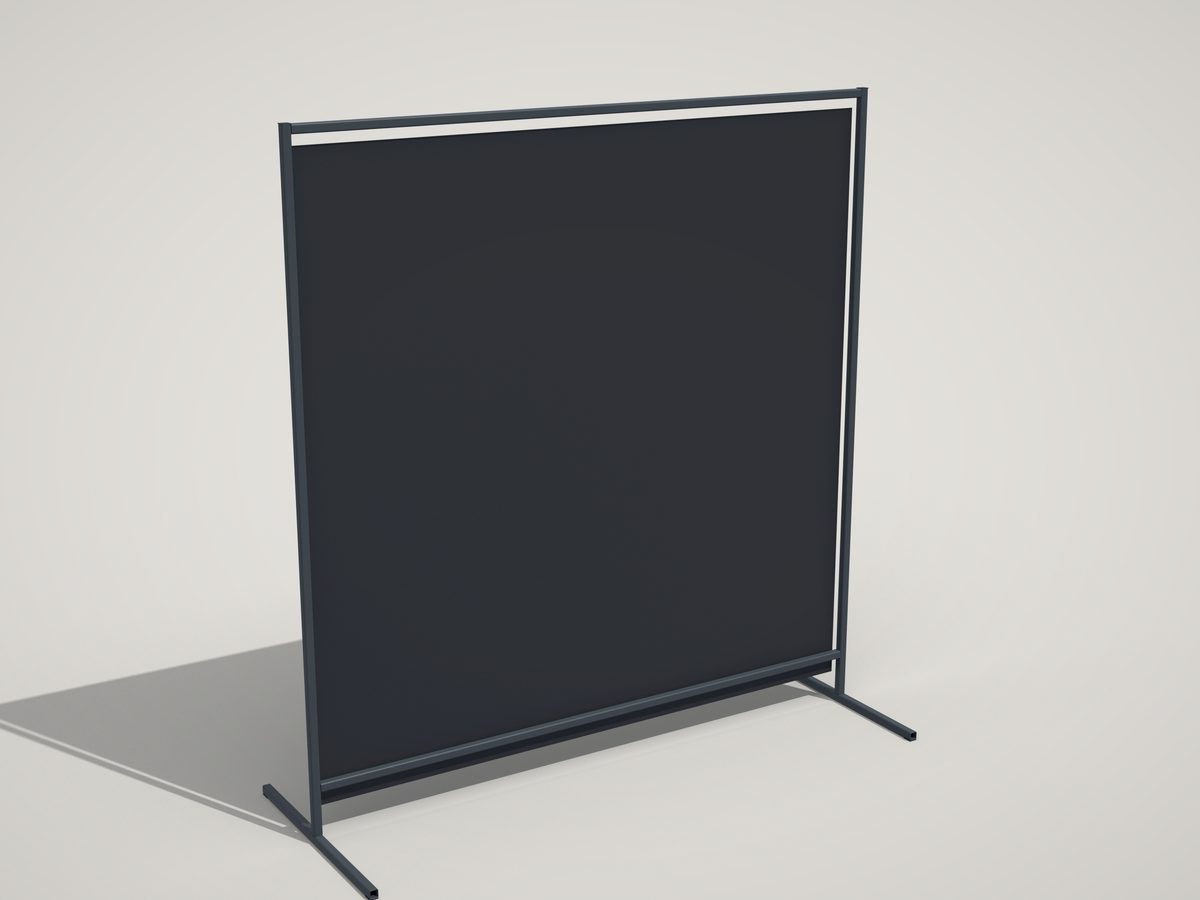
Our welding screen plan is a free-standing frame for a welding curtain, and its rule is to use only a curtain marked to EN ISO 25980, the standard for transparent welding curtains. It is a screen round the work, not a wall to weld against.
Fire and gas cylinders
HSE's guidance for workshops is never to apply heat to containers, tanks or drums that may contain flammable residues, and to remove anything flammable nearby before hot work. Sweep up sawdust and grinding dust, keep a fire extinguisher by the door, and check the bench and floor for smouldering spatter before you leave.
Store gas cylinders upright and chain them to racks or suitable trolleys so they cannot fall; store full and empty ones in a well-ventilated place, and change cylinders away from sources of ignition. Close the cylinder valve when you stop for the day, not just the regulator, and keep cars, fuel and paint tins out of an attached garage while you weld. Our welding cart guide covers sizing the bottle bay and chain.
A garage set up for welding
Think about where the fume goes before you strike an arc. Work with any fan or extractor drawing air away from you and out of the building, with the extraction close to the arc, and keep your head out of the plume rising off the work. Weld on a steel table, never on a timber bench, and keep a clear floor round it.
Before you start, move anything that burns out of reach of spatter: paint tins, solvents, rags, cardboard and the car. Screen the arc from the door so nobody walking in looks straight at it. When you stop, check the work, the floor and any gaps in the walls for smouldering spatter, and do not leave the garage straight away after hot work.
Noise, power and setting up
HSE notes that most arc welding processes, except TIG, make harmful noise: wear ear protection for welding and grinding. Check what supply your welder needs before you buy it: the plate on the machine gives its input current, and a set that trips a 13 A plug needs its own supply, fitted by an electrician. Plug in through an RCD, keep the leads off wet floors, check them for damage before each use, and put the earth clamp on the job itself, close to the weld.
Set up so the work comes to you: a welding table that earths the job and holds it flat, and a welding cart that keeps the cylinder chained and the leads off the floor.
The plan
Each plan comes in 3 sizes, drawn from a checked 3D model: the steel to buy, the cutting list, every part drawn, the build step by step, and the loads it was checked for.
Small makeWelding screen frame plans
A free-standing frame for a welding curtain: box-section uprights on long feet, a top rail to hang the curtain, glides.
£43 sizes, instant download
AddBuilding more than one? Every workshop plan is in the workshop bundle for £15 (29 plans, every size); any 3 plans are £12.
Questions
Is mild steel welding fume dangerous?
Yes. Since February 2019 HSE's position is that all welding fume, including mild steel fume, can cause lung cancer. Extract it at the arc and wear suitable respiratory protection.
Is an open garage door enough ventilation for welding?
No. HSE says natural ventilation from open doors and windows is not sufficient in most workshops. Use extraction at the arc, such as on-torch extraction for MIG.
What mask should I wear for welding?
HSE points arc welders to a powered or supplied-air respirator with an assigned protection factor of at least 20, worn with the welding helmet.
Can I weld galvanised steel?
Only with care: HSE links metal fume fever to hot work on galvanised metals. Grind the zinc back, extract the fume, and galvanise after welding where you can.
How should gas bottles be stored at home?
Upright, chained to a rack or a suitable trolley, in a well-ventilated place away from ignition. That is HSE's guidance for workshops.
Do these rules apply to a hobby welder?
HSE's rules are written for work. At home they are not enforced on you, but the fume, light and fire risks are identical.
Sources
Read on the published page. The plan figures are our own, taken off the checked 3D model. Where the law is quoted it is the law in England unless it says otherwise; your engineer, insurer or competent person decides your build.
- HSE Safety Alert STSU1-2019: change in enforcement expectations for mild steel welding fume, Bulletin STSU1-2019, February 2019“all welding fume, including mild steel welding fume, can cause lung cancer”
- HSE Safety Alert STSU1-2019: change in enforcement expectations for mild steel welding fume, Outdoor welding“Appropriate RPE should be provided for welding outdoors.”
- HSE: Controlling the risks from welding, Local exhaust ventilation“On-torch extraction can be very effective for MIG welding”
- HSE: Controlling the risks from welding, General ventilation“natural ventilation from open doors and windows is not sufficient”
- HSE: Controlling the risks from welding, Respiratory protective equipment“an APF of at least 20”
- HSE: Health risks from welding, Metal fume fever“Metal fume fever is usually linked to welding or hot work on galvanised metals”
- HSE: Health risks from welding, Ultraviolet radiation“Arc-eye is an acute injury to the front of the eye”
- HSE: Welding and flame cutting (motor vehicle repair), Gas cylinders“chain cylinders to racks or suitable trolleys to prevent them falling”
- HSE: Welding and flame cutting (motor vehicle repair), Fire precautions“Never apply heat to containers, tanks or drums that may contain flammable residues”
Where next
Small makeWelding screen frame plans
A free-standing frame for a welding curtain: box-section uprights on long feet, a top rail to hang the curtain, glides.
£43 sizes, instant download
Add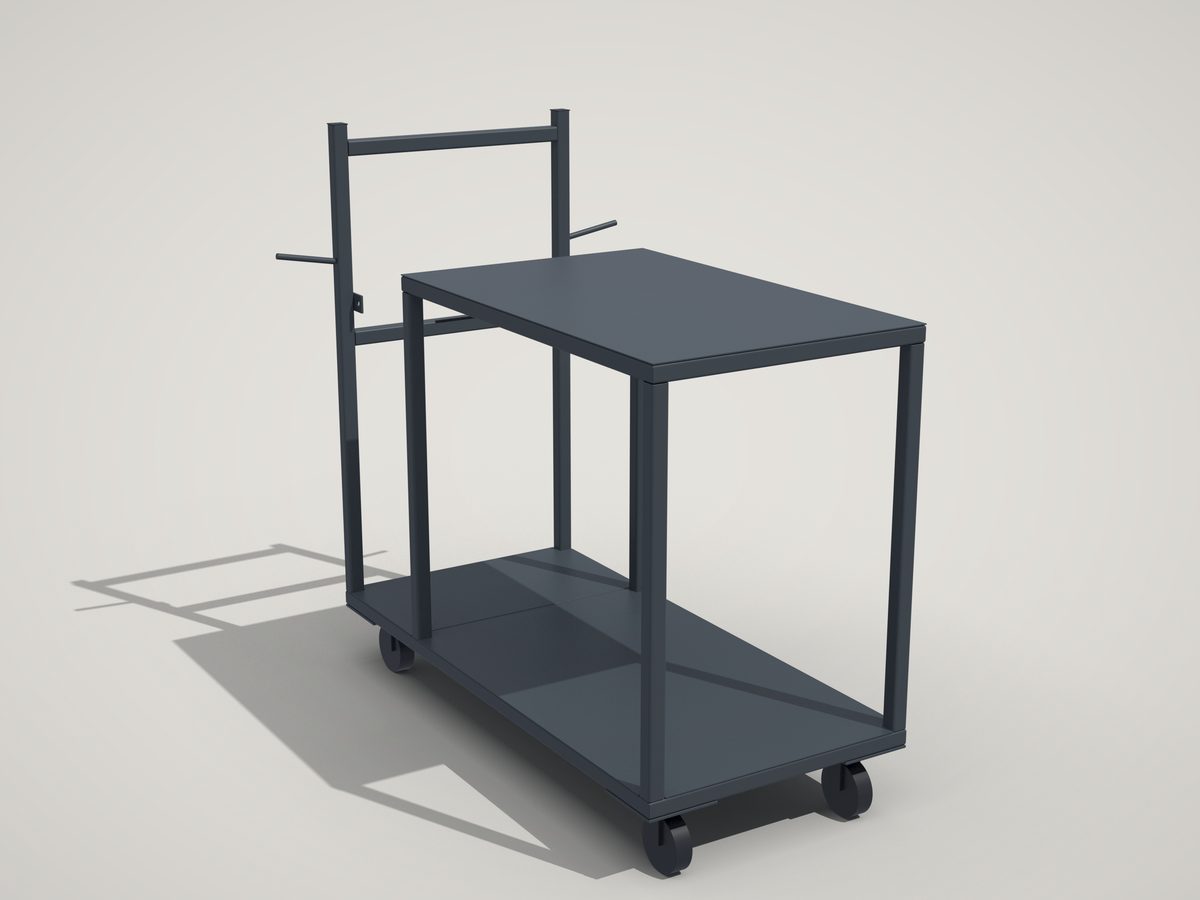
Welding cart plans
A box-section trolley for a MIG welder and its gas bottle: two shelves, a chained bottle bay, handle, castors.
£53 sizes, instant download
Add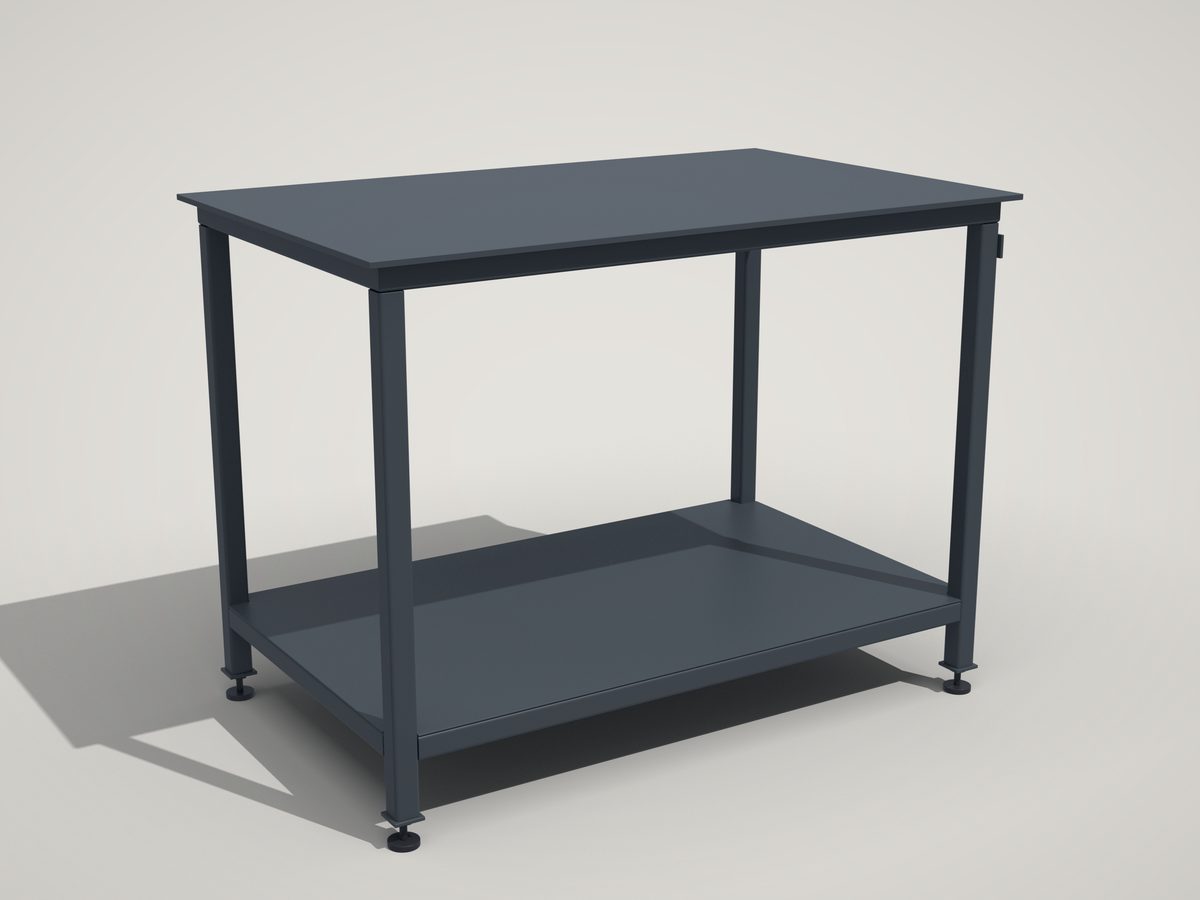
Welding table plans
A plate-topped fabrication table: clamping edge all round, box-section frame, a shelf under and levelling feet.
£53 sizes, instant download
AddHow to build a welding table: steel and sizes
How to build a welding table: an 8 or 10 mm plate top with a 25 mm clamping edge, a mitred SHS 40 frame, stitch welds to keep it flat. Sizes to 1500 x 900.
Guide3 sources read
More guides
How to build a welding table: steel and sizes
How to build a welding table: an 8 or 10 mm plate top with a 25 mm clamping edge, a mitred SHS 40 frame, stitch welds to keep it flat. Sizes to 1500 x 900.
Guide3 sources read
DIY welding cart: sizes, castors and the bottle
DIY welding cart: a bottle bay for a 200 to 250 mm cylinder, chained; castors rated for three wheels; stable to 15 degrees loaded. Three sizes.
Guide3 sources read
How to build a metal workbench that stays put
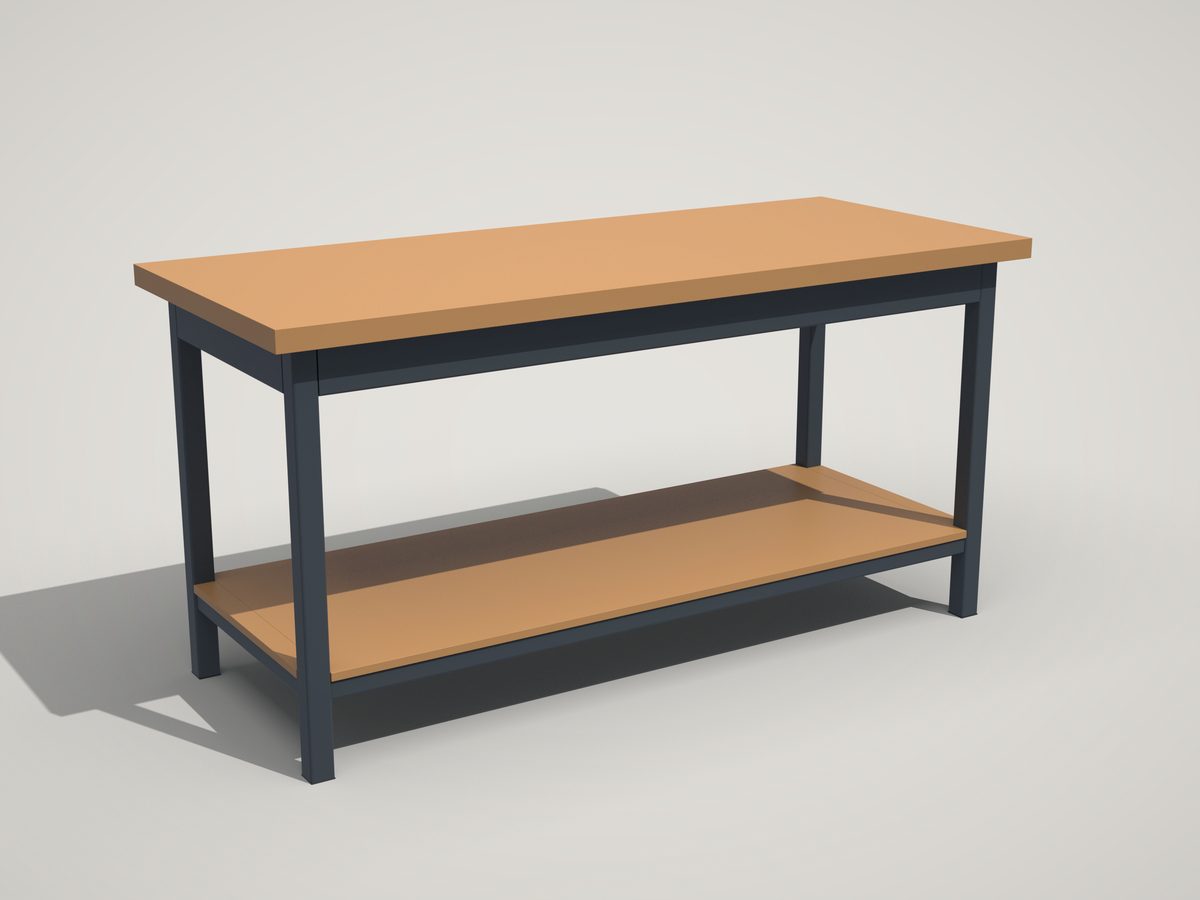
How to build a steel workbench: RHS 100 x 50 rails, SHS 50 legs and a 45 mm timber top, checked for 3.0 kN/m2 and a 2 kN point load. 1.5 to 2.1 m long.
Guide3 sources read