Guides/How to make a steel fire pit: plate and safety
How to make a steel fire pit
A steel fire pit is a box of plate that has to survive a fire in it every week, stand on the patio without scorching it, and never poison anyone. The decisions that matter are the plate, the air and where it goes. Here they are, from our fire pit plan and the rules that apply in England.
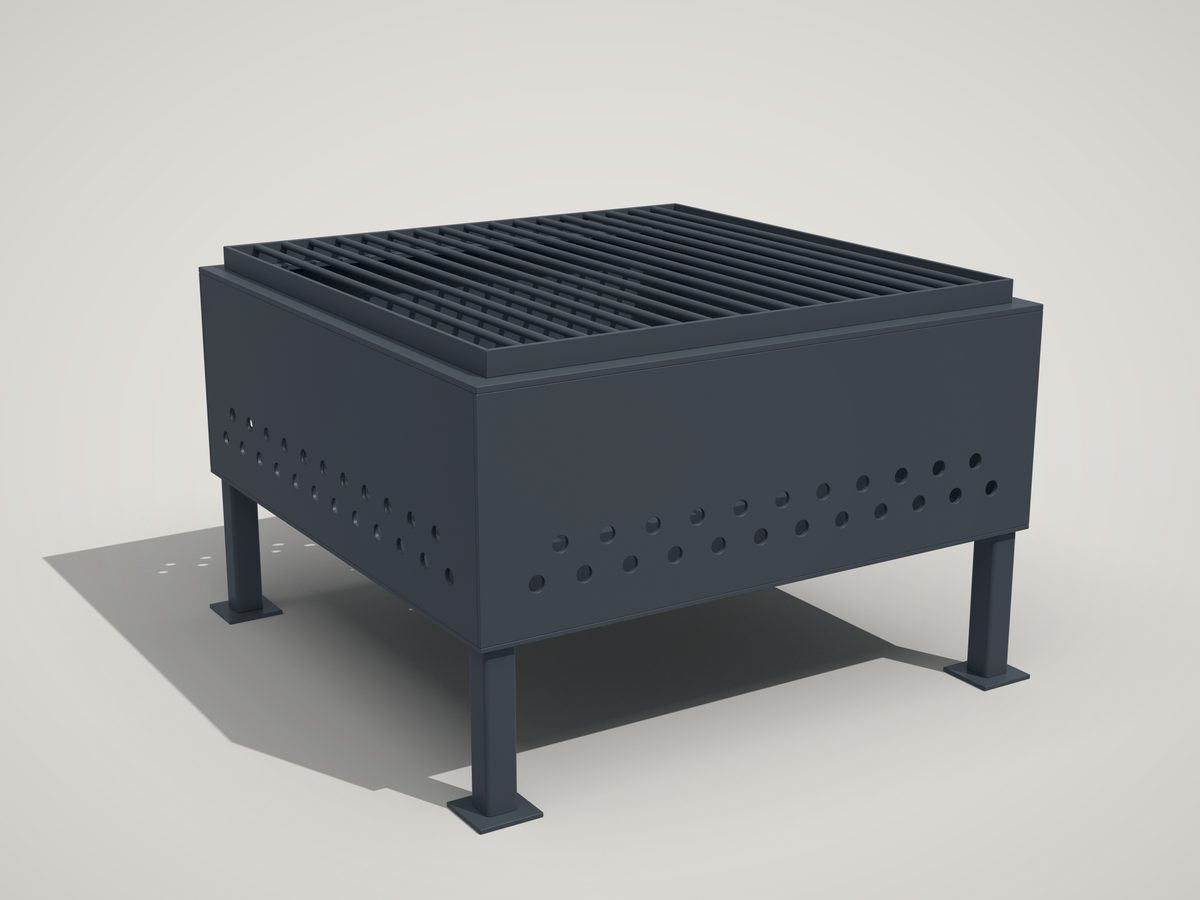
Plate thickness: why 5 or 6 mm
Thin steel in a fire warps and then burns through. Our plan uses 5 mm plate for the sides and base of the 600 mm pit and 6 mm on the 800 and 1000 mm pits, and its own check sets 5 mm as the minimum against warping and burn-through. That is our rule, not a standard's. The European standard for factory barbecues, EN 1860-1 (read from its 2023 draft), sets 0.7 or 0.8 mm as the minimum steel for a fuel compartment; a fire pit you build is meant to outlast a factory barbecue, so ours is several times as thick.
The flat-bar rim welded round the top edge does two jobs: it stiffens the sides so they do not bow outwards in the heat, and it carries the grill. Without it a square pit's sides open up after a few fires.
Have the four sides and base laser cut from the plan's DXFs if you can. The air holes are in the side DXFs, and a laser or plasma cutter puts them where they should be in minutes. Grind the cut edges smooth.
| Size | Overall (mm) | Plate | Base above the ground | Steel in it |
|---|---|---|---|---|
| Small | 600 x 600 x 451 | 5 mm sides and base | 200 mm | 51 kg |
| Standard | 800 x 800 x 492 | 6 mm sides and base | 200 mm | 96 kg |
| Large | 1000 x 1000 x 532 | 6 mm sides and base | 200 mm | 140 kg |
Swipe the table sideways to see every column.
Air under and through the fire
A fire needs air from below, and the ground under a fire pit needs protecting from the heat. Our pit stands its base 200 mm off the ground on four SHS 40 legs with foot pads; the plan's check calls for 150 mm at least. Air holes low in the sides feed the fire and drain holes in the base let rain out, so the bottom does not sit in a puddle of ash paste and rust through.
Stand it on paving, gravel or bare ground, never on decking or grass. The plan draws it 3 m from buildings, fences, trees and anything that burns, and out from under gazebos and overhanging branches. That 3 m figure is ours, a sensible clearance for an open fire in a garden; there is no single legal distance.
Never galvanise a fire pit
Hot-dip galvanising is the best finish for most outdoor steel, and the worst for a fire pit. Zinc gives off fumes when it is heated, and HSE links metal fume fever with hot work on galvanised metals. The American Galvanizers Association gives 200 C as the limit for continuous exposure of a galvanized coating, and a wood fire runs far hotter.
Leave the pit bare to rust to a brown patina, which is what most people want, or paint the outside with high-temperature stove paint rated to 600 C. Use plain steel fixings, not zinc-plated ones, anywhere near the fire. If you cook on the grill, keep it bare and oiled or use 304 stainless.
The rules for a fire in your garden
There is no law against a garden fire in England, but there are laws against the smoke becoming a nuisance. GOV.UK says your council must investigate complaints of smoke that could be a statutory nuisance, and you can be fined if you let the smoke drift across a road and become a danger to traffic.
If you live in a smoke control area, GOV.UK says you can use outdoor barbecues, chimineas, fireplaces or pizza ovens. It does not name fire pits, so check with your council if you are unsure.
Burn dry wood. It smokes less and burns hotter. Wood sold in England in volumes under 2 m3 must be certified Ready to Burn, with a moisture content of 20 % or less; if you season your own, our log store guide covers keeping it dry.
Mistakes we see
A pit made from 2 or 3 mm sheet. No rim, so the sides bow. No drain holes. A galvanised bowl or zinc-plated bolts. A pit on decking because it has legs. Petrol to light it: the plan says never use petrol, paraffin or any accelerant. And a pit left burning with children or dogs about: the whole bowl gets hot, not just the inside.
The build, step by step
The order we build it in. The plan draws each step with its new parts in orange.
- Cut and prepare
Have the base and four sides laser cut from the DXFs, air holes included. Drill the drain holes. Cut the legs, rim and grill bars.
- Bowl
Stand the sides on the base, outside faces flush, clamp the corners square with magnetic clamps, tack, check, weld inside and out.
- Rim
Weld the flat-bar rim round the top edge, flush with the outside, corners mitred.
- Legs
Turn the bowl over and weld a leg under each corner, square to the base, with a foot pad under each.
- Grill
Weld the grill bars across the grill frame, sized to sit on the rim. Leave the steel bare, or stove-paint the outside.
The plan
Each plan comes in 3 sizes, drawn from a checked 3D model: the steel to buy, the cutting list, every part drawn, the build step by step and a DXF for every plate, and the loads it was checked for.
Building more than one? Every garden plan is in the garden bundle for £15 (42 plans, every size); any 3 plans are £12.
Questions
What thickness steel for a fire pit?
5 mm at least. Our plan uses 5 mm on the 600 mm pit and 6 mm on the 800 and 1000 mm pits, with a flat-bar rim to stop the sides warping.
Can I galvanise a fire pit?
No. Zinc gives off fumes when heated: HSE links metal fume fever to hot work on galvanised metal. Leave it bare or use stove paint rated to 600 C on the outside.
How far should a fire pit be from the house?
Our plan says 3 m from buildings, fences, trees and anything that burns, on paving, gravel or bare ground. There is no single legal distance; that is our working figure.
Is a fire pit allowed in a smoke control area?
GOV.UK says outdoor barbecues, chimineas, fireplaces and pizza ovens can be used in smoke control areas. It does not mention fire pits; ask your council if you are unsure.
Why does it need holes in the base?
To drain rain. Ash and water make a paste that rusts the base through. The air holes in the sides feed the fire.
Can I cook on it?
Yes, on the grill that sits on the rim, up to 20 kg on our plan. For a cooking height and a charcoal shelf, see our charcoal BBQ guide.
Sources
Read on the published page. The plan figures are our own, taken off the checked 3D model. Where the law is quoted it is the law in England unless it says otherwise; your engineer, insurer or competent person decides your build.
- prEN 1860-1:2023, Appliances, solid fuels and firelighters for barbecueing, Part 1 (publisher's preview), 4.2.3.1, Table 1“Minimum thickness of steel sheet for fuel compartments”
- HSE: Health risks from welding, Metal fume fever“Metal fume fever is usually linked to welding or hot work on galvanised metals”
- American Galvanizers Association: Performance and inspection of HDG exposed to extreme temperatures, Recommended maximum temperature“long-term, continuous exposure is 392 F (200 C)”
- GOV.UK: Garden bonfires, the rules, Smoke and traffic“allow the smoke to drift across the road and become a danger to traffic”
- GOV.UK: Smoke control areas, the rules, Outdoor appliances“You can use outdoor barbecues, chimineas, fireplaces or pizza ovens in smoke control areas”
- GOV.UK: Selling wood for domestic use in England, Ready to Burn certification“This confirms it has a moisture content of 20% or less.”
Where next
Fire pit plans
A square steel plate fire pit on legs: laser-cut air holes, a drained base, a flat-bar rim and a grill that sits on it.
£53 sizes, instant download
Add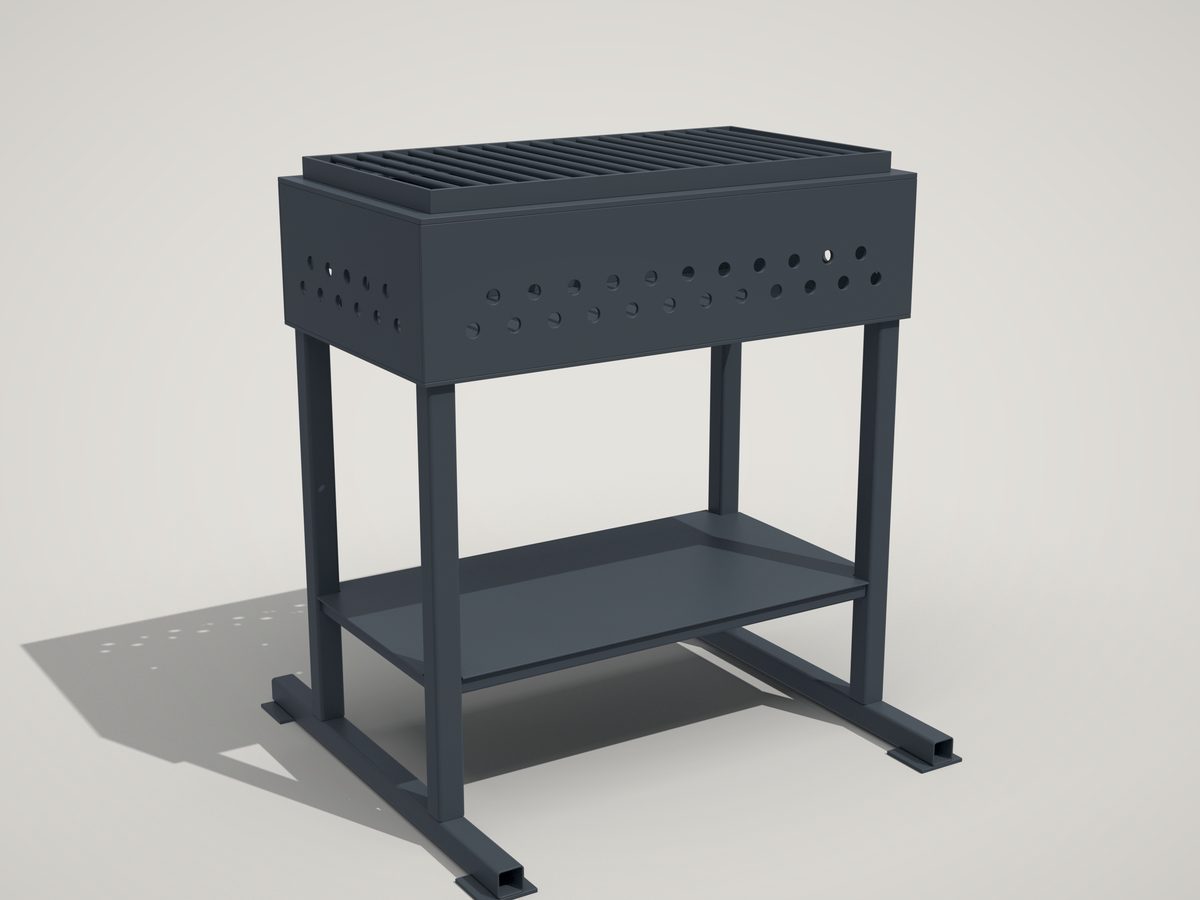
Charcoal BBQ plans
A standing charcoal BBQ: a 5-6 mm plate firebox at worktop height, a grill on the rim, braced legs and a charcoal shelf.
£53 sizes, instant download
AddHow to build a charcoal BBQ from steel plate
How to build a charcoal BBQ from steel: a 5 or 6 mm plate firebox at about 860 mm high, a grill on the rim, braced legs, and only ever used outdoors.
Guide6 sources read
Galvanise, powder coat or paint outdoor steel
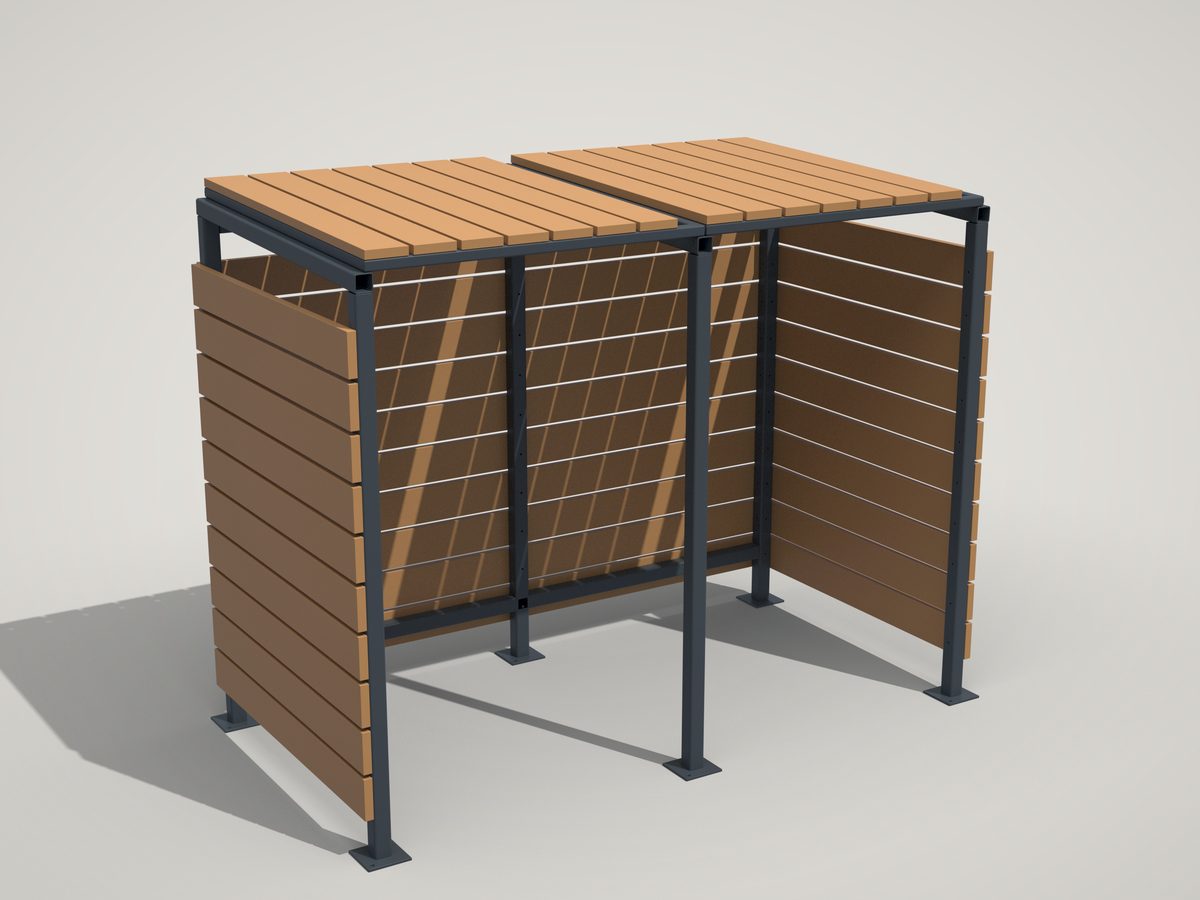
Galvanise, powder coat or paint: EN ISO 1461 asks for 85 µm of zinc on steel over 6 mm, vent holes from 10 mm, never galvanising what sits in a fire.
Guide8 sources read
More guides
How to build a welding table: steel and sizes
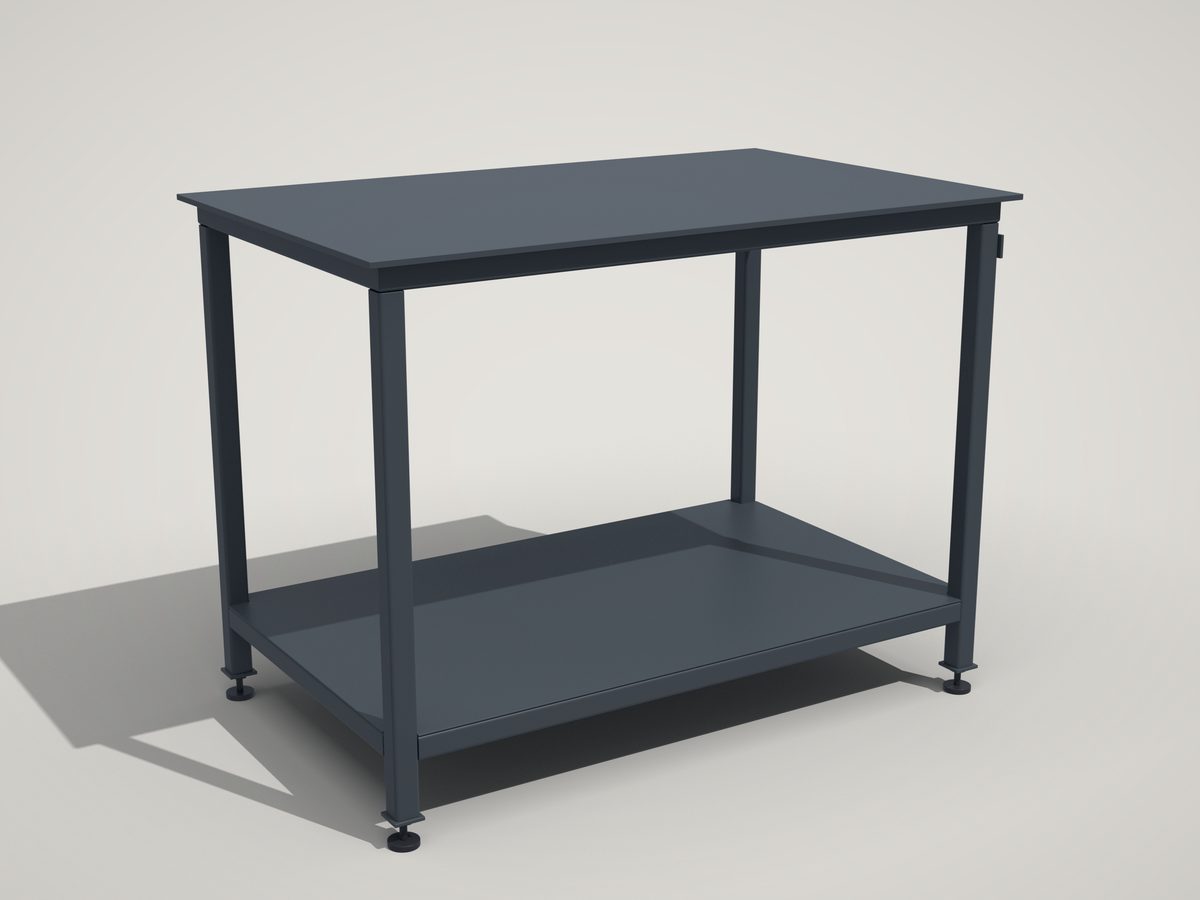
How to build a welding table: an 8 or 10 mm plate top with a 25 mm clamping edge, a mitred SHS 40 frame, stitch welds to keep it flat. Sizes to 1500 x 900.
Guide3 sources read
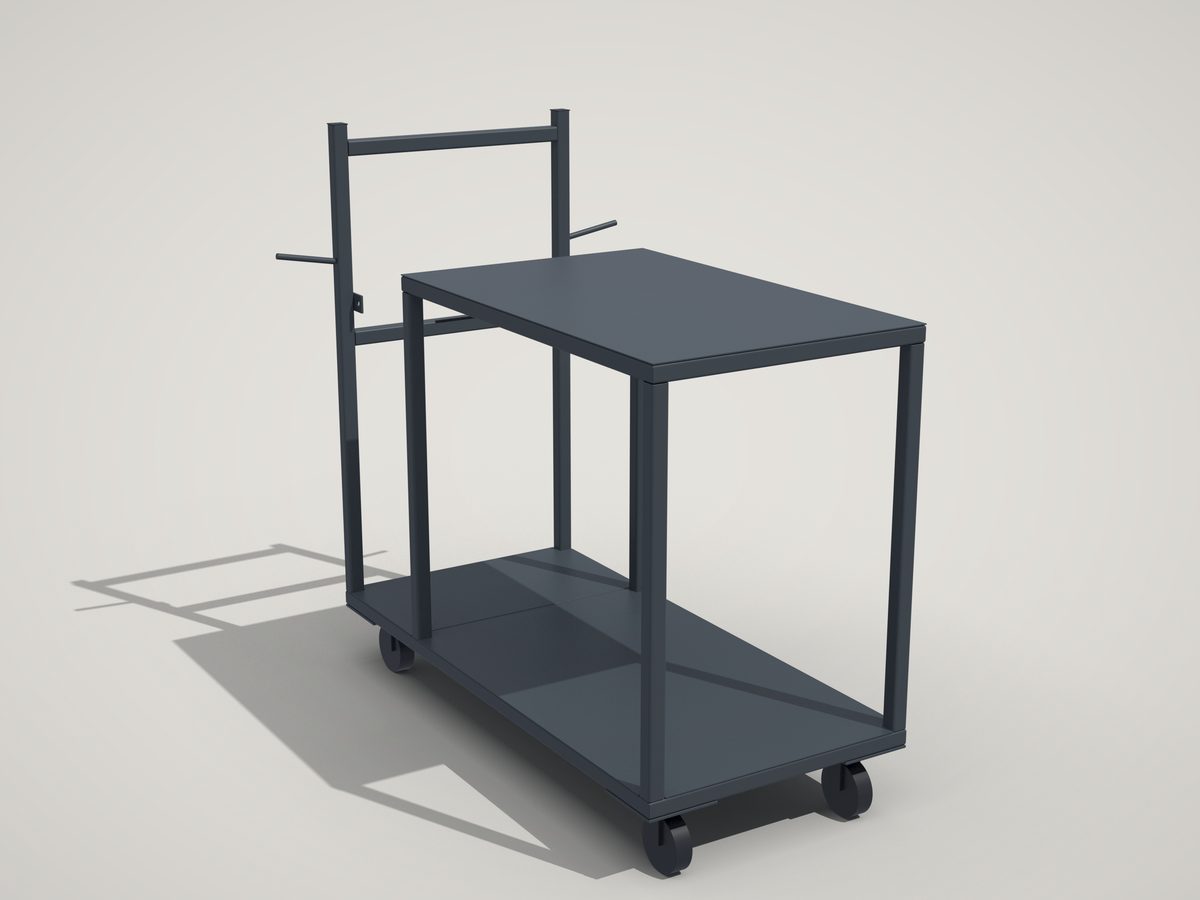
DIY welding cart: sizes, castors and the bottle
DIY welding cart: a bottle bay for a 200 to 250 mm cylinder, chained; castors rated for three wheels; stable to 15 degrees loaded. Three sizes.
Guide3 sources read
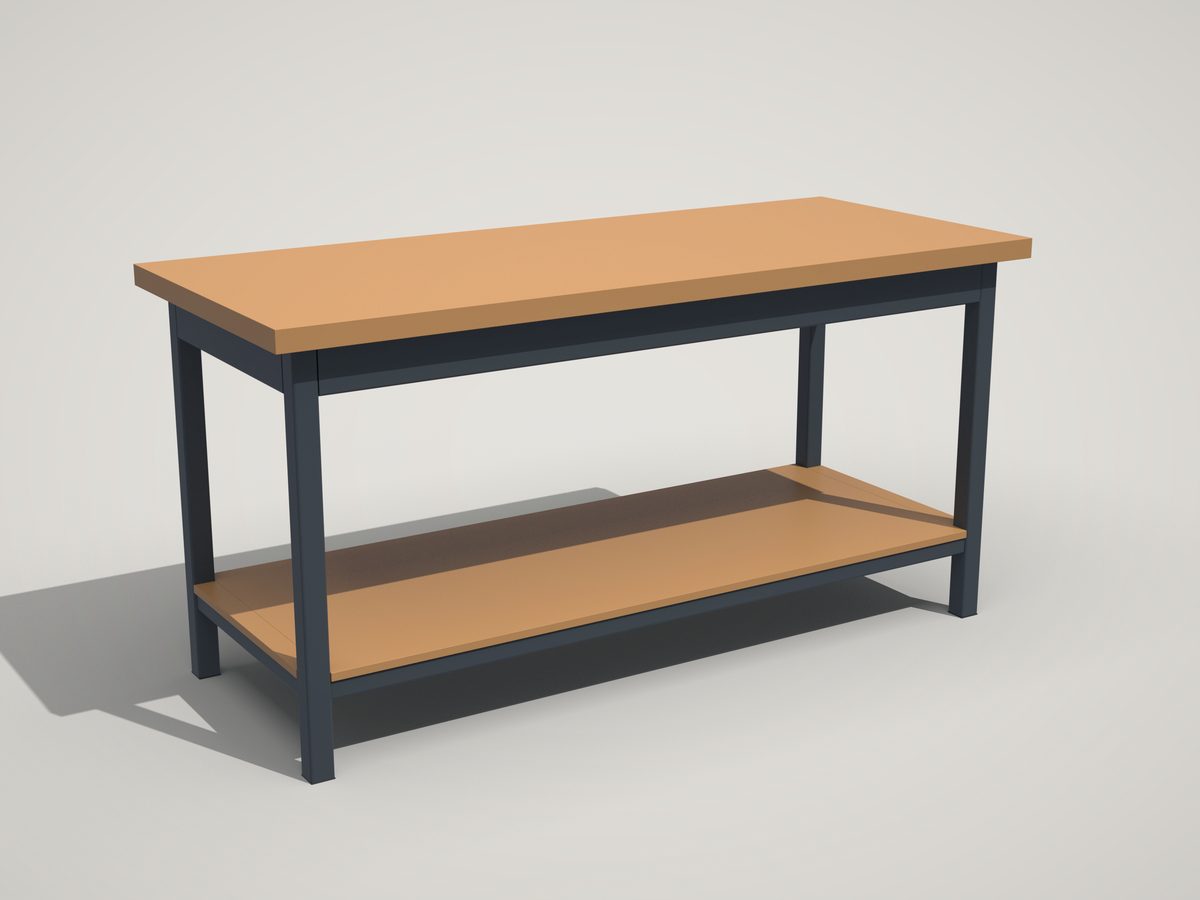
How to build a metal workbench that stays put
How to build a steel workbench: RHS 100 x 50 rails, SHS 50 legs and a 45 mm timber top, checked for 3.0 kN/m2 and a 2 kN point load. 1.5 to 2.1 m long.
Guide3 sources read