Homes and gardens/Balustrades/Curved
Curved balustrade
Balustrades on bow-fronted and curved edges, set out as straight facets so every pane or panel is flat and every joint lands on a post.
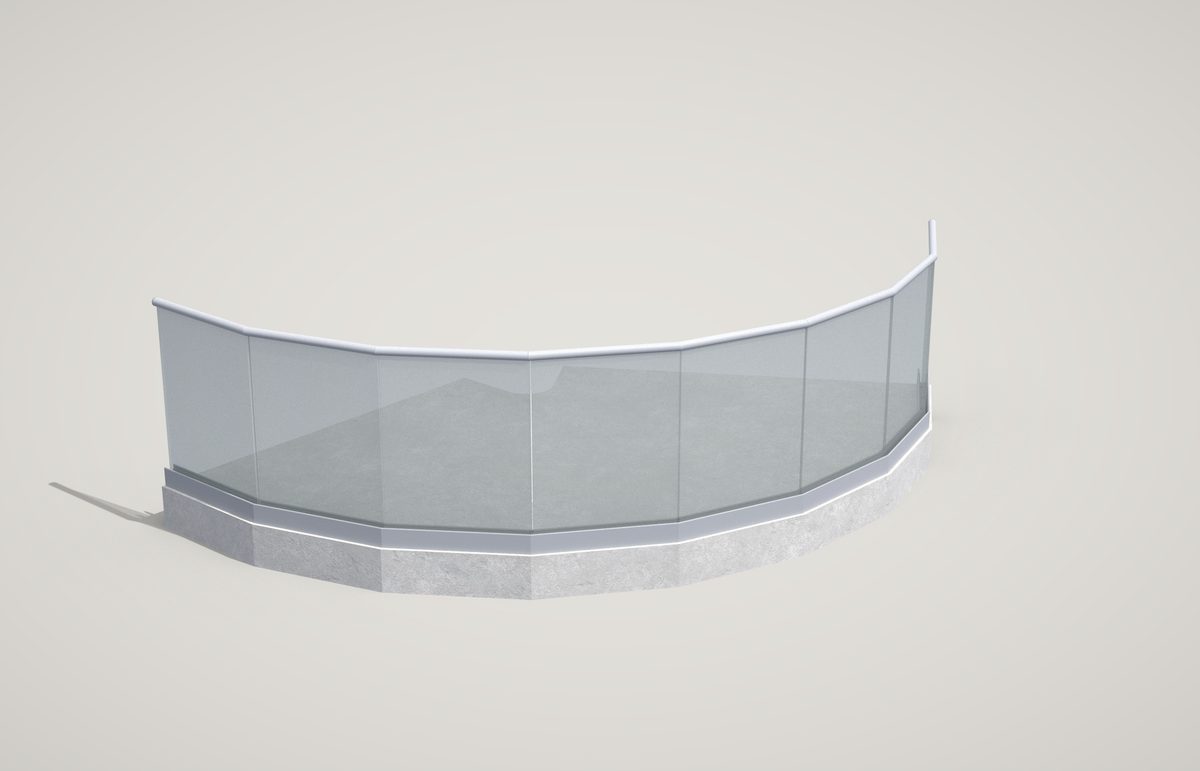
3D modelRendered from the model we draw from.
What it is
Curved glass is slow and costly; facets are not. We divide the curve into equal straight lengths, each a flat pane or panel, with the joints on posts or connectors, so the run reads as a curve and is made from flat parts.
On a helical stair the guarding follows the helix the same way, every post set out by angle.
Sizes and options
As we draw it. Every size is set to your job.
| Set-out | Equal facets round the curve, joints on posts |
| Infill | Glass, bars or panels |
| Handrail | Faceted or rolled to the curve |
Worth knowing
Tube can be rolled to a tight radius.
Kee Safety rolls its tube sizes 5 to 9 to any radius above a minimum of 500 mm. A handrail or tube guard can follow a curved edge without facets, down to that radius, which is why we draw a faceted infill under a rolled rail.
Source: Kee Safety components catalogue v13, tube bending table 21, p.65
The detail
How it is made, fitted and priced, and what to tell us.
A facet is a straight length, and on a curve the number of facets is set by how big one length can be. A glass pane is limited by its tested width, and a bar panel by the post spacing, so a tight curve needs more facets. The cost of a facet is its offset from the true curve. A 1200 mm chord on a 3 m radius sits about 59 mm inside the arc at its middle, and on a 6 m radius about 30 mm. We show the offset on the drawing so it is a decision, not a surprise.
Equal facets give identical panels, and identical parts carry the same mark. A curved balcony with ten equal facets is one panel drawing and one quantity, not ten different pieces. Posts or glass connectors sit at each joint, set out by angle and chord from a centre point, with the angle between the facets given in degrees. That is how the shop saws and welds the parts without trial fits.
The handrail is the one part that can follow the true curve. It is either made in facets that match the panels, or rolled to the radius by a bender. A rolled rail is ordered to a radius, so the radius must be surveyed first. Slab edges are seldom a perfect arc, so we ask for measured points along the edge, not a single radius from the architect, and we set the facets to those points.
Price depends on the infill. A faceted bar or panel run costs a little more than a straight run of the same length, because there are more joints and more angles to cut. Curved glass is made to a template and costs a good deal more, which is why we use flat panes. Tell us the plan shape, the radius or the measured points, and which infill you want.
More views
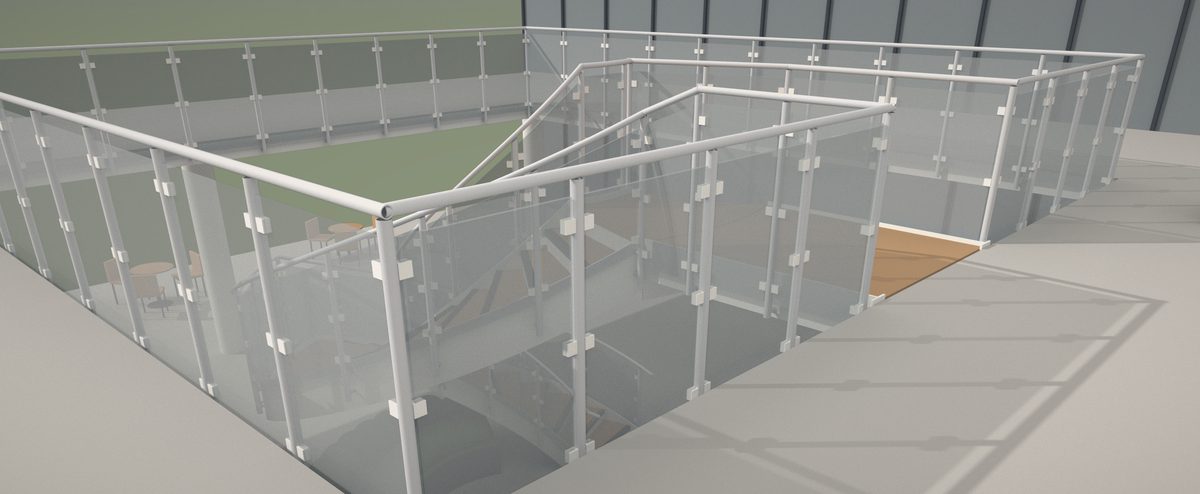
Renders and sheets from our sample projects: made-up jobs, modelled and drawn the way a real one is.
Is it right for you?
Good for
- Bow-fronted balconies
- Curved landings and voids
- Helical stairs
Not for
- Edges that have not been measured: the facets are set from survey points
- Curved glass panes, which are outside our standard types
What the drawings show
- A plan of the curve with the chord length and the angle at every joint dimensioned
- The offset of each facet from the true arc, so the departure is shown
- An elevation of one facet with the panel or pane marks and the quantity
- Post or connector positions by angle from the centre point of the curve
- The handrail, faceted or rolled, with its radius
Questions
Guide: Balustrade heights in the UKGuide: Stair rules in England: rise, going, headroomGuide: How to measure for a balustrade or stair
How is balustrade fitted on a curved balcony?
As straight facets round the curve. Each facet is a flat panel, pane or bar section, and each joint lands on a post or a connector. The run reads as a curve, and every part is made from flat stock that can be ordered and replaced singly.
Is curved glass balustrade allowed?
Yes, with a tested system, but curved glass is made to a template and costs more. Facets of flat glass are quicker and cheaper, and keep to the tested pane widths. We draw the flat-pane version unless the client asks for curved glass.
Why facets and not a true curve?
Flat parts are quicker to make, easier to replace, and can be ordered from a maker's tested table. A true curve needs a bender or a template for each part, and a longer wait. The facet offset from the true arc is shown on the drawing, so you can judge it.
Can the handrail be a true curve if the infill is faceted?
Yes. A tube handrail can be rolled to the radius of the edge while the panels or glass stay flat. The rail is ordered to a radius, so we need the survey of the edge first, and the posts are set out to match the rail line.
How do you measure a curved balcony?
With measured points along the edge, not a single radius, because most slab edges are not a perfect arc. From those points we set the facets, and check each chord against the edge and against the anchor edge distance at every post.
Other balustrades
Glass on posts
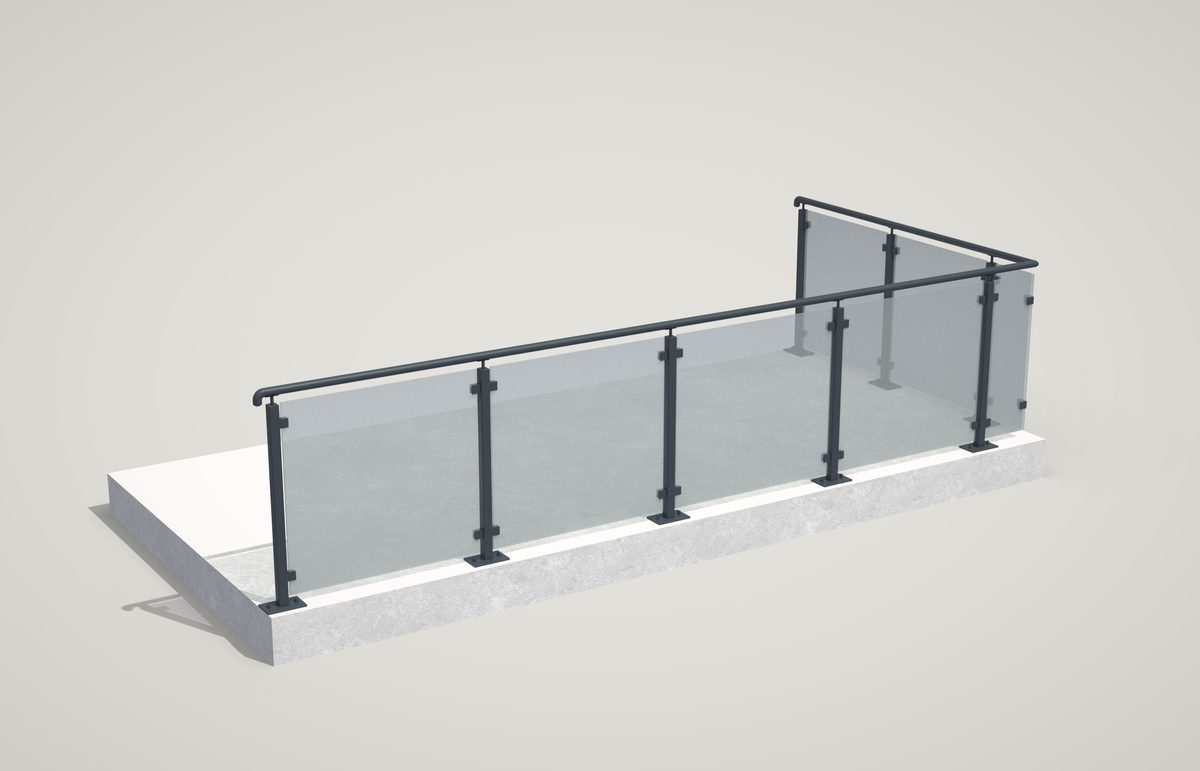
Toughened laminated glass clamped between steel posts, with a handrail on top.
From £179design pack
Frameless glass
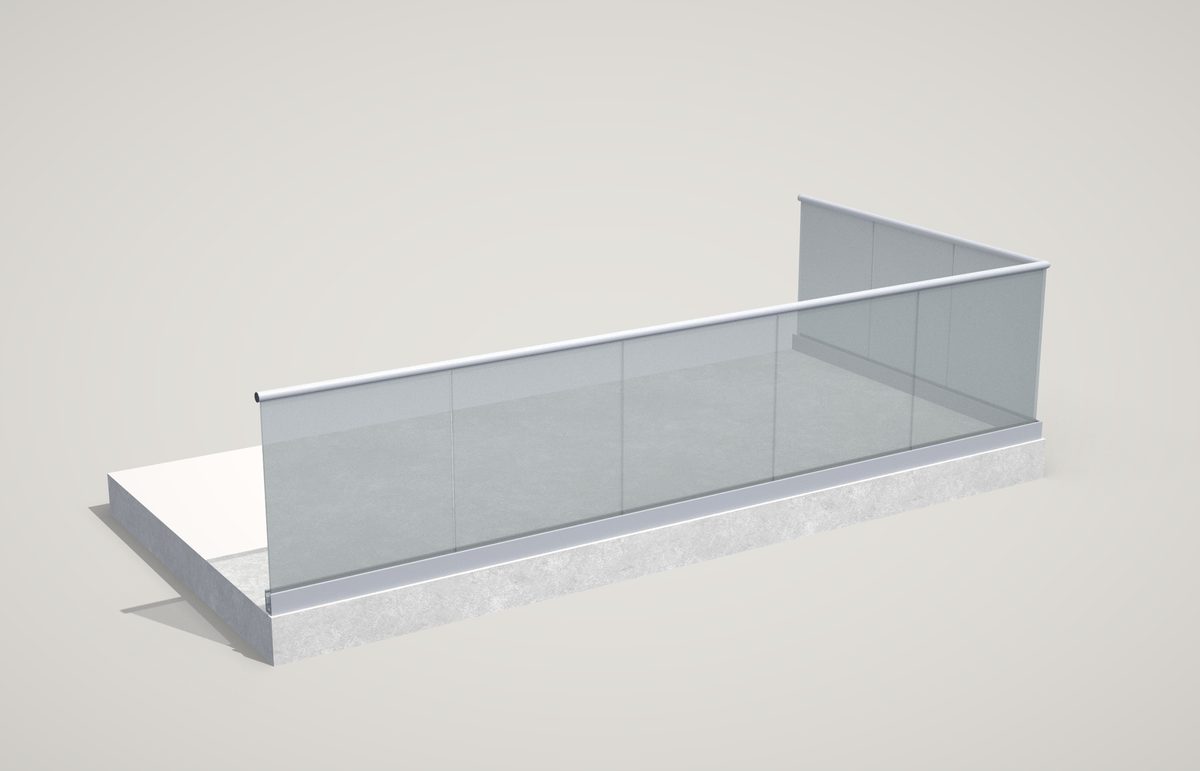
Glass panes standing in a channel fixed to the slab, with no posts at all.
From £179design pack
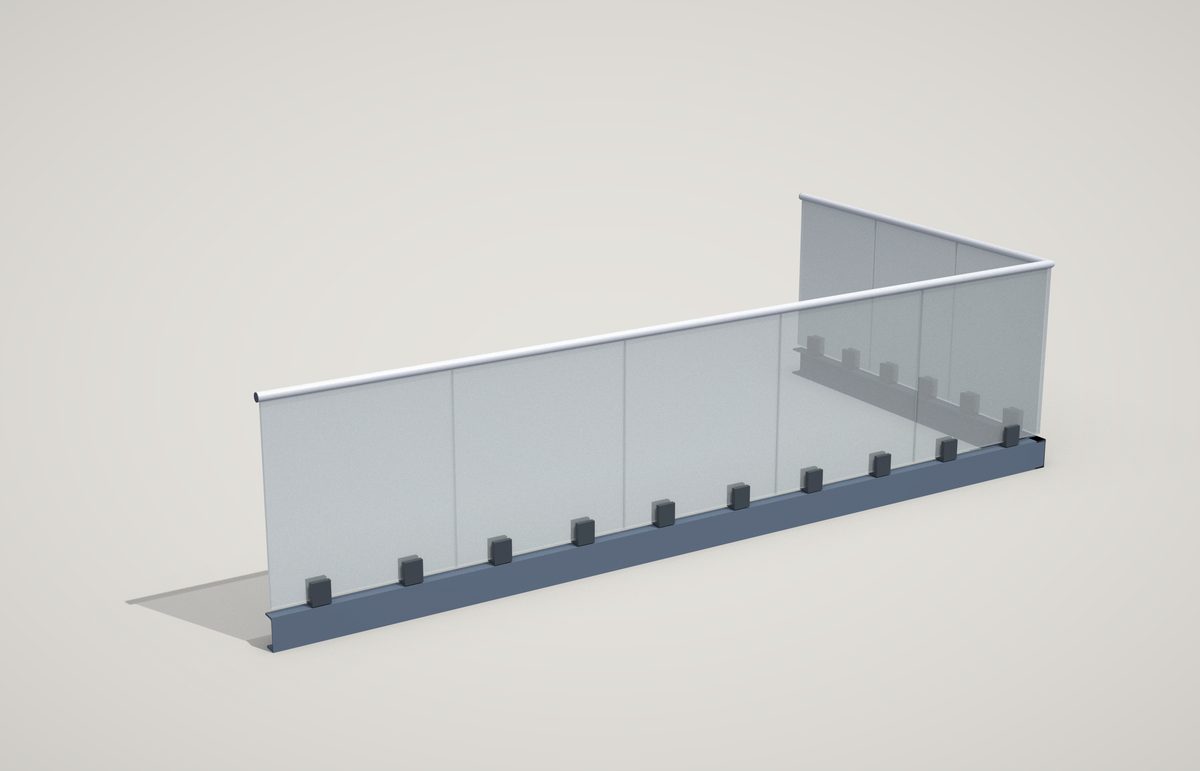
Glass on spigots
Glass panes held off the floor on aluminium spigots, two to a pane.
From £179design pack
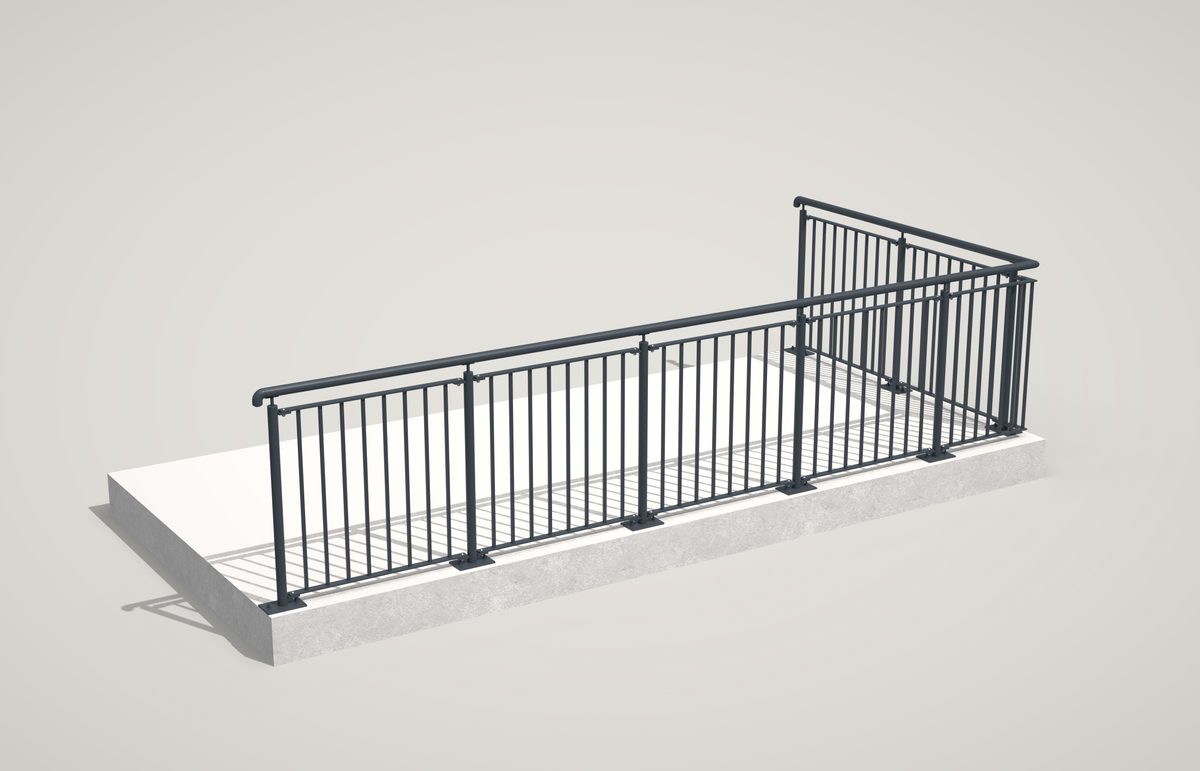
Vertical bars
Steel bars between posts at less than 100 mm clear, the hardest wearing type.
From £179design pack
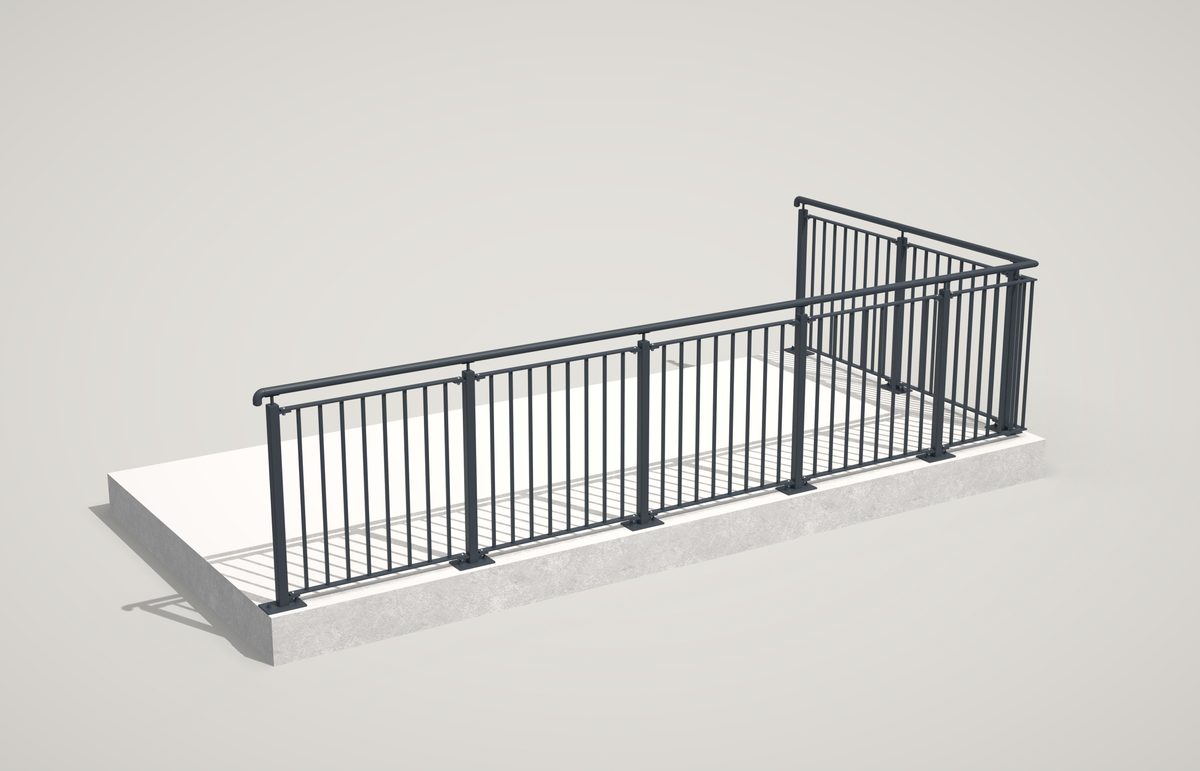
Post and panel
Bar panels bolted between posts on weld-on lugs, galvanised and fitted on site.
From £179design pack
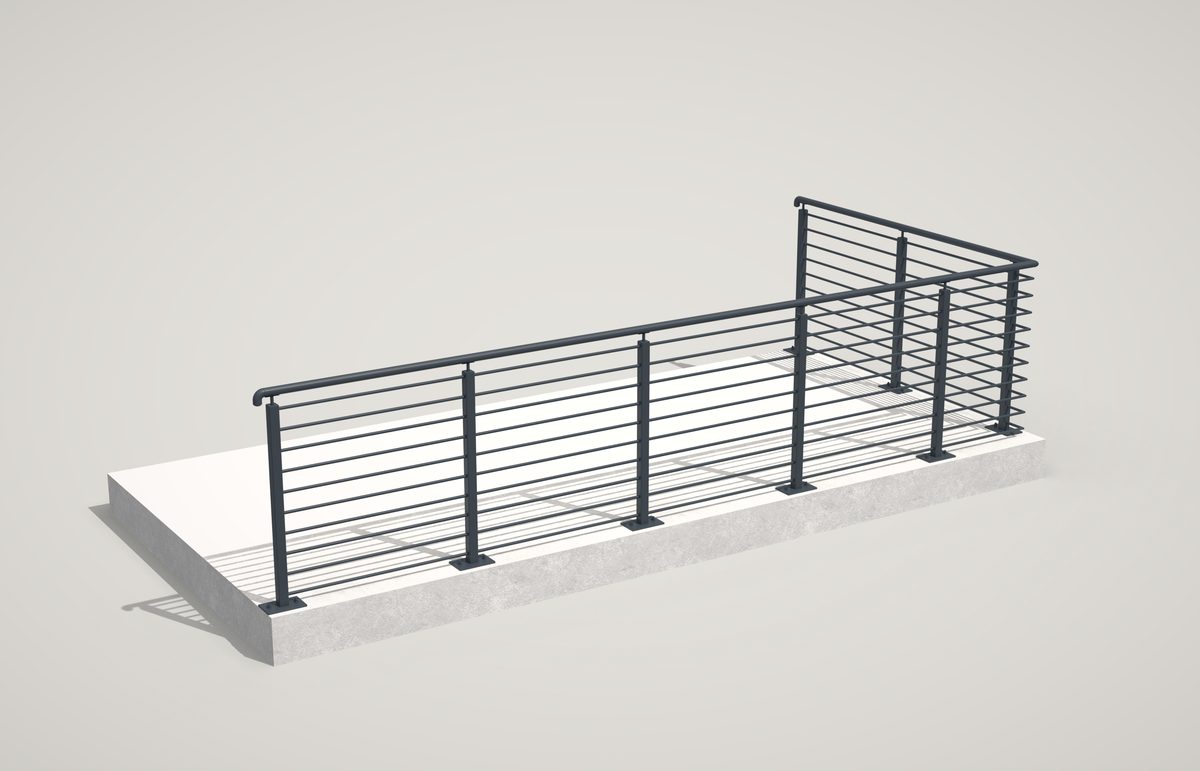
Horizontal bars
Bars run along the run between posts: a clean line, with limits on where it can go.
From £179design pack
Your curved, drawn from a real 3D model.
Balustrade and stair design pack: from £249Back in 3 working days or your money back. Or call 07399 358543 to ask first.