Guides/How to build a charcoal BBQ from steel plate
How to build a charcoal BBQ from steel plate
A standing charcoal barbecue is a plate firebox at worktop height, a grill on its rim and legs that do not wobble when you lean on it. It is a simple build if you get the plate, the grill and the stability right, and never use it anywhere it can fill a room with carbon monoxide.
The firebox
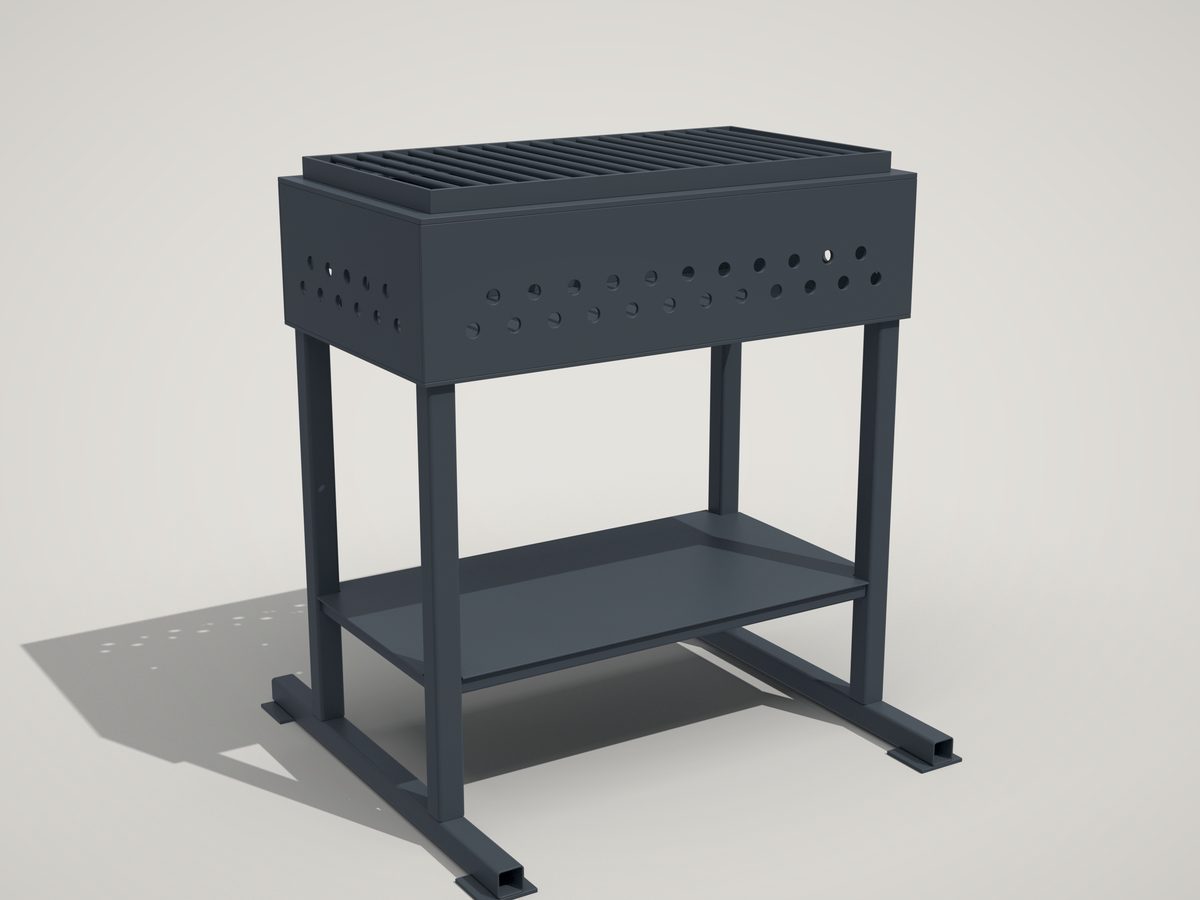
Our plan builds the firebox like our fire pit: 5 mm plate on the 600 mm barbecue and 6 mm on the 800 and 1000 mm ones, with air holes low in the sides, drain holes in the base and a flat-bar rim that stiffens the top edge and carries the grill. Our rule is 5 mm minimum against warping and burn-through.
EN 1860-1 (its 2023 draft, which we read) for factory barbecues sets the minimum steel for a fuel compartment at 0.7 mm, or 0.8 mm over 400 mm across. That is sheet for a barbecue made by the thousand; one you weld yourself is meant to last, so it is built in plate several times as thick.
The top of the firebox sits about 840 to 880 mm off the ground depending on the size, a comfortable height to cook at standing. Set your own height before you cut the legs if you are taller or shorter than most.
Legs, shelf and stability
A barbecue gets leant on, knocked by people reaching for food and sometimes walked into. Our plan braces the four SHS 40 legs with low rails and a steel shelf welded on them, notched round the legs. The shelf holds the charcoal bag and ties the legs together, which is what stops a tall barbecue racking.
We check it against a 150 N push at the rim, someone leaning on it: the 800 mm barbecue takes 2.1 times the push that would tip it, and our minimum is 1.5. Stand it on firm, level paving. Soft ground lets one leg sink and changes that.
The grill
Our grill is RB 10 round bar welded across a FL 30 x 6 frame that sits on the rim and lifts off. The bars are at 40 mm centres, about 30 mm clear: fine for steaks, burgers and pans. The prEN 1860-1 draft keeps the gaps in a factory barbecue's cooking grid to 20 mm at most, so food does not fall through. For sausages and vegetables, add bars to close the gaps to 20 mm or lay a stainless mesh on top.
Keep the grill bare mild steel seasoned with oil, or make it from 304 stainless. Never galvanise, paint or plate anything that touches food or sits in the fire: zinc gives off fumes when heated.
Outdoors only: carbon monoxide
The draft standard defines a barbecue as an appliance for outdoor cooking in the open air, and it means it. Charcoal gives off carbon monoxide while it burns and after the cooking is done. Never take a smouldering or lit barbecue into a tent, caravan or cabin, even when you have finished cooking: the government's carbon monoxide advice says the same. The same goes for a garage, a shed, a conservatory and under a gazebo.
Keep it 3 m from buildings, fences and anything that burns, and on paving, gravel or bare ground, not decking or grass. That clearance is our working figure. Never light it with petrol or paraffin.
Mistakes we see
Thin sheet that warps in the first summer. A galvanised firebox. Four unbraced legs. A grill with gaps that lose half the sausages. Drain holes forgotten, so the base rusts out under wet ash. And a barbecue wheeled into the garage to cool down: the plan's rule is never in a garage, a tent or under a gazebo.
The build, step by step
The order we build it in. The plan draws each step with its new parts in orange.
- Cut and prepare
Have the base and sides laser cut from the DXFs, air holes included. Drill the drain holes; cut the legs, rim and grill bars.
- Firebox
Stand the sides on the base, flush outside, clamp square, tack, check, weld the corners and round the base inside and out.
- Rim
Weld the flat-bar rim round the top edge, its corners mitred.
- Legs
Turn the box over and weld a leg under each corner, square to the base, with a foot pad under each.
- Shelf
Weld the low rails between the legs and the shelf plate on them, notched round the legs.
- Grill
Weld the bars across the grill frame, sized to sit on the rim. Oil it before the first cook.
The plan
Each plan comes in 3 sizes, drawn from a checked 3D model: the steel to buy, the cutting list, every part drawn, the build step by step and a DXF for every plate, and the loads it was checked for.
Building more than one? Every garden plan is in the garden bundle for £15 (42 plans, every size); any 3 plans are £12.
Questions
What steel should I use for a BBQ?
Mild steel plate, 5 mm at least for the firebox: our plan uses 5 mm on the 600 mm barbecue and 6 mm on the larger two. Keep the grill bare and oiled, or use 304 stainless.
Can I galvanise or paint a BBQ?
Do not galvanise any of it: zinc gives off fumes when heated. The outside of the firebox can take high-temperature stove paint rated to 600 C; the grill stays bare.
How far apart should the grill bars be?
The prEN 1860-1 draft keeps a factory barbecue's grid to 20 mm clear at most. Our plan's grill is about 30 mm clear; close it up or add a mesh for small food.
Can I use a charcoal BBQ in a garage or tent?
No. Charcoal gives off carbon monoxide while it burns and after. Never take a lit or smouldering barbecue into a tent, caravan, cabin or garage.
How high should a BBQ be?
Our three sizes put the top of the firebox at about 840 to 880 mm. Set your own height before you cut the legs if you need to.
Sources
Read on the published page. The plan figures are our own, taken off the checked 3D model. Where the law is quoted it is the law in England unless it says otherwise; your engineer, insurer or competent person decides your build.
- prEN 1860-1:2023, Appliances, solid fuels and firelighters for barbecueing, Part 1 (publisher's preview), 3.1 barbecue“appliance designed only for outdoor cooking in the open air”
- prEN 1860-1:2023, Appliances, solid fuels and firelighters for barbecueing, Part 1 (publisher's preview), 4.2.3.1, Table 1“Minimum thickness of steel sheet for fuel compartments”
- prEN 1860-1:2023, Appliances, solid fuels and firelighters for barbecueing, Part 1 (publisher's preview), 4.2.1 Cooking grid“shall not exceed 20 mm before, during and after”
- nidirect (Northern Ireland Government): Carbon monoxide dangers if camping, caravanning or boating, Advice when using a barbecue“never take a smouldering or lit barbecue into a tent, caravan or cabin”
- HSE: Health risks from welding, Metal fume fever“Metal fume fever is usually linked to welding or hot work on galvanised metals”
- GOV.UK: Smoke control areas, the rules, Outdoor appliances“You can use outdoor barbecues, chimineas, fireplaces or pizza ovens in smoke control areas”
Where next
Charcoal BBQ plans
A standing charcoal BBQ: a 5-6 mm plate firebox at worktop height, a grill on the rim, braced legs and a charcoal shelf.
£53 sizes, instant download
Add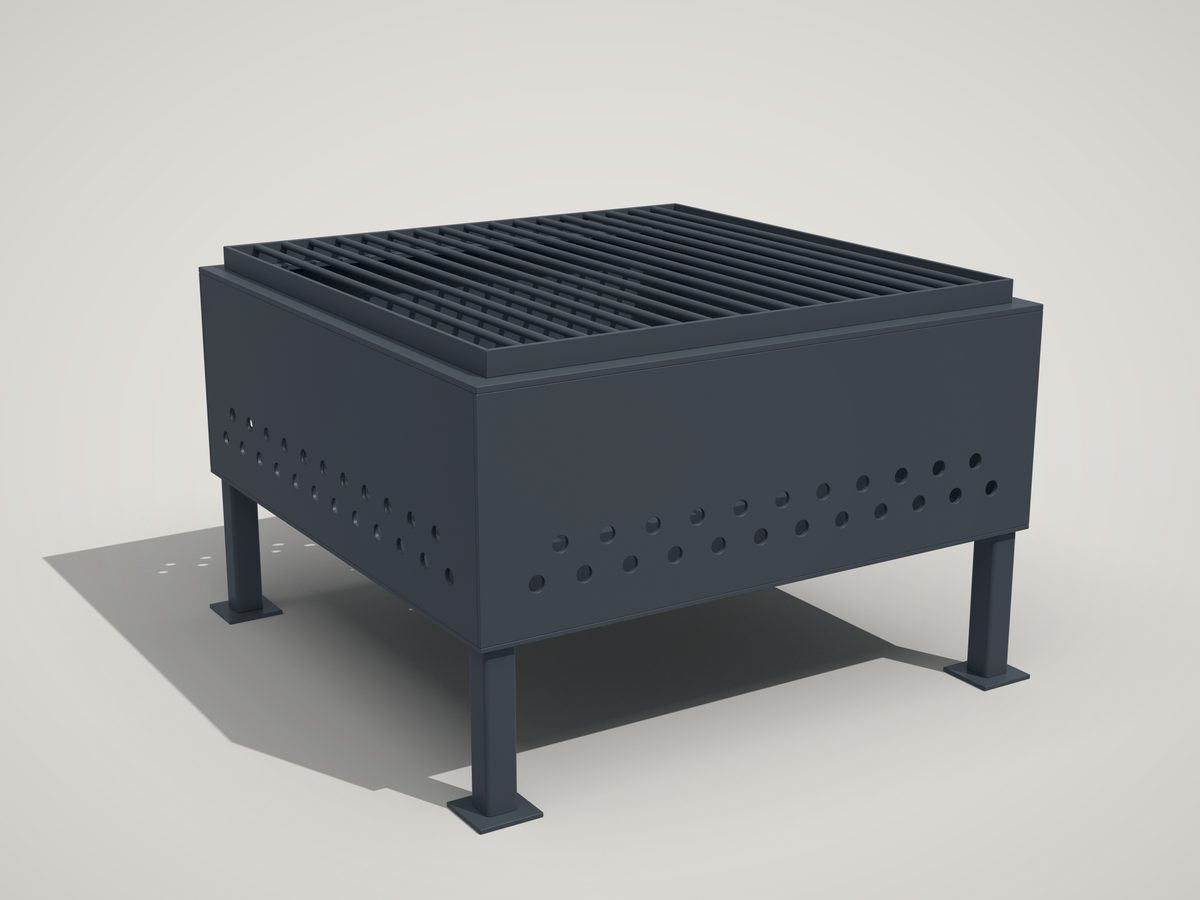
Fire pit plans
A square steel plate fire pit on legs: laser-cut air holes, a drained base, a flat-bar rim and a grill that sits on it.
£53 sizes, instant download
AddHow to make a steel fire pit: plate and safety
How to make a steel fire pit: 5 or 6 mm plate that will not burn through, the base 200 mm off the ground, never galvanised, 3 m from anything that burns.
Guide6 sources read
Galvanise, powder coat or paint outdoor steel
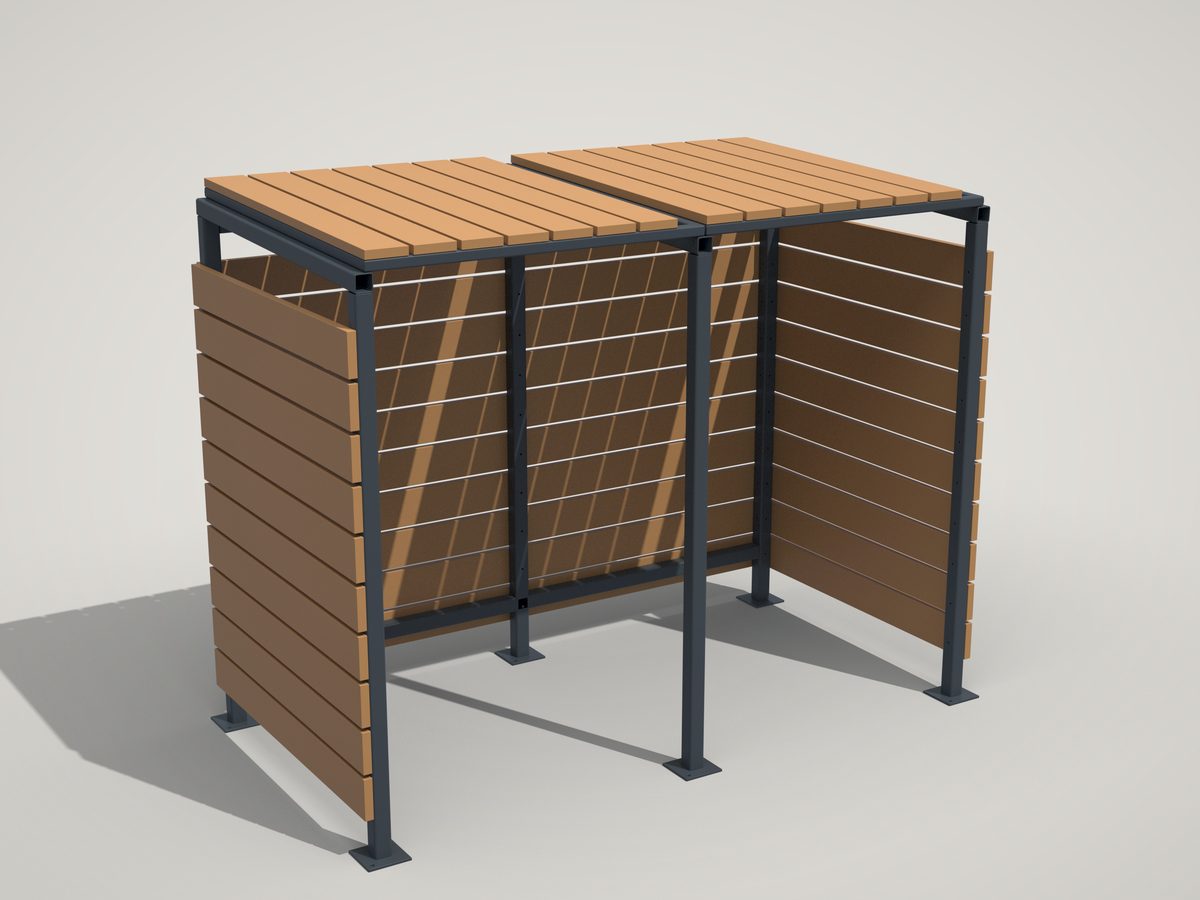
Galvanise, powder coat or paint: EN ISO 1461 asks for 85 µm of zinc on steel over 6 mm, vent holes from 10 mm, never galvanising what sits in a fire.
Guide8 sources read
More guides
How to build a welding table: steel and sizes
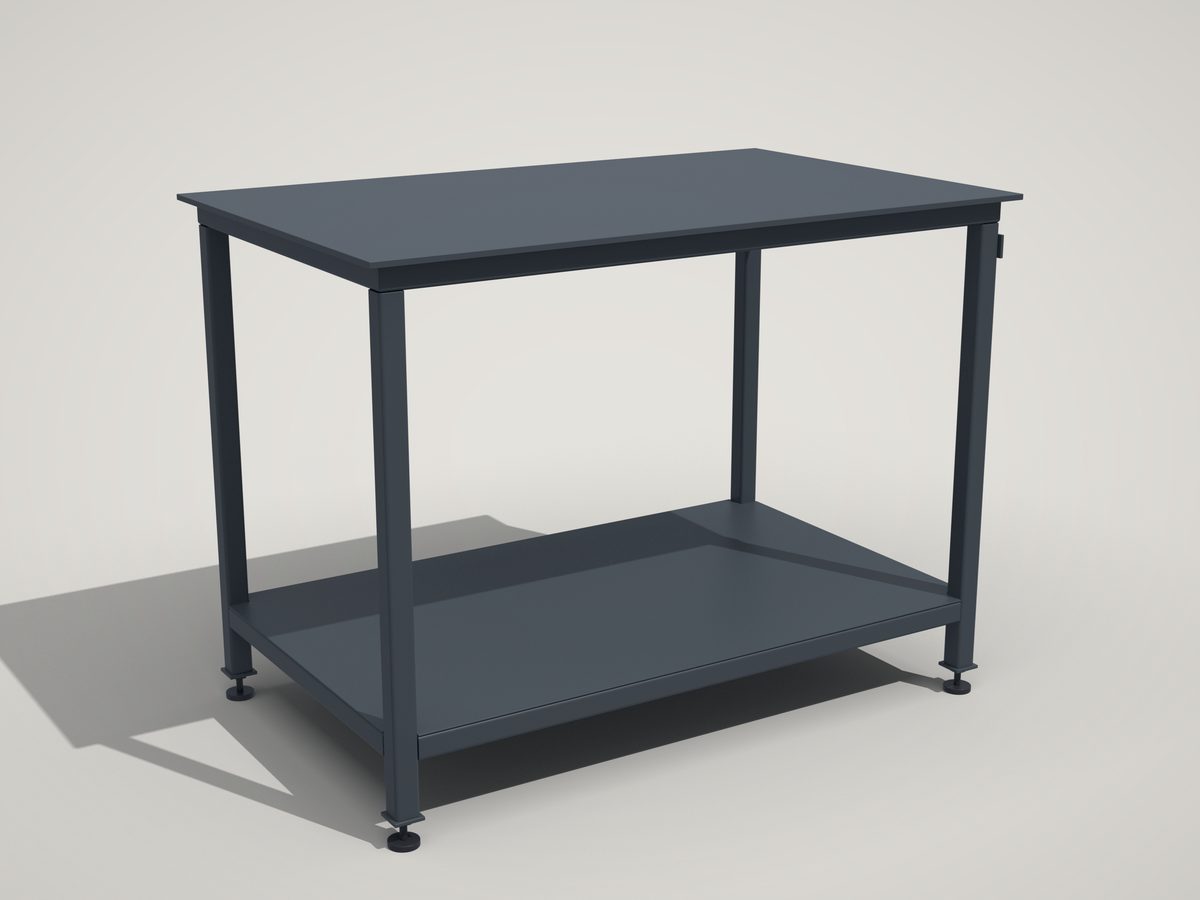
How to build a welding table: an 8 or 10 mm plate top with a 25 mm clamping edge, a mitred SHS 40 frame, stitch welds to keep it flat. Sizes to 1500 x 900.
Guide3 sources read
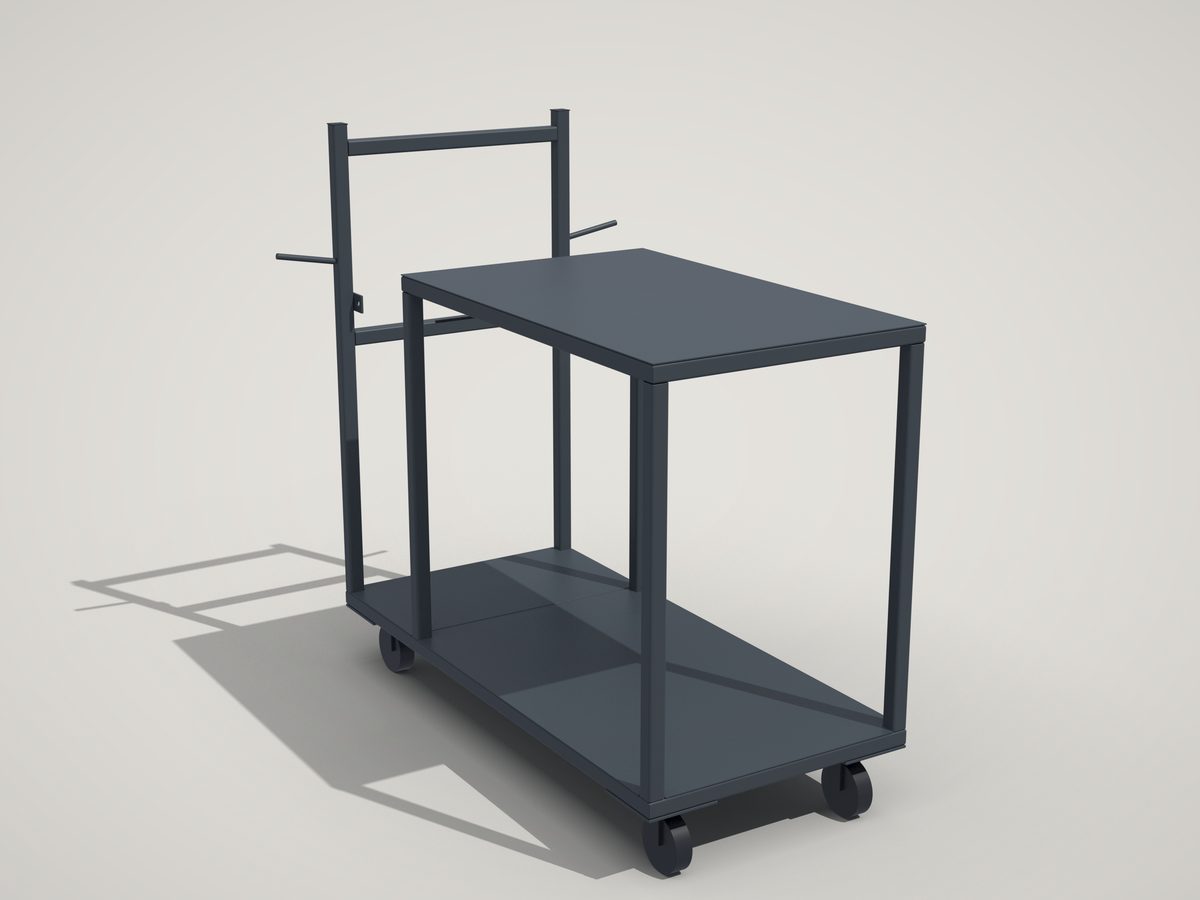
DIY welding cart: sizes, castors and the bottle
DIY welding cart: a bottle bay for a 200 to 250 mm cylinder, chained; castors rated for three wheels; stable to 15 degrees loaded. Three sizes.
Guide3 sources read
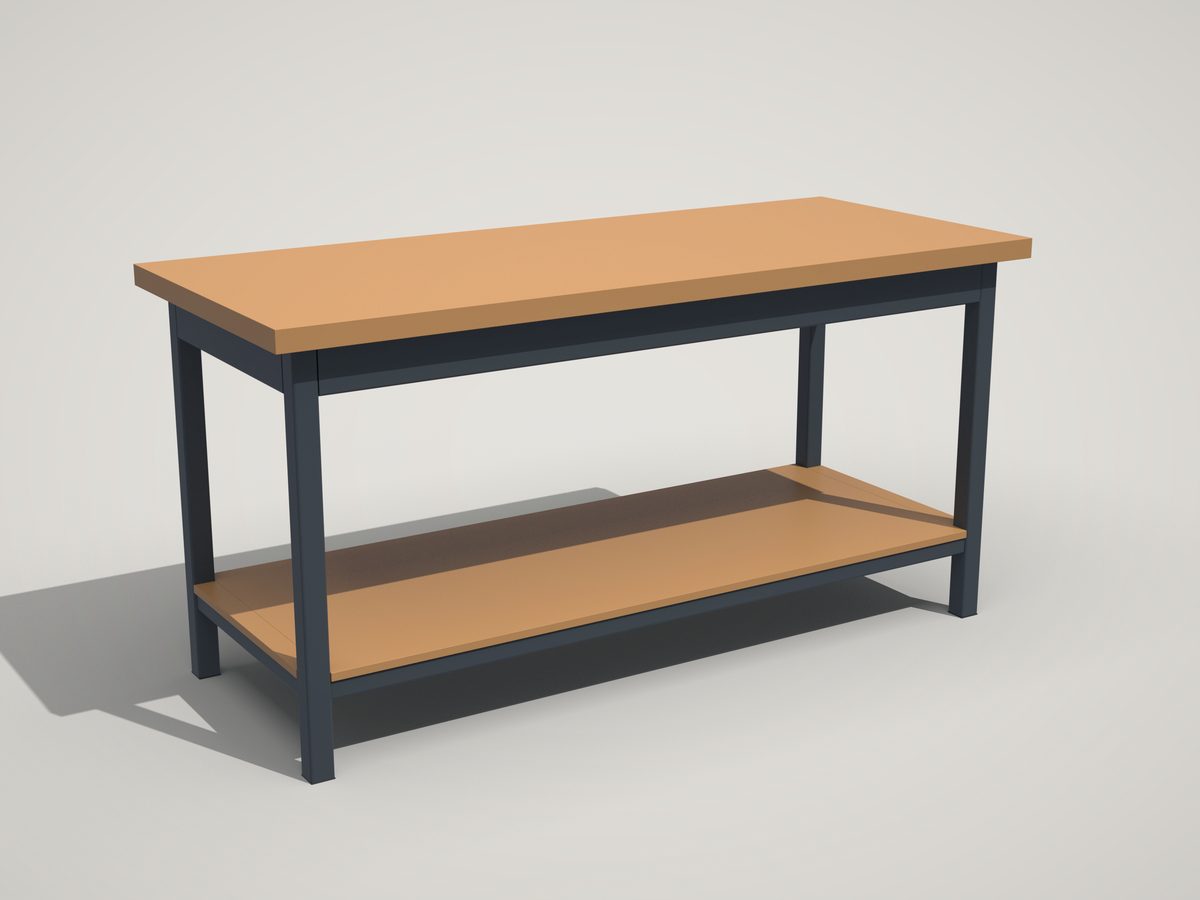
How to build a metal workbench that stays put
How to build a steel workbench: RHS 100 x 50 rails, SHS 50 legs and a 45 mm timber top, checked for 3.0 kN/m2 and a 2 kN point load. 1.5 to 2.1 m long.
Guide3 sources read