Trade/Structural steelwork/Load plans
Steel load plans
Every wagon of steel planned from the model: what goes on, in erection order, on its timbers, chained and checked for its axle loads.
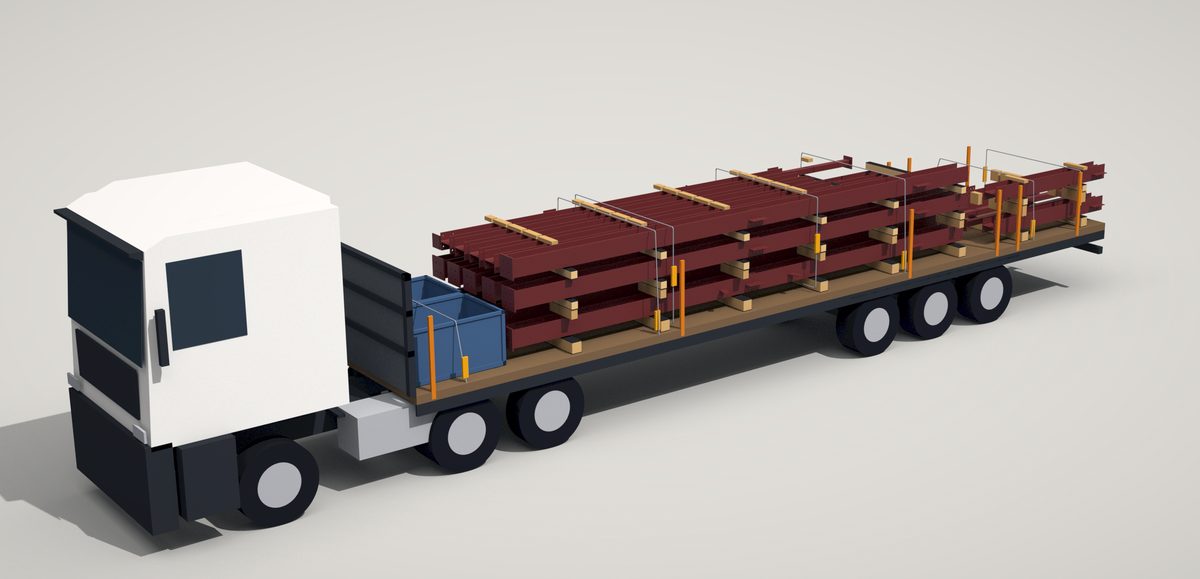
3D modelFrom sample project HY06, rendered from the model.
What it is
A load plan puts the steel on the wagon the way it will come off: the first pieces up go on last, in tiers on timbers, with the chains and pins drawn and the axle loads worked out.
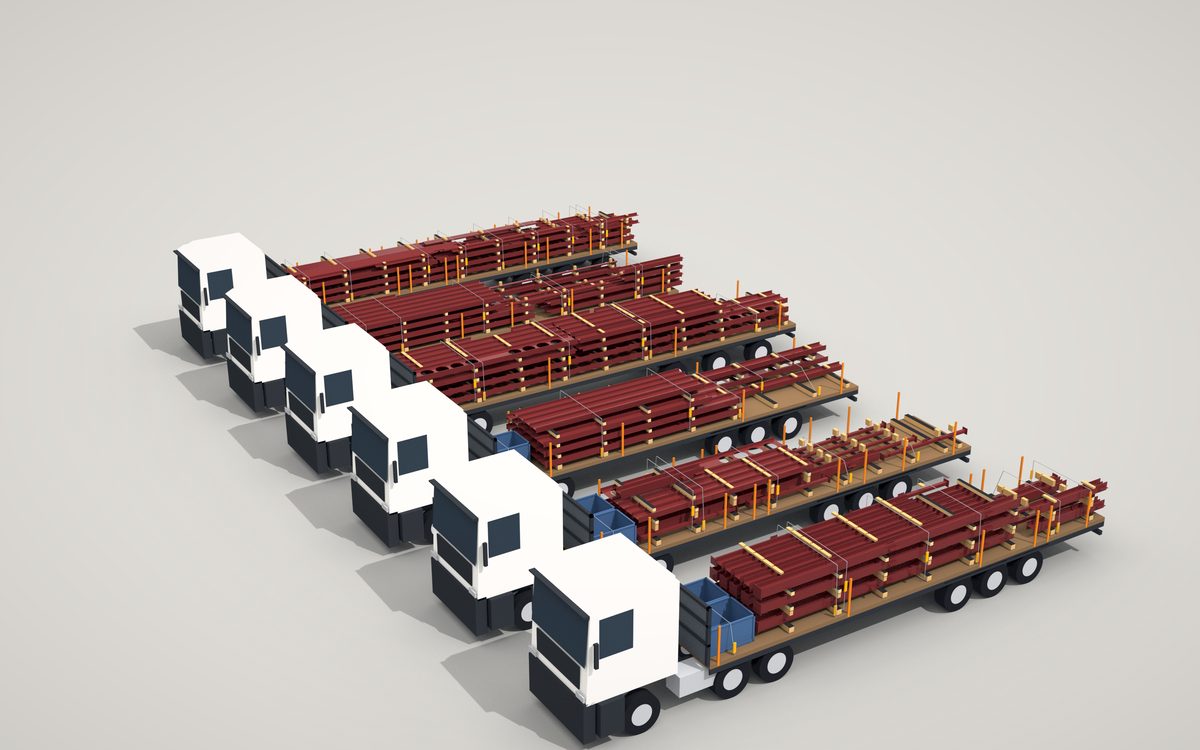
Our sample takes a 58.7 tonne steel frame to site in six loads, four on flat trailers and two on extendables.
Sizes and options
As we draw it. Every size is set to your job.
| Sample | 58.7 t in six loads |
| Trailers | 13.6 m flats and extendables |
| Checks | Axle loads, heights, securing |
Worth knowing
Heavy steel goes down with chains, not straps.
The government's load securing guide tells drivers to use chains, not straps, for heavy loads, together with bulkheads, chocks or dunnage so the load is stable without lashings.
Source: DVSA / DfT, Securing loads on HGVs and goods vehicles, 'Different types of load'
The detail
How it is made, fitted and priced, and what to tell us.
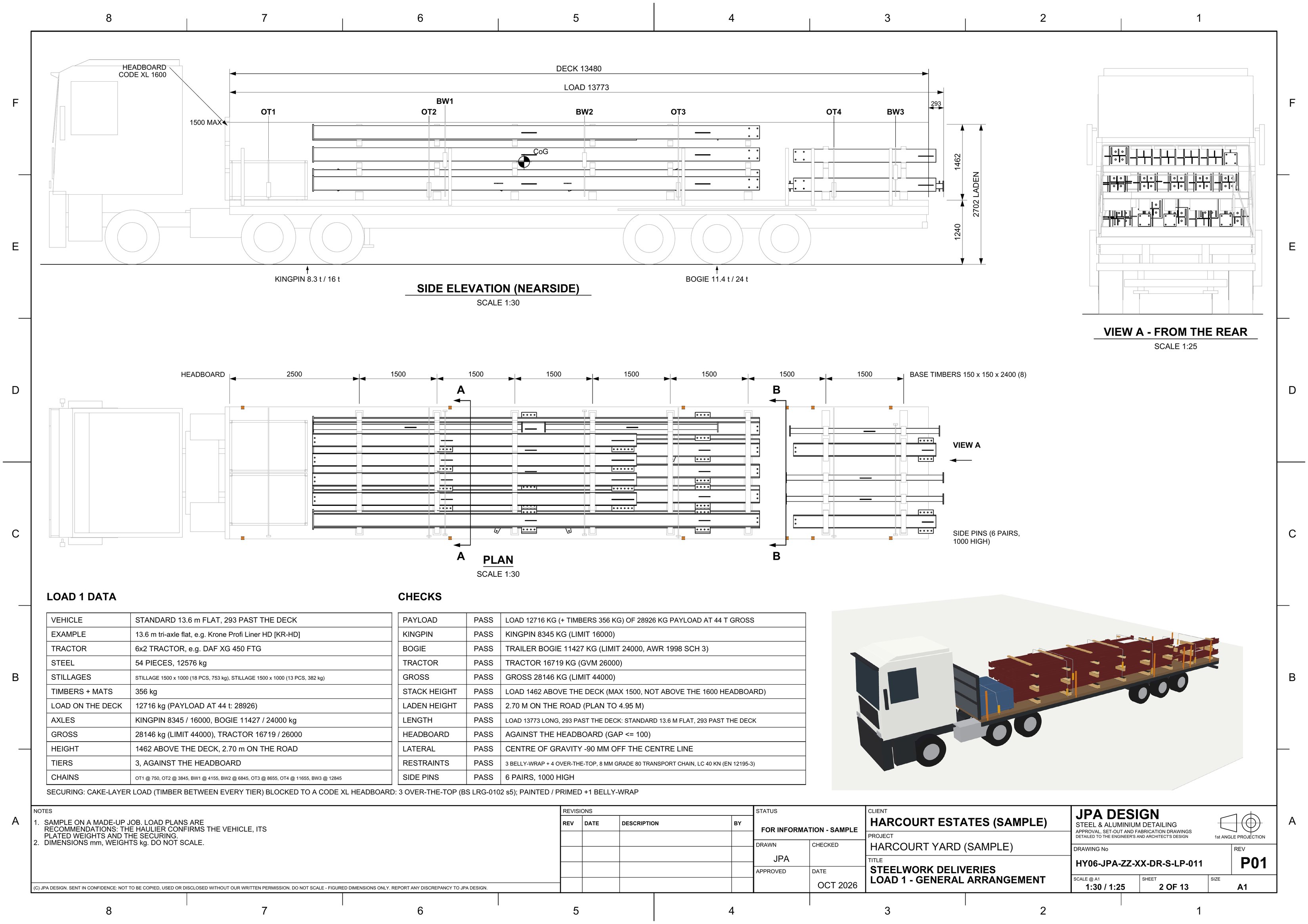
A load plan is a drawing of one lorry, not a list. Ours lays the steel on a 13.6 m flat trailer in tiers, on 150 x 150 base timbers at no more than 3 m apart, with 100 x 100 timbers between layers and mats under and over. Every piece sits with its ends within 1 m of a timber. The pyramid stays under 1.5 m above the deck and never above the headboard. Beams and columns never share a tier. All of that follows British Steel's load restraint rules, a benchmark rather than a legal one, and the haulier makes the final call.
The order matters as much as the stacking. We load in erection order with a look-ahead, so the first pieces up are the last on and the erector never digs through a stack. Axle loads come from statics: the kingpin, the bogie and the tractor, within a 44 t gross. If a load is heavy at the back, we move it forward from the headboard until the axles pass. Long pieces go on extendable trailers, opened to suit. In our 58.7 t sample, long pieces needed 15 m extendables.
Securing is drawn as well as noted: chains over the top at each timber, a belly wrap on the bottom tier, side pins, and tensioners. DVSA says to use chains instead of straps for heavy loads. After a part delivery, the load must be re-secured and the axle weights checked, which is why we plan one delivery per erection stage. Fabricated members rarely have lashing points, so most of the work is done by over-the-top chains and blocking against the headboard.
The plan feeds your loading list and the delivery schedule. Costs change with the number of loads: a looser plan with fewer loads saves haulage but gives the erector less choice. Tell us the trailer types your haulier runs, the route height limits, the site's unloading rules and the crane's reach, and send the marked model or the mark list.
More views
Renders and sheets from our sample projects: made-up jobs, modelled and drawn the way a real one is.
Is it right for you?
Good for
- Main contractors and erectors
- Tight sites with timed deliveries
Not for
- Replacing the haulier's own securing scheme or the driver's checks
What the drawings show
- Each wagon with its timbers, tiers and mats, to scale
- Chains, belly wrap, side pins and tensioners drawn on the load
- Axle loads by statics for kingpin, bogie and tractor, against 44 t
- Loads in erection order, with the schedule of what is on which wagon
- Trailer choice: flat or extendable, with the length opened
Questions
What should structural steel be secured with on a lorry?
DVSA guidance says to use chains instead of straps for heavy loads. British Steel's rules call for Grade 8 chains and timbers between layers. The haulier chooses the final scheme and is responsible for it. Our plan shows a workable scheme as a starting point.
How much steel can go on one trailer?
That depends on the trailer, the tractor and the axle loads, up to 44 tonnes gross on a six-axle artic in the UK. We work out the axle loads by statics for every load. Our 58.7 tonne sample went in six loads, four on flat trailers and two on extendables.
Why plan loads in erection order?
So the pieces needed first come off first, and the erector does not have to unload a trailer twice. No standard prescribes this; it is our practice. Each delivery should be stable and complete for the erection stage it serves.
Do you replace the haulier's own load securing?
No. The haulier and driver are responsible for securing the load safely and legally. Our plan gives them the stack, the weights and a scheme to start from, so they see the load before it arrives. We can also re-run the plan if a trailer type or the delivery order changes.
Other structural steelwork
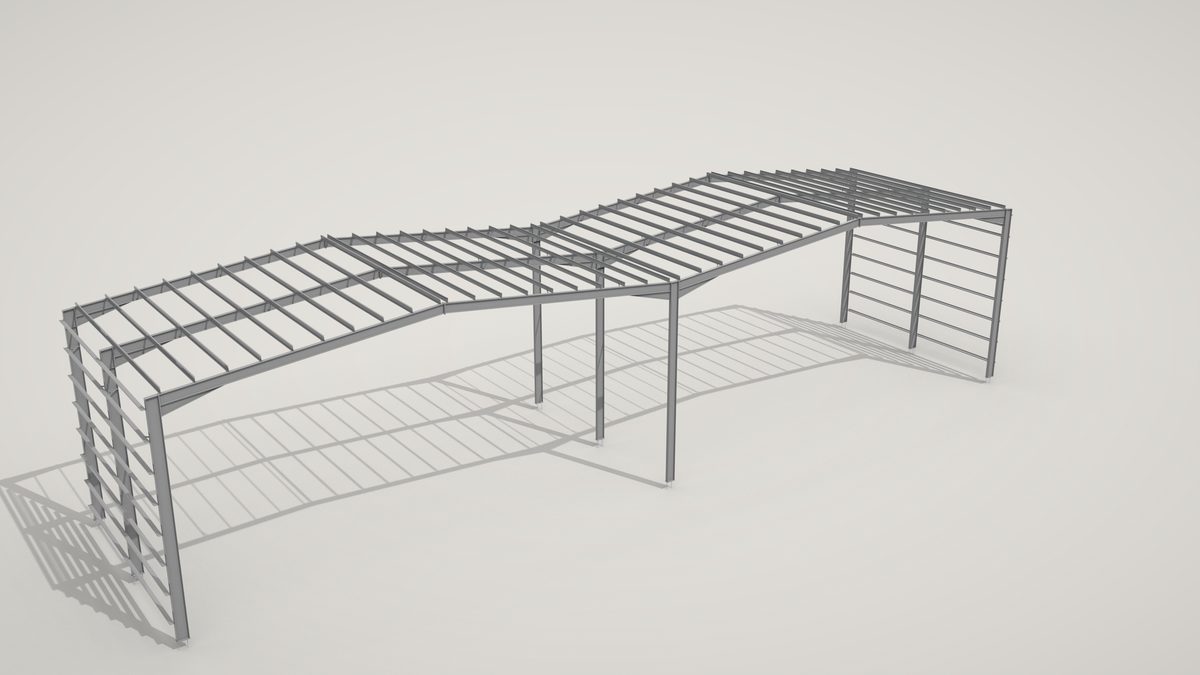
Portal frame buildings
Portal frame warehouses and sheds: frames, bracing, purlins, cladding and docks.
Trade from £895portal frame building, fixed price
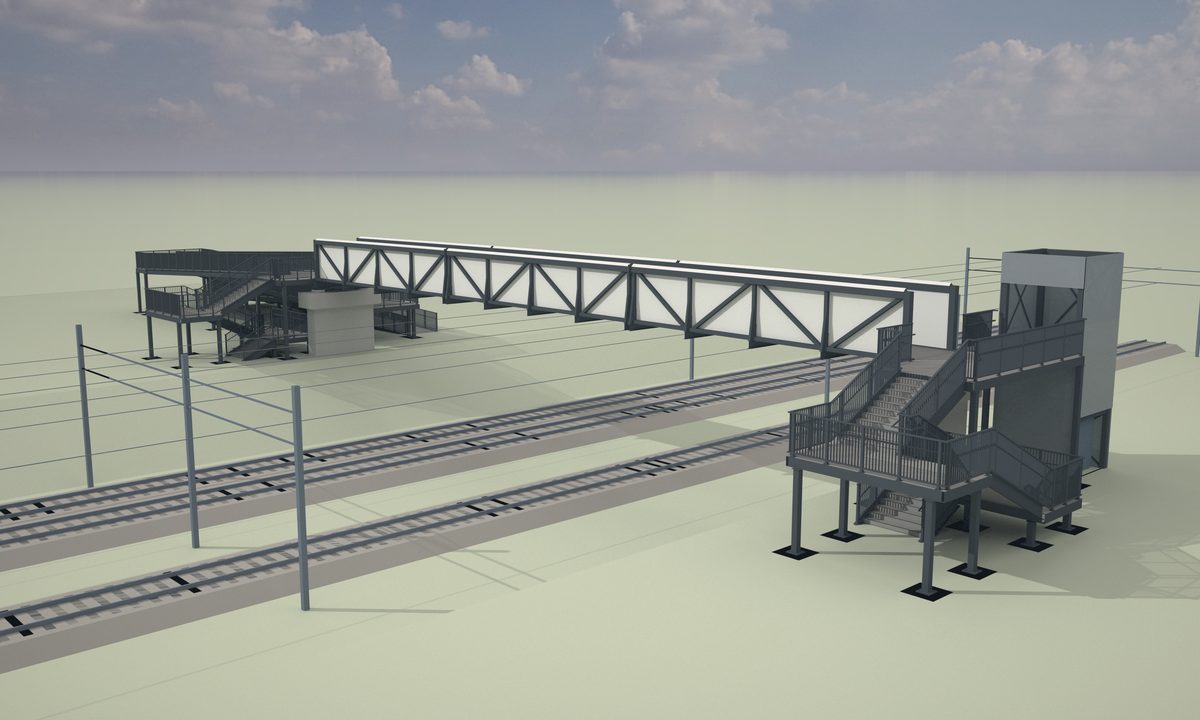
Footbridges
Truss footbridges over railways and roads, with their approaches.
Trade from £895portal frame building, fixed price
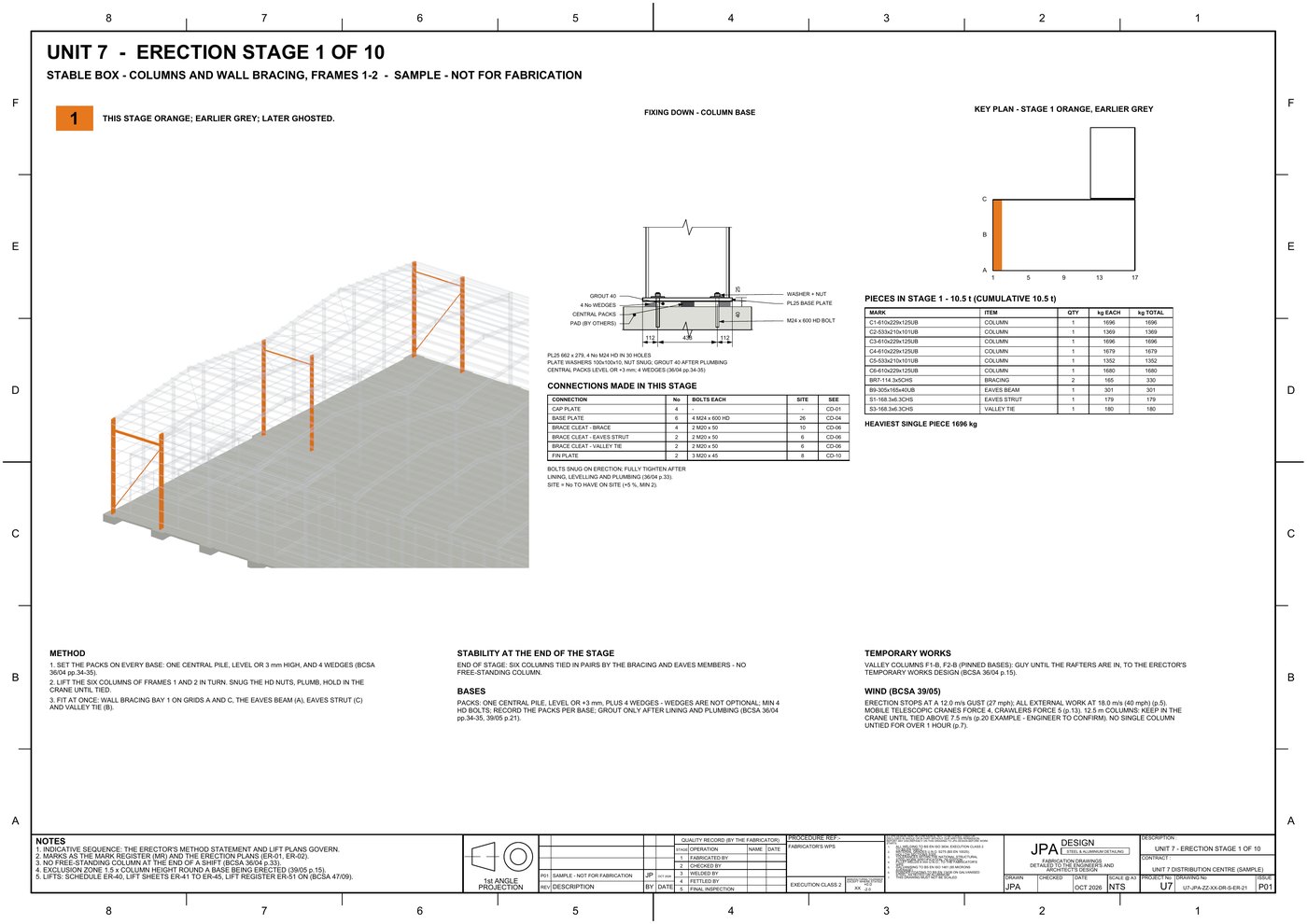
Erection and lift plans
Erection stages and lift plans with sling legs, loads and hook heights.
Trade from £895portal frame building, fixed price
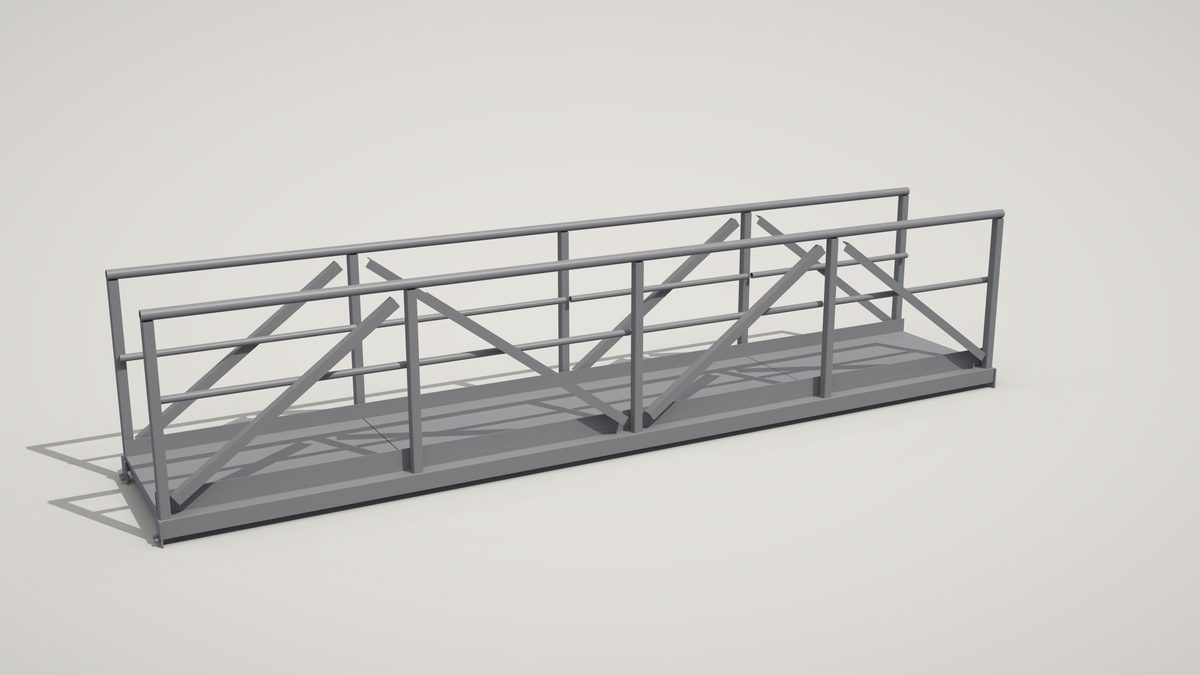
Catwalks and platforms
Handrail-truss catwalks, peak platforms and hop-over stairs over pipework.
Trade from £895portal frame building, fixed price
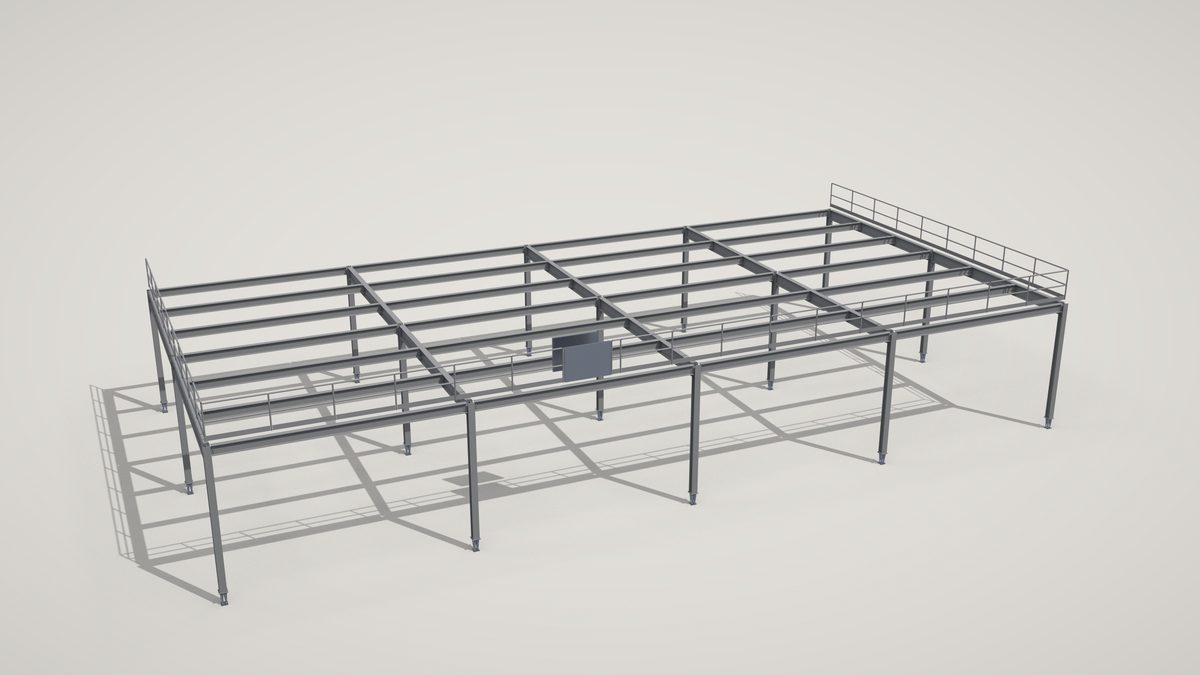
Mezzanine floors
Steel mezzanine floors inside sheds and warehouses: columns, beams, deck, stairs and guarding.
Trade from £895portal frame building, fixed price
Send the drawings.
Send the drawings and get a fixed price back within 4 working hours (Mon-Fri, 8 am-6 pm).
Not ready to send drawings? Ask for the full sample pack for your type of work, or a call back, with the form.