Homes and gardens/Balustrades/Perforated sheet
Perforated sheet balustrade
Perforated steel sheets held on clamps between posts: privacy and shade with light through, and nothing to climb.
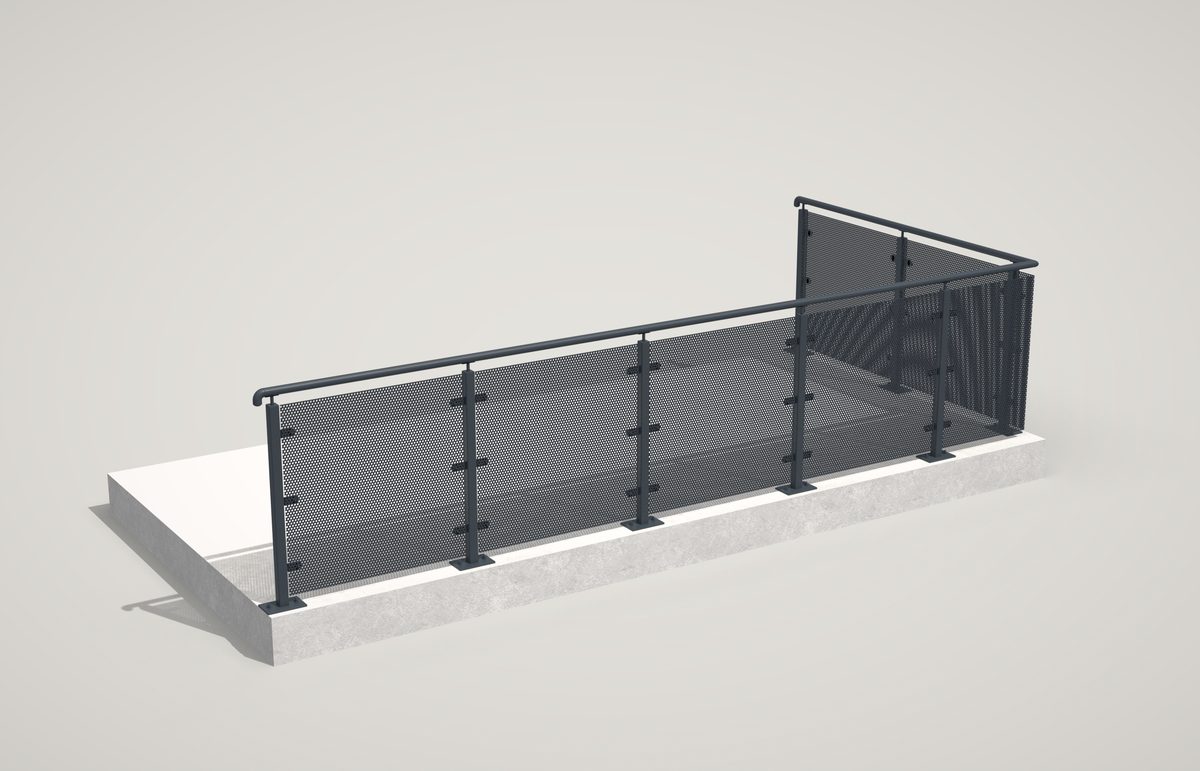
3D modelRendered from the model we draw from.
What it is
The sheet is cut with a plain border so the clamps grip solid metal, and the holes are sized and spaced so nothing can climb it. At corners the sheet folds round rather than stopping.
It suits escape stairs, balconies that need privacy, and screens that double as guarding.
Sizes and options
As we draw it. Every size is set to your job.
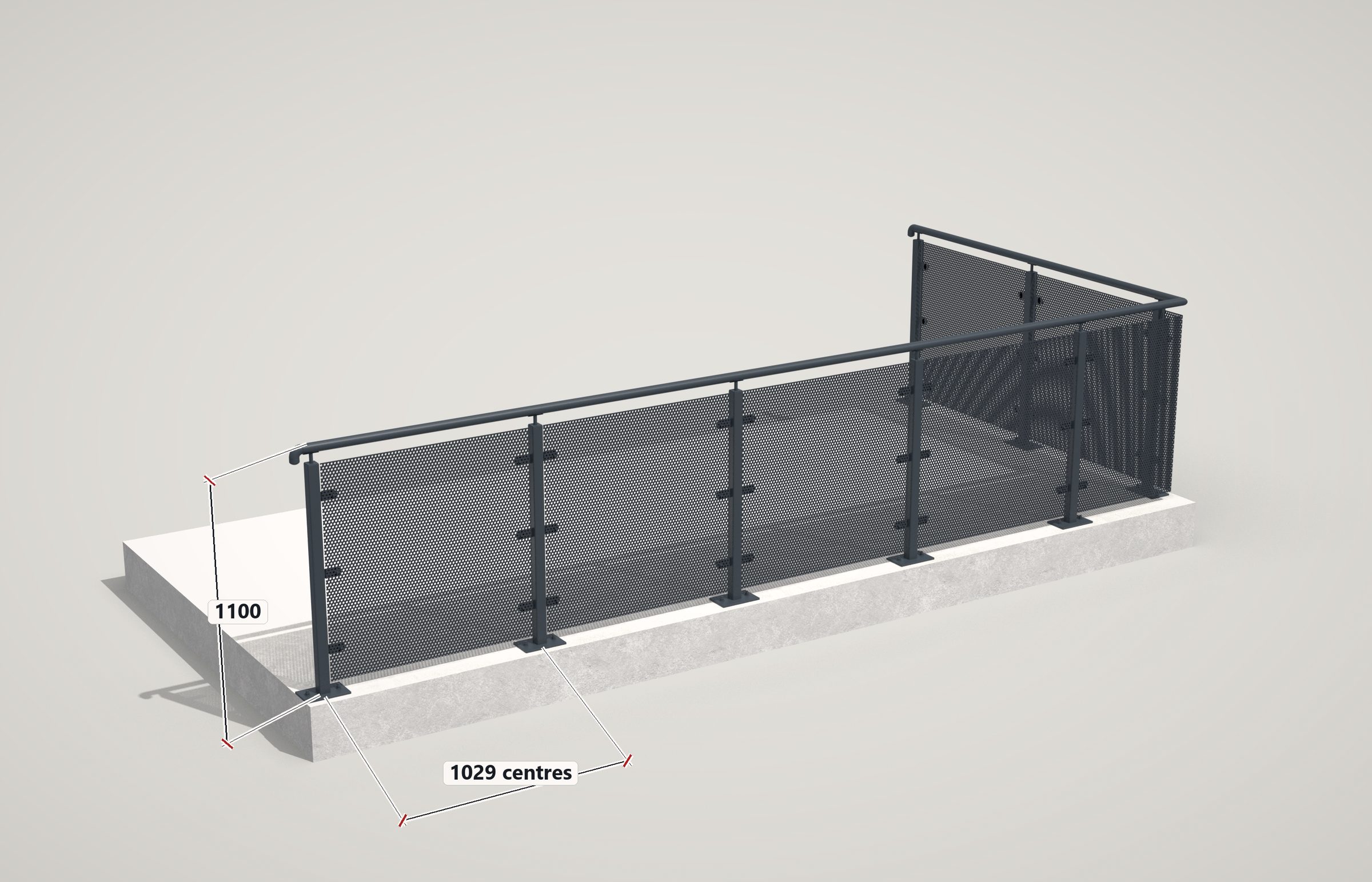
| Posts | SHS 50 x 50 |
| Sheet | 4 mm perforated, plain 70 mm border |
| Clamps | Weld-on sheet clamps up each side of every post |
| Handrail | CHS 42.4 on saddles |
Worth knowing
On tall residential blocks the infill must be non-combustible.
For a residential building with a storey 11 m or more up, Approved Document B asks balconies to contain only A1 or A2-s1, d0 materials, with a short list of exceptions. Steel sheet qualifies. Timber, HPL and many composite infill panels do not.
Source: Approved Document B volume 1 (2019 edition incl. 2026 amendments), paragraph 10.10a
The detail
How it is made, fitted and priced, and what to tell us.
The sheet is cut from 4 mm plate with a solid 70 mm border, and the border is what the clamps grip, so the holes never weaken the fixing. The clamps are weld-on, fixed to the posts, with a gasket between clamp and sheet and a bolt through. Each sheet is then a single piece bolted into the post line, and it can be unbolted and replaced. At a corner the sheet is folded round, so the corner has no gap and no extra post.
A solid-looking sheet catches wind, and the open area decides how much. The posts and their anchors are sized by your engineer on the wind pressure at the site, so tell us if the balcony is high or exposed. The same sheet used as a privacy screen carries more load than the same sheet used as a low guard. We draw the post spacing, plate sizes and sheet sizes to the engineer's figures.
At 4 mm, a steel sheet weighs about 31 kg per square metre before the holes are cut, so a sheet a metre wide by 1.1 m high is a two-person lift. That weight decides how the sheets are handled on site and whether the build has a crane or hoist. We keep each sheet to a size one fixer pair can carry through a door, and show the size on the drawing. Finish is galvanising and powder coating on the sheet and the posts, with the galvaniser told about the coating on the drawing note.
The type suits stair cores and escape stairs where a screen is wanted without rails, and balconies that need privacy. Price is above bars for the same length, because the sheet is cut, perforated, folded and finished, but it is below glass. Because nothing is horizontal and the holes are small, there is nothing to climb and nothing to trap a hand. Tell us how much privacy and light you want, and the wind exposure.
More views
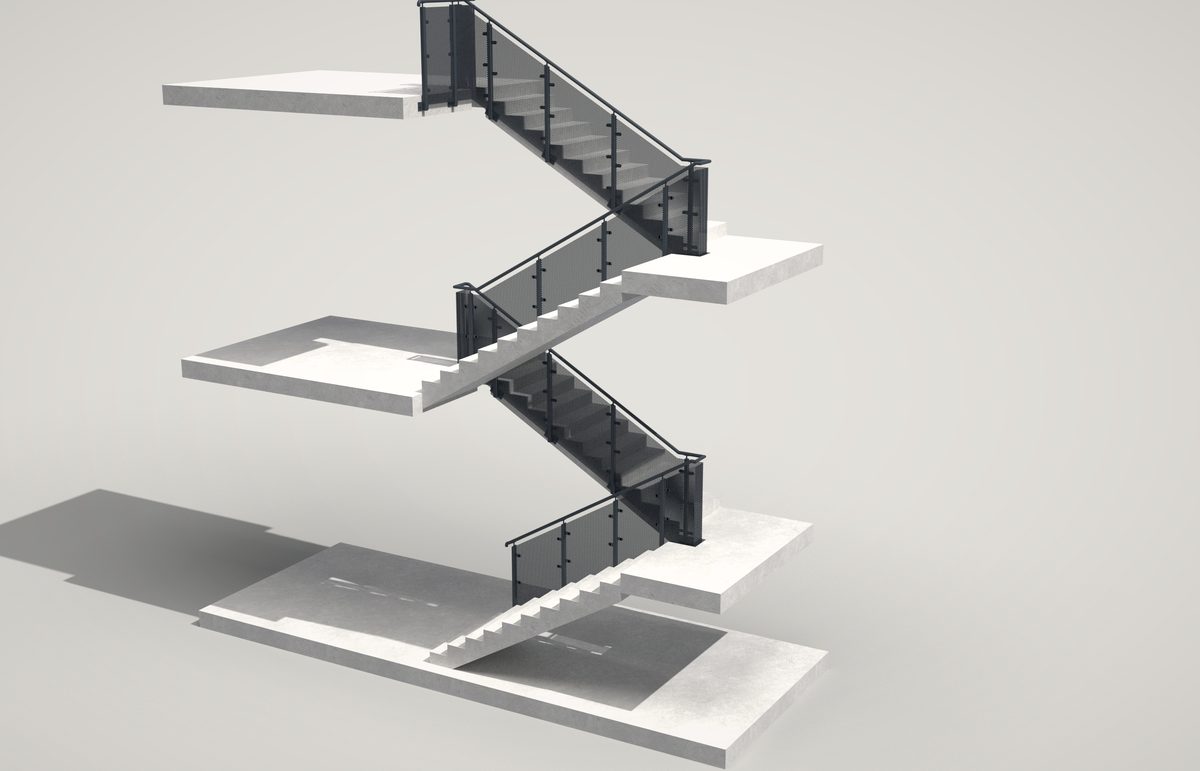
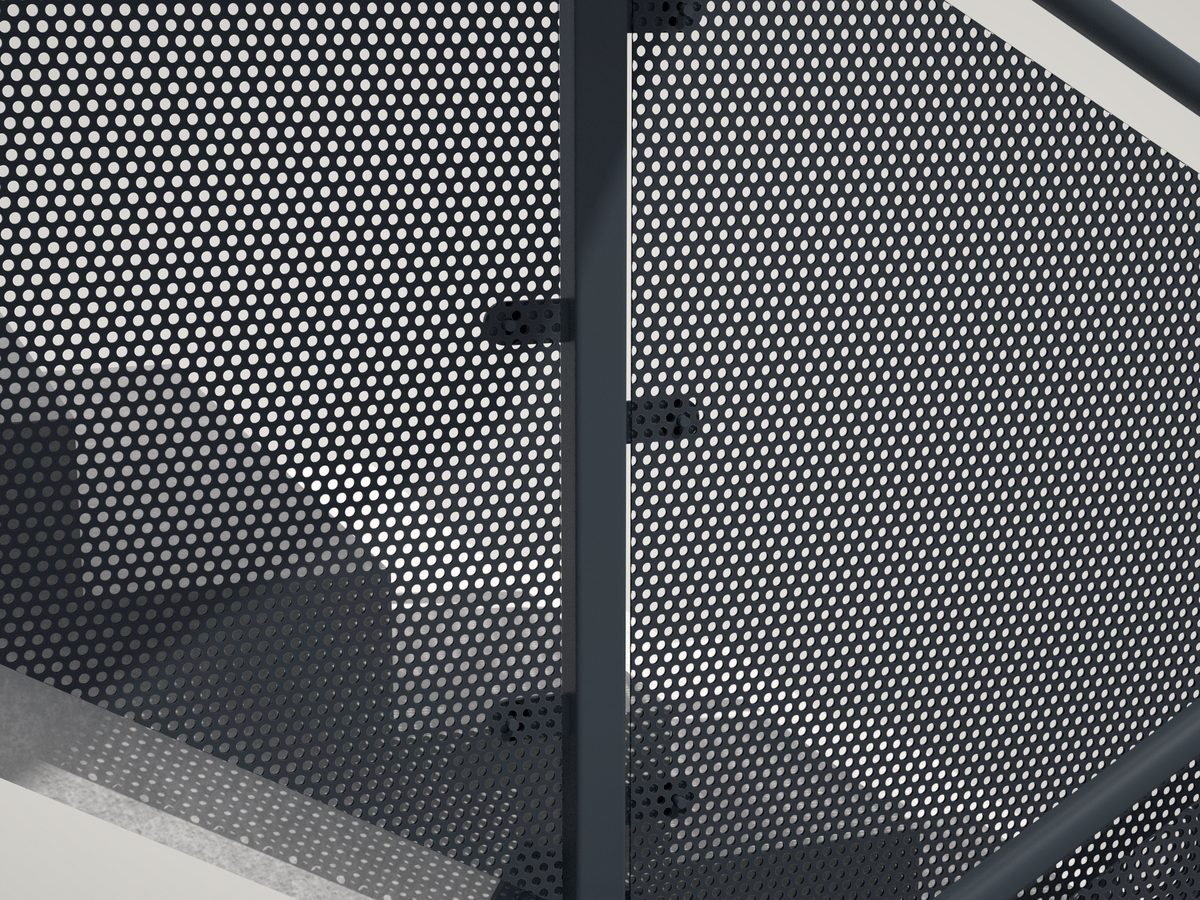
Renders and sheets from our sample projects: made-up jobs, modelled and drawn the way a real one is.
Is it right for you?
Good for
- Escape stairs and stair cores
- Balconies that need privacy
- Screens that also guard a drop
Not for
- Where the view out matters: see glass
What the drawings show
- A sheet schedule with the mark, size, thickness and the plain border width on every sheet
- Sheet positions between posts with the clamp positions on the border
- The fold line and the corner detail where the sheet turns a corner
- A 1:5 section through the sheet, the clamp, the post and the handrail
- The hole pattern shown on one sheet at a scale that reads
Questions
Guide: Balustrade heights in the UKGuide: Stair rules in England: rise, going, headroomGuide: How to measure for a balustrade or stair
Can perforated metal be used as a balustrade?
Yes, as infill between posts. The sheet and its fixings must resist the barrier loads, and the holes must not let a 100 mm sphere through. A small hole pattern with a plain border meets both, and the posts and anchors are checked for the wind on the sheet.
Is a perforated screen counted as guarding?
If it is fixed at the right height and can take the loads, it works as the infill of the guarding. A screen that is only there for privacy is not guarding unless it meets the height and load rules. We draw it to the guarding height wherever there is a drop.
How big should the plain border be?
On our drawings, 70 mm all round. The clamps grip that solid border, so the holes do not weaken the connection, and the sheet stays flat. Delta's perforated panels use a 60 mm margin, which shows the figure is a range.
Does perforated sheet need galvanising?
Steel sheet used outdoors should be galvanised or otherwise protected, and then powder coated for colour. Aluminium sheet does not need galvanising. We note which on the drawing, and tell the galvaniser about the powder coat so the surface is prepared for it.
Is it cheaper than glass?
Usually, because the sheet is steel, not laminated glass, but it costs more than plain bars of the same length. Our band is the middle. The price depends on the sheet thickness, how much is folded round corners and the finish.
Other balustrades
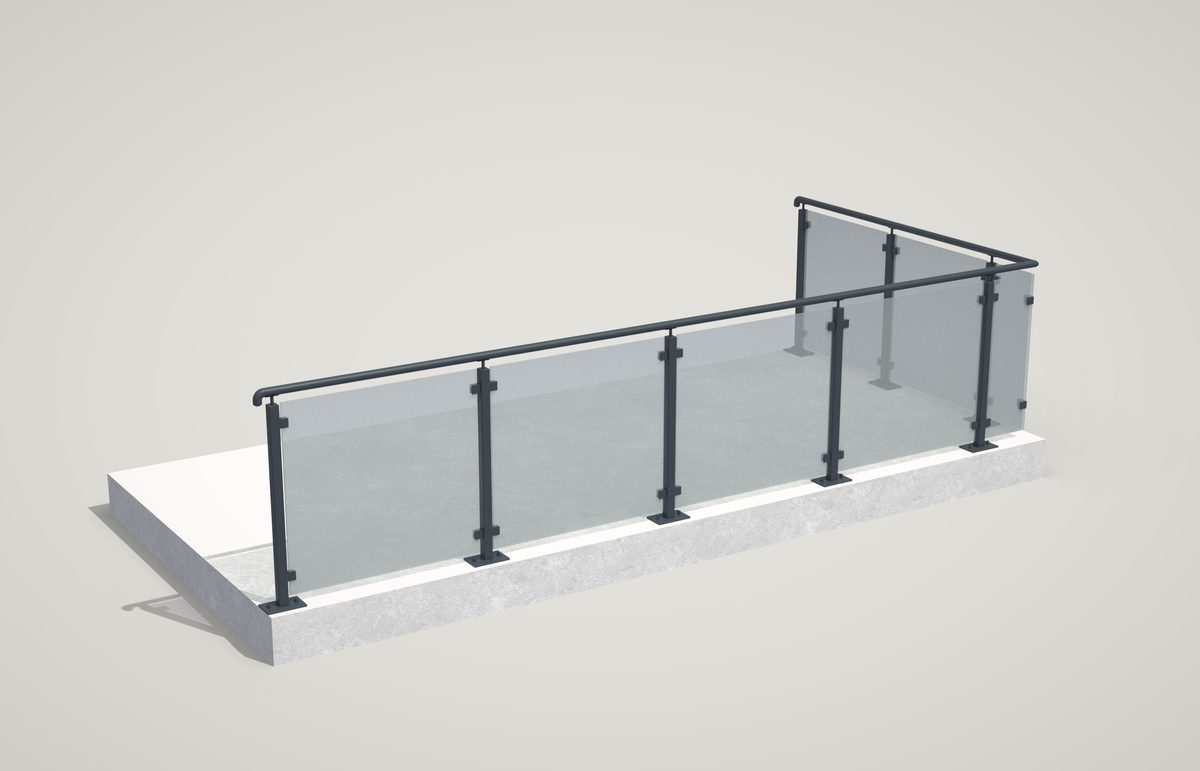
Glass on posts
Toughened laminated glass clamped between steel posts, with a handrail on top.
From £179design pack
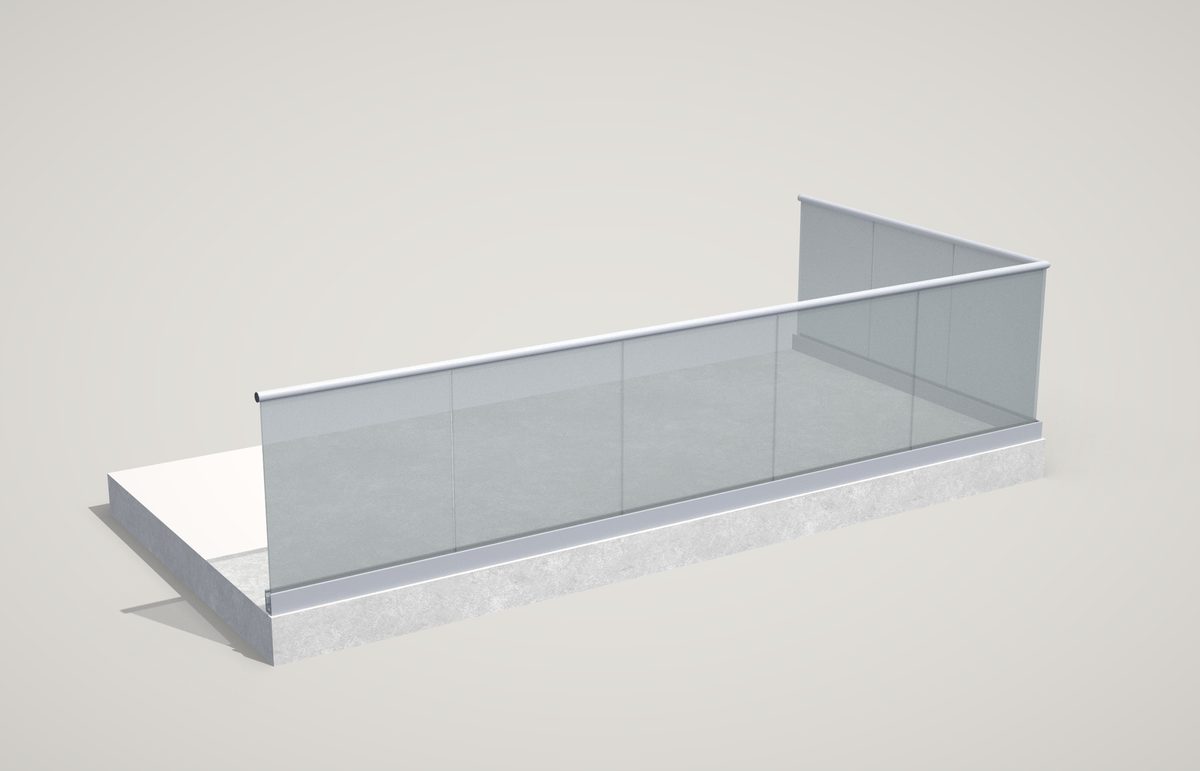
Frameless glass
Glass panes standing in a channel fixed to the slab, with no posts at all.
From £179design pack
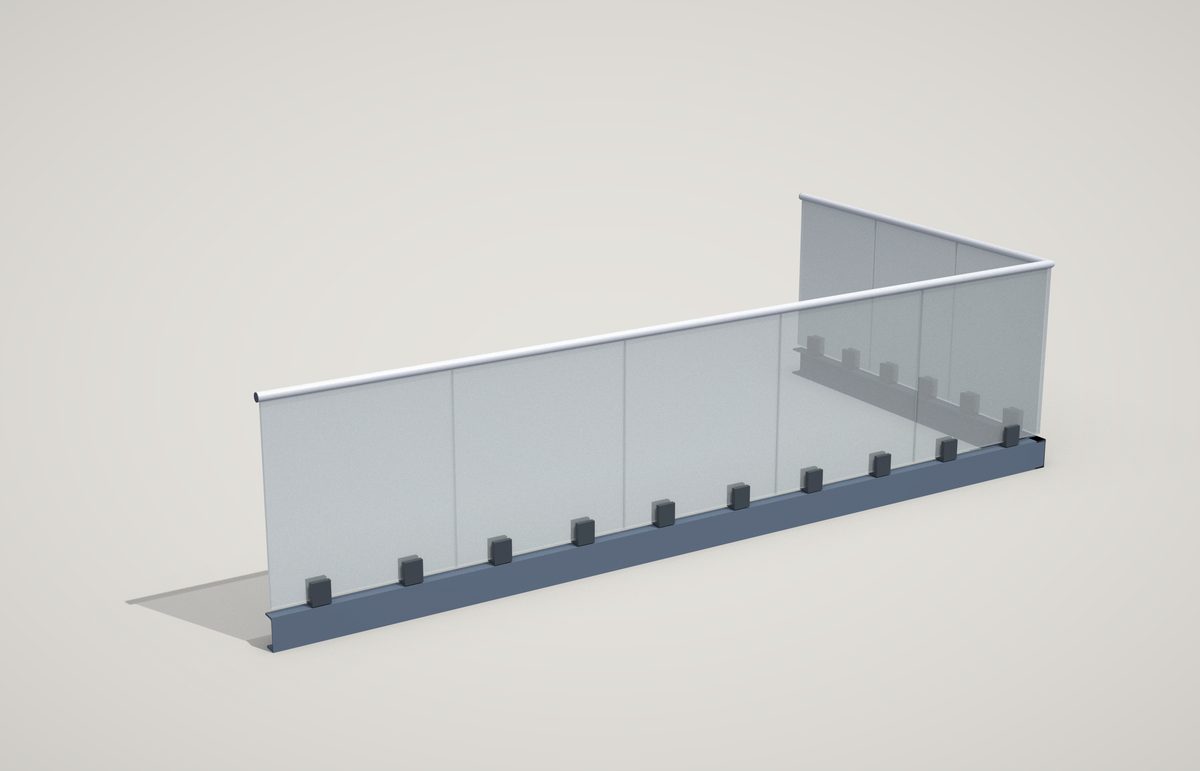
Glass on spigots
Glass panes held off the floor on aluminium spigots, two to a pane.
From £179design pack
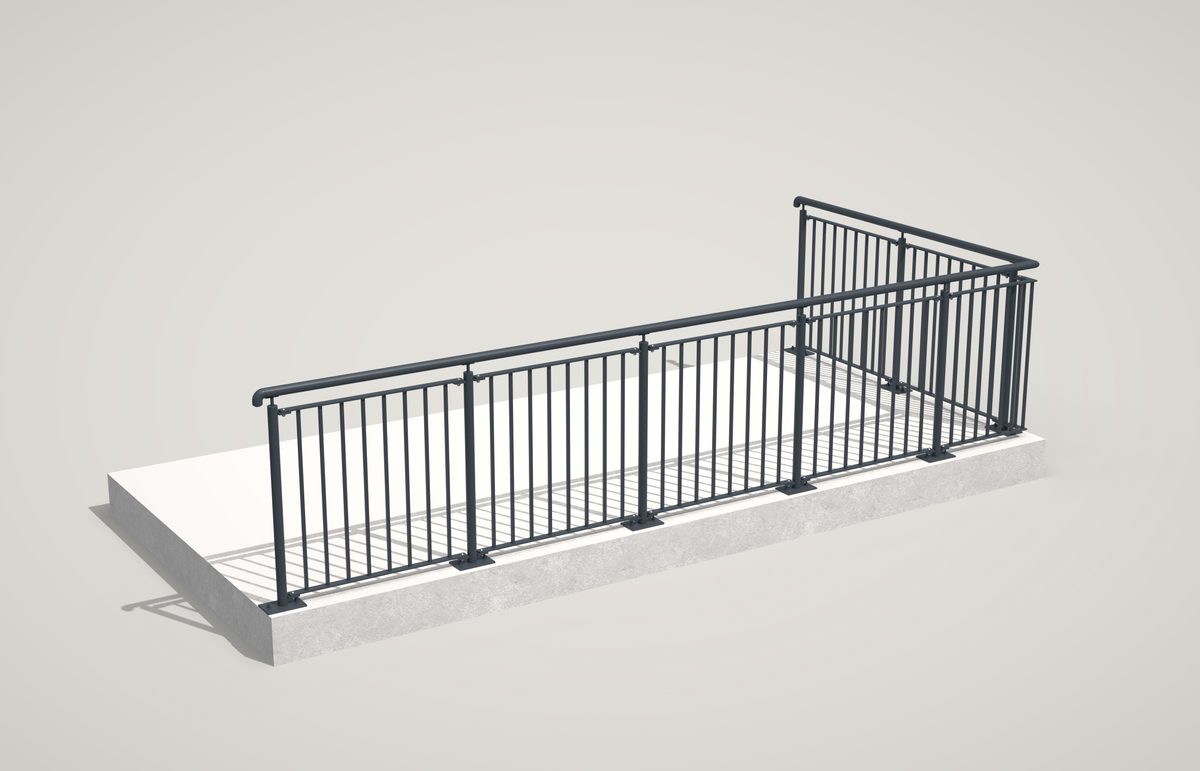
Vertical bars
Steel bars between posts at less than 100 mm clear, the hardest wearing type.
From £179design pack
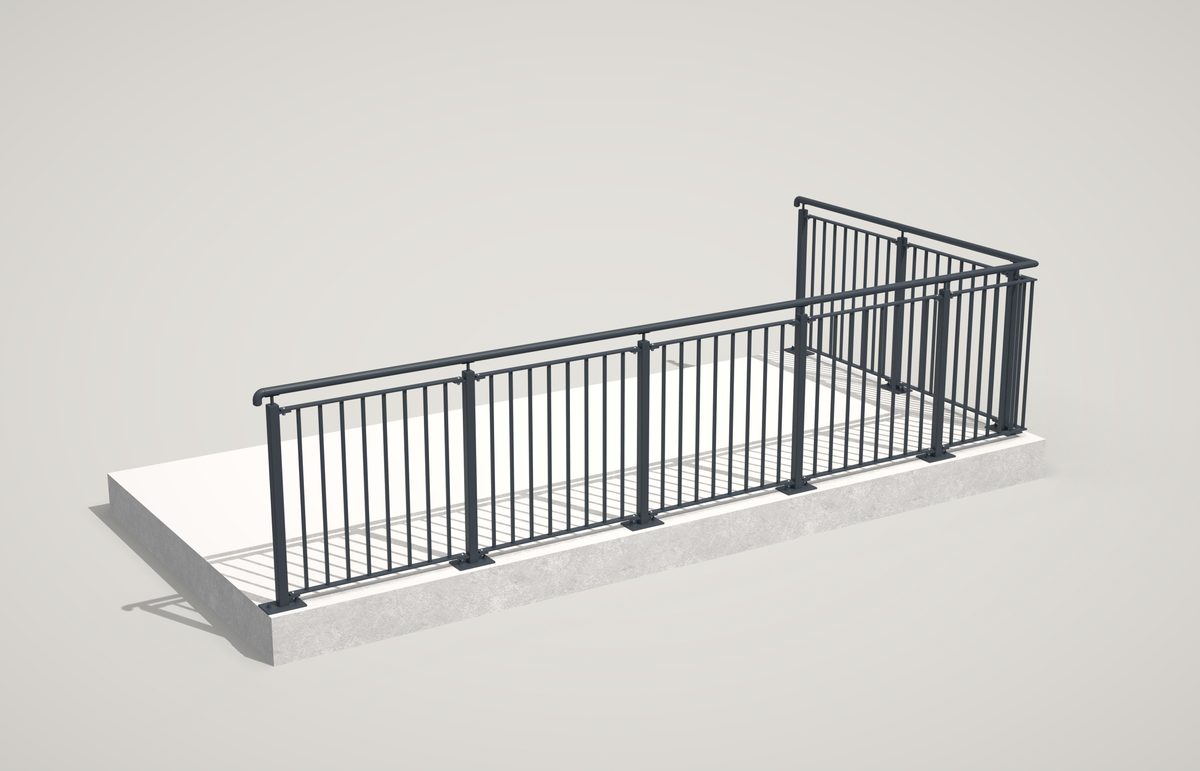
Post and panel
Bar panels bolted between posts on weld-on lugs, galvanised and fitted on site.
From £179design pack
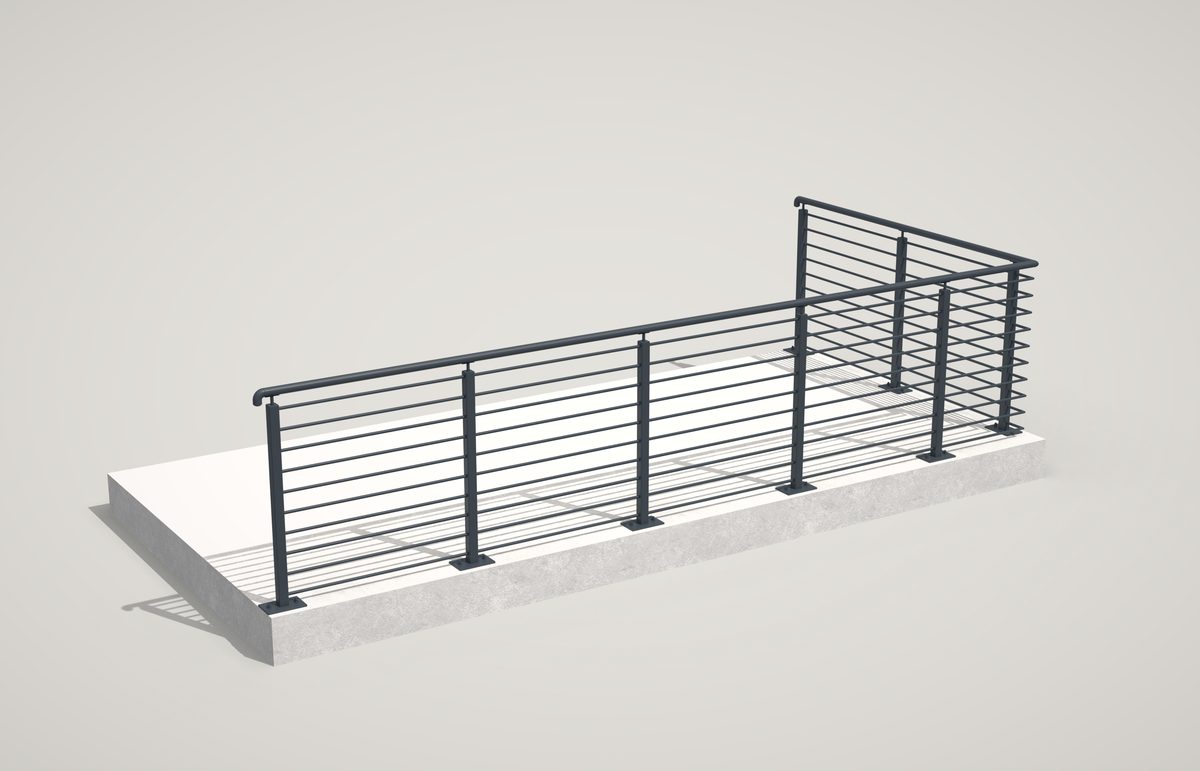
Horizontal bars
Bars run along the run between posts: a clean line, with limits on where it can go.
From £179design pack
Your perforated sheet, drawn from a real 3D model.
Balustrade and stair design pack: from £249Back in 3 working days or your money back. Or call 07399 358543 to ask first.