Guides/How to build a steel log store that dries logs
How to build a steel log store
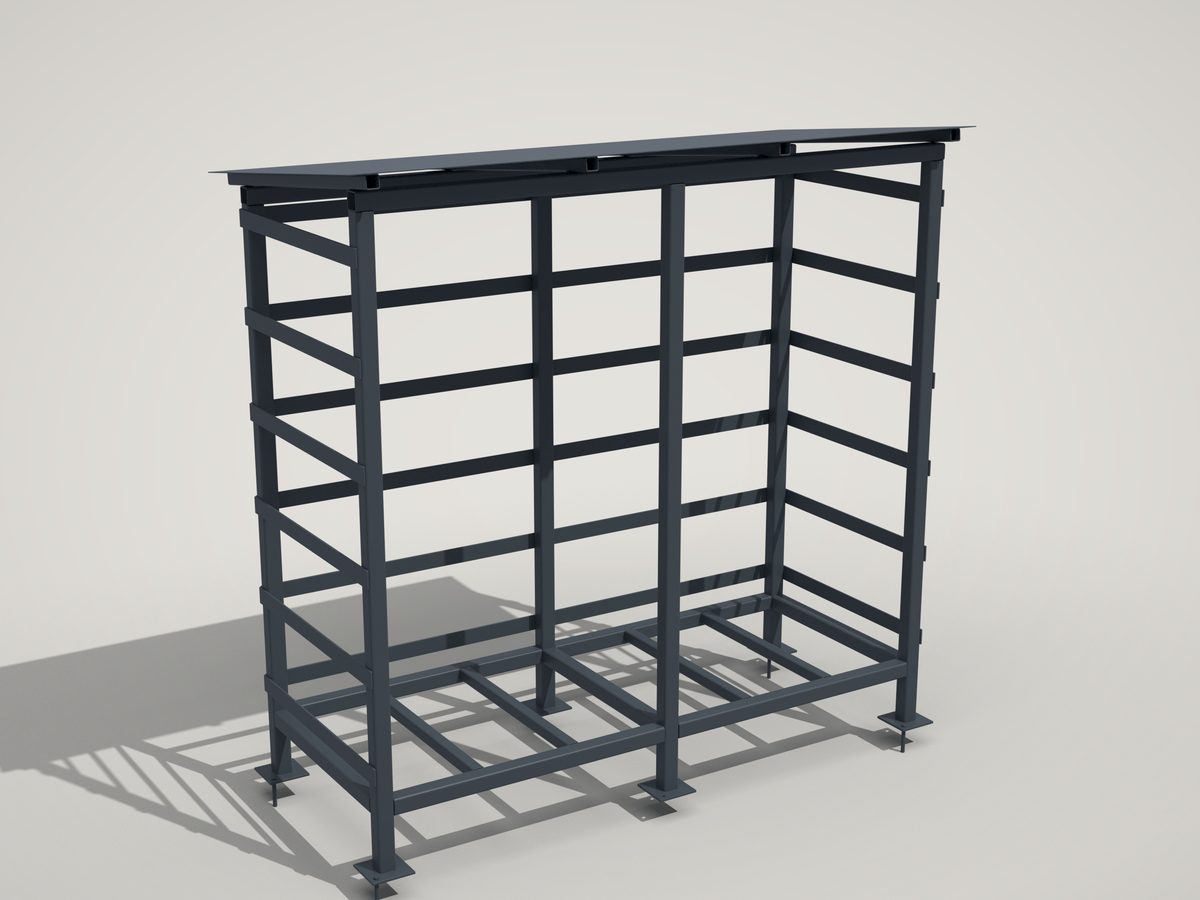
A log store has one job: get wood dry and keep it dry until you burn it. That means air through the stack, nothing touching the ground and a roof that throws the rain clear. In steel it lasts far longer than timber, provided it is bolted down and finished properly. This is how our plan does it.
Why the store matters to the fire
Wet wood smokes, soots the flue and gives half the heat. In England, wood sold in volumes under 2 m3 must be certified Ready to Burn, which confirms a moisture content of 20 % or less, and the government's guidance to sellers says customers should be told how to dry and store it: indoors, off the ground or under cover.
Logs you split yourself start far wetter than that and dry in air, not in a closed shed. A good store keeps rain off the top, lets wind through the sides and back, and lifts the bottom row off the ground so it does not wick water up. A cheap moisture meter tells you when a log is ready.
| Size | Overall (mm) | Logs stacked | Logs at 500 kg/m3 | Anchor pull-out each | Steel in it |
|---|---|---|---|---|---|
| Small | 1080 x 640 x 1200 | about 0.35 m3 | 174 kg | 1.0 kN | 65 kg |
| Standard | 1580 x 740 x 1500 | about 0.88 m3 | 440 kg | 1.5 kN | 108 kg |
| Large | 2080 x 840 x 1800 | about 1.67 m3 | 835 kg | 2.6 kN | 166 kg |
Swipe the table sideways to see every column.
Sizes, and what a full store weighs
Size it for a season's burning and the space you have. Our plan comes in three sizes. The small one is 1080 mm wide and holds about 0.35 m3 of stacked logs; the standard is 1580 mm wide for about 0.88 m3; the large is 2080 mm wide and 1.8 m high for about 1.67 m3.
Logs are heavy. We check the slats and base for stacked logs at 500 kg/m3, which makes a full large store about 835 kg of wood. The slats are SHS 30 x 30 x 2.5 set across SHS 40 x 40 x 3 base rails; on the standard store the slats work at 12 % of their strength at 1.5 times that load, so the stack can be filled to the back without the floor bowing.
The roof and the wind
The roof is 2 mm steel plate on SHS 30 bearers, sloping front to back so rain runs off behind the stack, with an overhang at the front to keep driving rain off the logs. We check it for 0.6 kN/m2 of snow; it is not for standing on.
Wind is the case people forget. An empty log store is a light box with a roof on it, and on our check an empty store would tip in a 0.8 kN/m2 wind on its side face: its own weight gives only a fraction of the hold it needs. So every corner is bolted down: two M10 anchors per corner into a level slab or paving on a concrete bed, each rated for at least 1.0 kN pull-out on the small store, 1.5 kN on the standard and 2.6 kN on the large. Choose anchors for what you are fixing into.
Fix the roof plate by stitch welding it to every bearer from underneath, 25 mm welds at 200 mm, or with stainless self-drilling screws if you would rather it came off.
Finish it for outside
The best finish for a log store is hot-dip galvanising, then paint if you want a colour. Galvanising needs vent holes so zinc can flow in and out of every hollow section; size them to your galvaniser's table, which for an SHS 40 is one 14 mm hole at each end of each sealed length (EN ISO 14713-2, Table 1, as the Galvanizers Association reproduces it). Ask the galvaniser before you drill. Our finishing guide covers the alternatives, and the galvanising calculator sizes the holes.
If you paint instead, use a zinc-rich primer and two coats of exterior metal paint, and touch up any scratches before winter. Keep the bottom of each post clear of standing water.
Mistakes we see
Solid sides and back, which make a damp cupboard. The bottom row on the ground. A store left free-standing on the lawn until the first gale. Logs stacked against the roof plate. And a store against the house wall where the gap behind fills with leaves and stays wet. Keep it a hand's width off any wall and never light a fire or barbecue near it. For logs indoors beside a stove, our log holder plan is the indoor version.
The build, step by step
The order we build it in. The plan draws each step with its new parts in orange.
- Cut and prepare
Cut every bar to the list and mark it. Drill the foot plates for the anchors, and vent holes if it is to be galvanised.
- Front and back frames
Lay the posts flat with their foot plates, fit the base rails and top rail, check every bay's diagonals within 2 mm, weld.
- Base and slats
Stand the frames up, join them with the side base rails, check square and level, weld the slats in flush.
- Roof bearers
Weld the bearers across the top rails, sloping front to back; sight along them so the roof sits flat.
- Sides and back
Weld the flat bars across the end and back posts at the drawn centres, the bottom one just above the base rail.
- Roof and fixing
Stitch weld or screw the roof plate on, finish it, stand it on a level slab and anchor all four corners.
The plan
Each plan comes in 3 sizes, drawn from a checked 3D model: the steel to buy, the cutting list, every part drawn, the build step by step and a DXF for every plate, and the loads it was checked for.
Building more than one? Every garden plan is in the garden bundle for £15 (42 plans, every size); any 3 plans are £12.
Questions
How do you keep logs dry in a log store?
Roof over the top, air through open sides and back, and the bottom row lifted off the ground on slats. GOV.UK's guidance to wood sellers says to store wood indoors, off the ground or under cover.
What moisture should logs be before burning?
The Ready to Burn figure for wood sold in small volumes in England is 20 % or less. A moisture meter on a freshly split face tells you.
Does a log store need fixing down?
Ours does. Empty, it would tip in a 0.8 kN/m2 wind, so each corner is fixed with two M10 anchors into a slab or paving on concrete.
How much wood does a log store hold?
Our three sizes hold about 0.35, 0.88 and 1.67 m3 of stacked logs, up to 835 kg of wood in the large one.
Galvanise or paint?
Galvanise for the longest life outside, with vent holes sized to the galvaniser's table. Otherwise a zinc-rich primer and two coats of exterior metal paint.
Sources
Read on the published page. The plan figures are our own, taken off the checked 3D model. Where the law is quoted it is the law in England unless it says otherwise; your engineer, insurer or competent person decides your build.
- GOV.UK: Selling wood for domestic use in England, Ready to Burn certification“This confirms it has a moisture content of 20% or less.”
- GOV.UK: Selling wood for domestic use in England, Customer notice“storing the wood indoors, off the ground or undercover”
- Galvanizers Association, Design for Galvanizing poster (reproduces EN ISO 14713-2:2020), Table 1, vent hole sizes for hollow sections“molten zinc must be able to flow freely over all surfaces of a fabrication”
- Galvanizers Association, Design for Galvanizing poster (reproduces EN ISO 14713-2:2020), Introduction“molten zinc heated to a temperature of 450ºC”
Where next
Log store plans
An open-fronted firewood store: logs on slats off the ground, slatted sides and back for air, a sloping steel roof.
£53 sizes, instant download
Add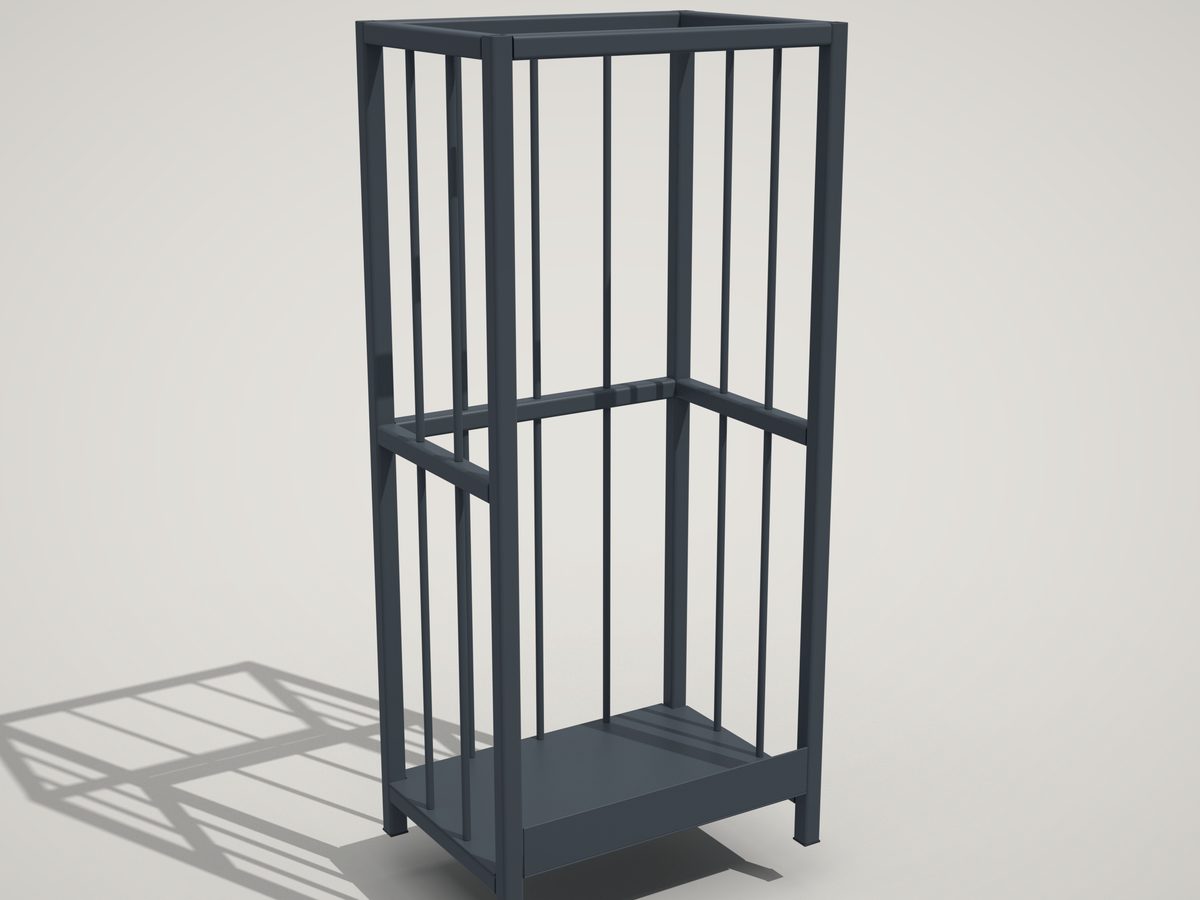
Indoor log holder plans
A tall firewood holder for beside the fire or stove: box-section frame, round-bar sides, a plate floor with a lip.
£53 sizes, instant download
Add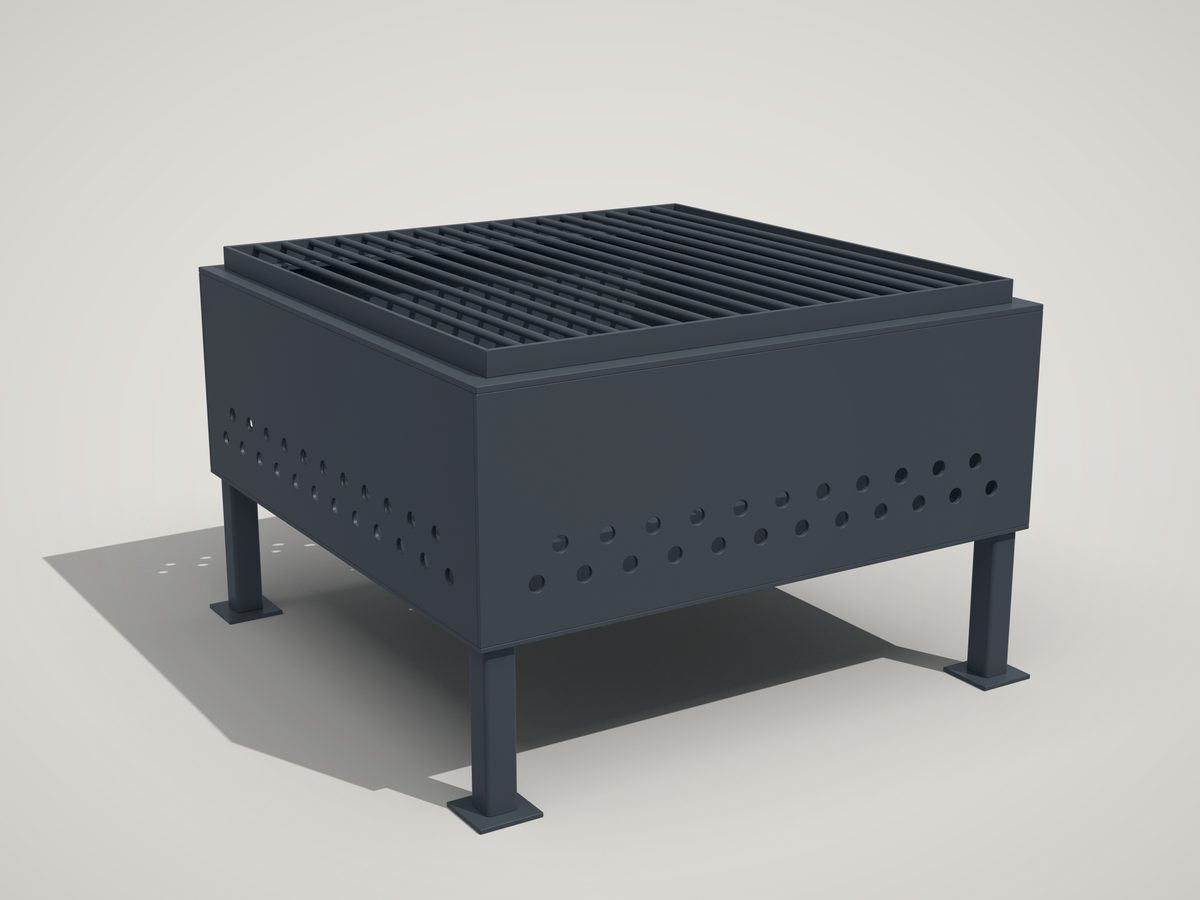
How to make a steel fire pit: plate and safety
How to make a steel fire pit: 5 or 6 mm plate that will not burn through, the base 200 mm off the ground, never galvanised, 3 m from anything that burns.
Guide6 sources read
Galvanise, powder coat or paint outdoor steel
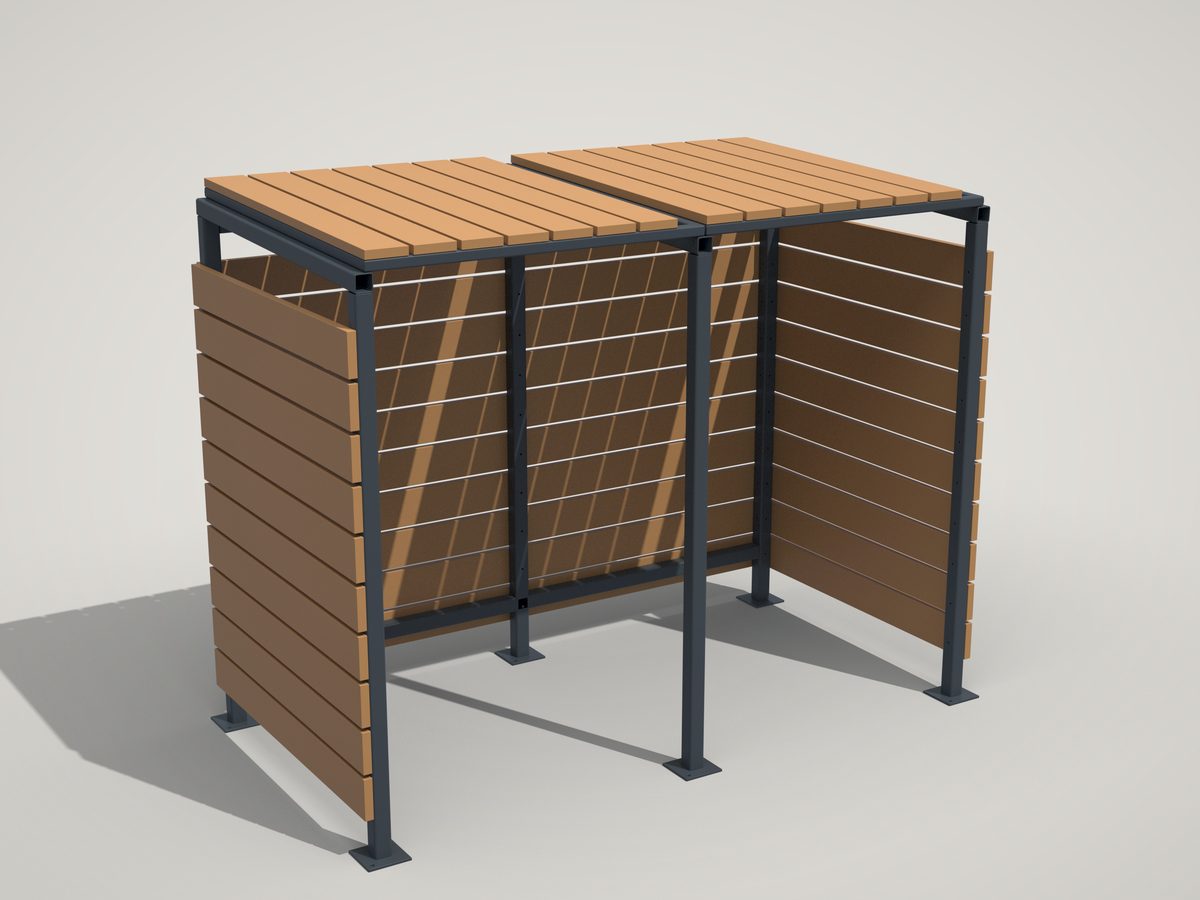
Galvanise, powder coat or paint: EN ISO 1461 asks for 85 µm of zinc on steel over 6 mm, vent holes from 10 mm, never galvanising what sits in a fire.
Guide8 sources read
More guides
How to build a welding table: steel and sizes
How to build a welding table: an 8 or 10 mm plate top with a 25 mm clamping edge, a mitred SHS 40 frame, stitch welds to keep it flat. Sizes to 1500 x 900.
Guide3 sources read
DIY welding cart: sizes, castors and the bottle
DIY welding cart: a bottle bay for a 200 to 250 mm cylinder, chained; castors rated for three wheels; stable to 15 degrees loaded. Three sizes.
Guide3 sources read
How to build a metal workbench that stays put
How to build a steel workbench: RHS 100 x 50 rails, SHS 50 legs and a 45 mm timber top, checked for 3.0 kN/m2 and a 2 kN point load. 1.5 to 2.1 m long.
Guide3 sources read